
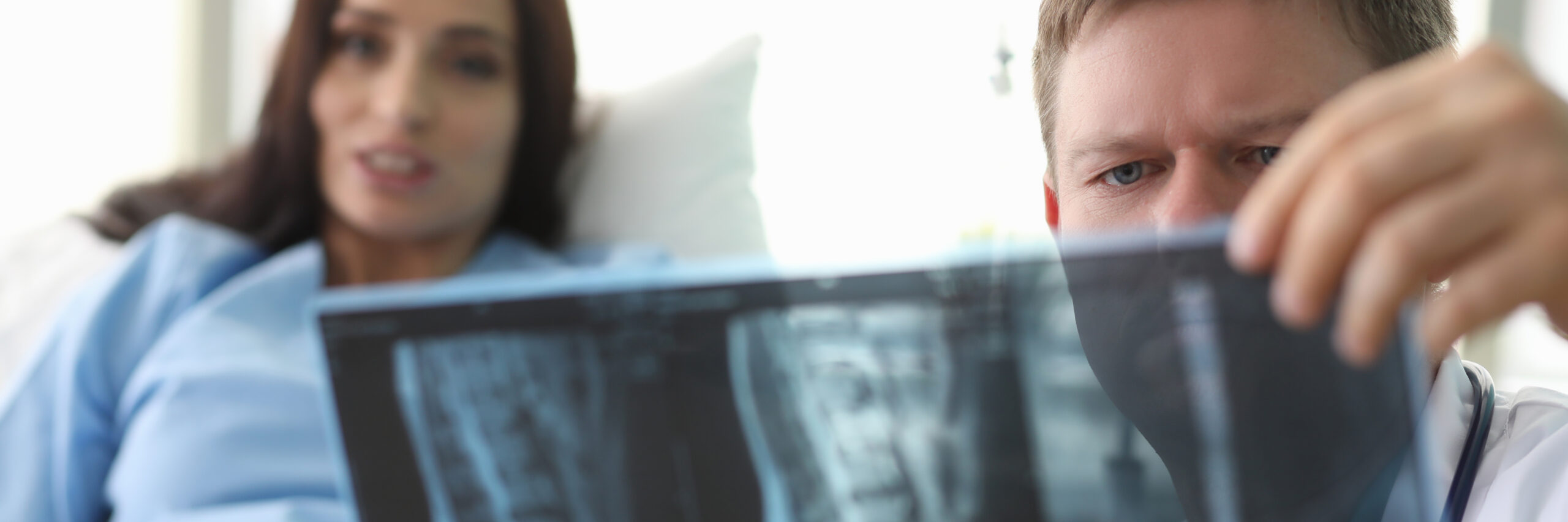
#1 Comprehensive Guide to Spine Conditions
Back and neck pain affect millions of people each year, and understanding the underlying cause begins with learning about the most common spine conditions. The spine is a complex structure made up of bones, joints, discs, ligaments, muscles, and nerves. Problems in any of these areas can lead to pain, stiffness, numbness, weakness, or difficulty walking.
This comprehensive guide organizes structural, neurologic, disc-related, and post-surgical disorders into clear categories to help you better understand symptoms, diagnosis, and treatment options. It is not meant to replace a medical visit, but rather to give you a roadmap so that conversations with your spine specialist are more focused and productive. For a broader overview of back pain causes and risk factors, large academic centers such as
Mayo Clinic also provide helpful patient education.
Below, you will find major groups of spine conditions, important mimicking disorders, and pain syndromes that can be treated with minimally invasive procedures, targeted injections, rehabilitation, and—only when truly necessary—surgery.
Spinal Column Conditions
These spine conditions affect the alignment, stability, or development of the vertebral column itself. When the spinal column becomes unstable, narrowed, or deformed, it can cause mechanical back pain, stiffness, or pressure on the spinal cord and nerves. Symptoms may include pain that worsens with standing or walking, postural changes, or visible deformity such as curvature of the spine.
Early diagnosis is important. Imaging such as X-rays, MRI, or CT can help determine whether the pain is coming from instability, deformity, or degenerative changes. Treatment ranges from targeted physical therapy and bracing to minimally invasive stabilization procedures; more advanced deformity may sometimes require surgical reconstruction.
- Spondylolisthesis and Spinal Instability — when one vertebra slips forward relative to another, or when supporting ligaments and joints can no longer maintain proper alignment.
- Spinal Stenosis: Central and foraminal narrowing that can pinch nerves and lead to leg pain, heaviness, or difficulty walking.
- Coccydynia — tailbone pain, often worse with sitting.
- Isthmic Spondylolisthesis — stress-related slip in younger or athletic patients; this often starts as a defect in the pars interarticularis and may worsen with repetitive extension and loading of the lower back. The American Academy of Orthopaedic Surgeons (AAOS) provides additional background on spondylolisthesis on their OrthoInfo website.
- Degenerative Scoliosis (Adult Spinal Deformity) — age-related curvature of the spine that can be associated with spinal stenosis and imbalance.
- Bertolotti Syndrome (Lumbosacral Transitional Vertebra) — abnormal connection between the lowest lumbar vertebra and the sacrum that can cause chronic unilateral low back or buttock pain.
- Baastrup’s Syndrome (“Kissing Spine”) — painful contact between enlarged spinous processes, typically in the lumbar spine.
- Skeletal Irregularities
- Scoliosis
- Lordosis
- Kyphosis
- Congenital anomalies of the spine
Spine Bone & Joint Conditions
The vertebrae (spinal bones) and facet joints maintain spinal stability and allow smooth movement. When these structures fracture, wear down, or become inflamed, they can produce localized back pain, muscle spasm, or progressive deformity. These conditions often coexist with disc and nerve problems, making a careful, image-guided evaluation essential.
Treatments may include osteoporosis management, bracing, targeted injections (such as facet joint blocks or medial branch radiofrequency ablation), and in some cases minimally invasive stabilization procedures. Untreated, some of these conditions can lead to chronic pain or even neurologic problems.
- Compression Fracture — often related to osteoporosis or trauma; can cause sudden, sharp back pain and loss of height.
- Spondylolysis (pars fracture) — a small stress fracture in the back part of a vertebra, common in young athletes.
- Facet Syndrome — sprain, arthritis, or joint overload of the small joints in the back of the spine, often causing pain with extension or twisting.
- Facet Cysts (Synovial Cysts) — fluid-filled sacs that arise from degenerated facet joints and may compress nearby nerves.
- Costovertebral Joint Dysfunction — a common source of mid-back or rib-based pain, especially with deep breathing or rotation.
- Spina Bifida — incomplete formation of the spine and spinal cord present at birth; severity ranges from mild bony defects to major neurologic issues.
- Osteoporosis — thinning of the bones that increases the risk of fractures in the spine and elsewhere.
- Vertebral Osteomyelitis — an infection involving the spinal bones. This is a serious condition that may cause severe back pain, fevers, and neurologic deficits; centers like
Cleveland Clinic provide additional detailed educational resources.
Disc Conditions
Intervertebral discs act as shock absorbers between the vertebrae. A healthy disc is well-hydrated and flexible; as discs dry out or tear, they can become a source of both mechanical and nerve-related pain. Disc problems are among the most frequently diagnosed spine conditions in both the neck and lower back.
Disc-related pain may be centralized in the midline, or it may radiate into the arms or legs if a disc herniation or bulge compresses a nerve root. Modern options such as targeted epidural injections, minimally invasive decompressions, disc biacuplasty, and basivertebral nerve ablation (Intracept) can be considered when conservative therapy is not enough.
- Herniated Disc — when disc material protrudes or leaks and compresses a nerve root, often causing sharp, shooting pain into the arm or leg.
- Degenerative Disc Disease — progressive disc wear and tear that can contribute to chronic back pain.
- Annular Tear — a tear in the outer ring of the disc that can be painful even without a large herniation.
- Disc Bulge — a common age-related disc change that may irritate nerve roots or contribute to spinal stenosis.
- Internal Disc Disruption (IDD) — discogenic pain arising from structural changes inside the disc without significant herniation.
- Modic Endplate Changes — inflammatory changes in the vertebral endplates that are associated with vertebrogenic pain.
- Vertebrogenic Pain / Basivertebral Nerve Pain — pain arising from the vertebral body itself, often treatable with the Intracept procedure in carefully selected patients.
- Schmorl’s Nodes — disc material herniating into the vertebral endplate; often an incidental finding but sometimes associated with pain.
- Discitis — infection and inflammation involving the disc space, which can cause severe pain and systemic symptoms.
Spinal Nerve & Neurologic Conditions
Nerve-related spine conditions involve irritation, compression, or damage to the spinal cord or nerve roots. These disorders often present with radiating pain, tingling, numbness, weakness, or clumsiness. Sometimes symptoms are mild and intermittent; in other cases they can be progressive and disabling.
Because neurologic symptoms can indicate serious underlying pathology, it is important to seek prompt evaluation if you experience bowel or bladder changes, progressive weakness, or difficulty walking. In many cases, however, nerve-related pain can be managed with image-guided injections, minimally invasive decompression, or targeted rehabilitation rather than open surgery. For additional general education on sciatica, U.S. patients often refer to
MedlinePlus, a resource of the National Library of Medicine.
- Sciatica vs. Radiculopathy — pain, numbness, or tingling traveling down a limb due to nerve root irritation or compression.
- Neurogenic Claudication — heaviness, aching, or fatigue in the legs with walking due to spinal stenosis, often relieved by leaning forward or sitting.
- Cervical or Thoracic Myelopathy — spinal cord compression affecting balance, hand function, fine motor control, and sometimes bowel or bladder function.
- Cauda Equina Syndrome — an emergency involving severe compression of the nerves at the base of the spine, often causing saddle anesthesia, leg weakness, or bladder/bowel dysfunction.
- Syringomyelia — fluid-filled cavities within the spinal cord that can disrupt nerve function.
- Tarlov Cysts — perineural cysts that may be asymptomatic or cause nerve-related pain in certain cases.
Conditions Mimicking Spine Diseases
Many disorders outside the spine can closely resemble spinal pathology and must be ruled out during a thorough evaluation. Some mimic nerve pain, while others produce deep aching in the back, buttocks, or hips. Misdiagnosis can lead to ineffective treatments, so part of a careful spine workup is making sure the pain truly arises from the spine and not from another organ or joint.
A combination of history, physical examination, imaging, and sometimes diagnostic injections can help distinguish these mimics from true spinal disease. In many cases, treating the hip, sacroiliac joint, abdomen, or vascular system is more effective than focusing on the spine itself.
- Muscle Sprains — acute or chronic strain of muscles and ligaments supporting the spine, often due to overuse, poor posture, or sudden movements.
- Sacroiliac Joint Dysfunction / Sacroiliitis — inflammation or dysfunction of the SI joint, typically causing low back or buttock pain.
- Piriformis Syndrome — compression of the sciatic nerve by the piriformis muscle in the buttock.
- Intercostal Neuralgia — nerve pain in the ribs and chest wall that can mimic thoracic spine problems.
- Hip Osteoarthritis — commonly mistaken for lumbar radiculopathy because the pain may radiate to the groin, thigh, or knee.
- Greater Trochanteric Pain Syndrome — lateral hip pain often worsened by lying on the affected side.
- Meralgia Paresthetica — lateral thigh nerve entrapment causing burning, tingling, or numbness.
- Abdominal Aortic Aneurysm (AAA) — a vascular condition that can cause deep, poorly localized back pain and requires urgent attention.
- Pancreatitis — inflammation of the pancreas that may cause severe upper abdominal and upper back pain.
Post-Surgical Spine Conditions
Some patients develop new or persistent symptoms after spine surgery. This may be due to scar tissue, residual compression, changes in biomechanics, or wear and tear at levels above or below a fusion. Post-surgical spine conditions can be frustrating, but many patients still benefit from careful re-evaluation, targeted injections, neuromodulation, or minimally invasive revision procedures rather than large open surgeries.
- Adjacent Segment Disease — degeneration at spinal levels next to a prior fusion.
- Post-Laminectomy Syndrome — persistent pain after decompressive surgery, sometimes related to scar tissue or instability.
- Pseudarthrosis (Failed Fusion) — incomplete or absent fusion that can result in motion, hardware stress, and ongoing pain.
- Hardware Failure or Loosening — breakage or migration of screws, rods, or cages.
- Epidural Fibrosis (Scar Tissue) — scar formation around nerve roots that may contribute to recurrent nerve-related symptoms.
Pain Syndromes Associated With Spine Conditions
Not all spine-related pain is purely structural. Some disorders primarily involve the muscles, fascia, or peripheral nerves. These pain syndromes can develop after injury, surgery, or prolonged stress on the spine and surrounding tissues.
Multimodal treatment often works best and may include targeted injections, nerve blocks, medications, desensitization techniques, and physical therapy. In select cases, neuromodulation (spinal cord stimulation or dorsal root ganglion stimulation) may be considered.
- Myofascial Pain Syndrome — chronic muscle pain with trigger points and referred pain patterns.
- Chronic Pain After Trauma (Whiplash, Soft Tissue Injury) — may persist even after the initial injury appears “healed” on imaging.
- Complex Regional Pain Syndrome (CRPS) — a severe pain condition that can develop after injury or surgery, characterized by burning pain, color changes, temperature changes, and hypersensitivity in an affected limb.
Non-Spine Sources of Back Pain
Certain medical conditions can produce back, flank, or pelvic pain even when the spine itself is normal. A careful review of systems, physical examination, and sometimes collaboration with other specialists (such as urology, gynecology, or rheumatology) may be needed to uncover these causes.
- Kidney Stones — flank pain that may radiate to the groin, often severe and colicky.
- Endometriosis — pelvic disease that can cause cyclical low back or pelvic pain.
- Fibromyalgia — a widespread pain syndrome with tender points, fatigue, and sleep disturbance.
- Tumors within or around the spine, or in nearby organs, that may cause deep, persistent pain.
- Pregnancy — mechanical strain and hormonal changes that can contribute to low back and pelvic pain; symptoms typically improve after delivery.
Dr. Amit Sharma & our minimally invasive pain & spine team.
This expanded educational library was created to help patients better understand the wide range of spine conditions that can affect the neck, back, and nervous system. If you recognize your symptoms in any of these descriptions, consider scheduling a consultation for a personalized diagnosis and treatment plan.