
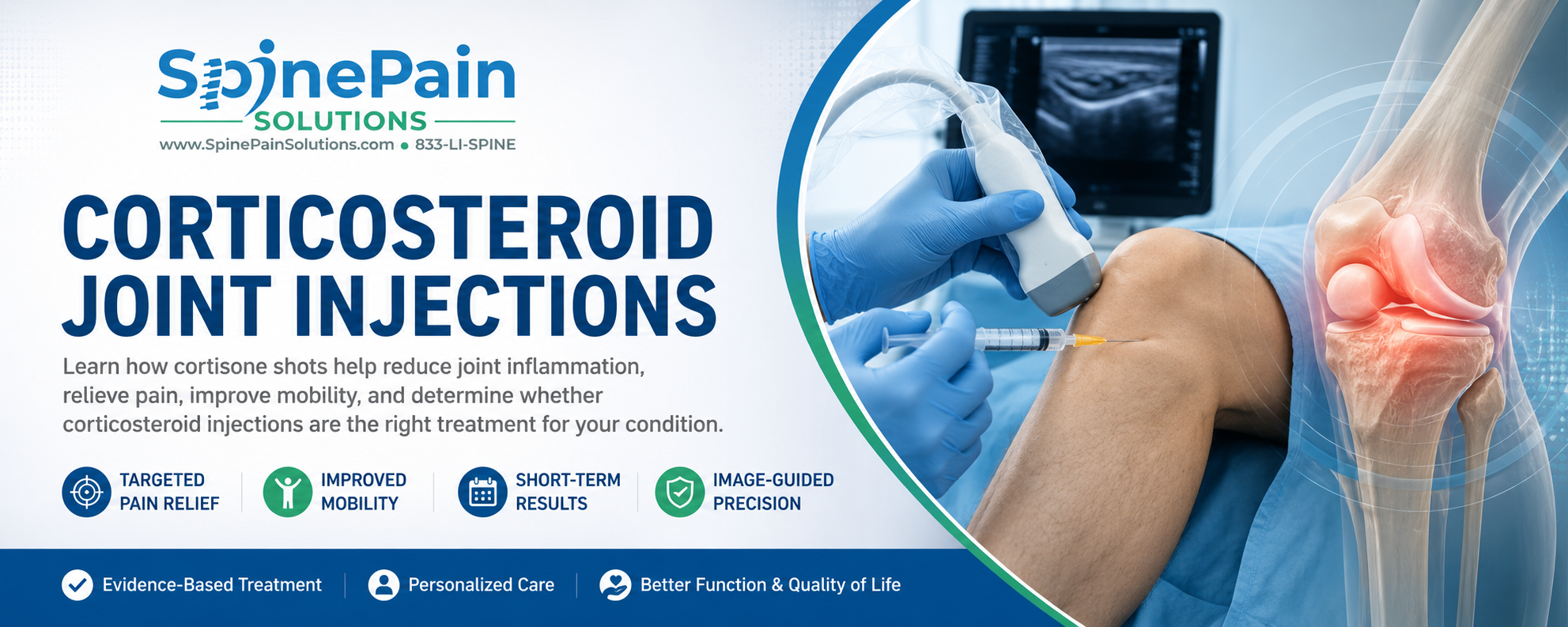
Steroid Injections for Arthritis: Benefits, Risks, Recovery & What to Expect
Corticosteroid joint injections, commonly called cortisone shots, are among the most frequently performed treatments for painful joints. By delivering anti-inflammatory medication directly into an inflamed joint or surrounding tissue, these injections may reduce pain, improve mobility, and help patients participate more effectively in rehabilitation.
Although corticosteroid injections have been used for decades, they are not appropriate for every patient or every condition. Understanding when they are helpful, their potential risks, and how they compare with treatments such as platelet-rich plasma or hyaluronic acid injections is essential for making an informed decision.
Quick Answer
Corticosteroid joint injections reduce inflammation inside painful joints and surrounding tissues. They may provide meaningful pain relief for weeks to months but do not cure arthritis or permanently repair damaged cartilage. Image-guided placement, appropriate patient selection, and realistic expectations are key to achieving the best outcome.
Clinical Perspective
Corticosteroid injections remain one of the most useful non-surgical treatments for inflammatory joint pain. Their greatest value lies in reducing inflammation sufficiently to restore movement, improve function, and allow patients to resume rehabilitation or daily activities. The injection should support a broader treatment plan rather than become an automatically repeated substitute for diagnosis, exercise, weight optimization, or definitive treatment when those are needed.
What Are Corticosteroid Joint Injections?
A corticosteroid joint injection places anti-inflammatory medication directly into a joint, bursa, tendon sheath, or another carefully selected musculoskeletal target. Corticosteroids are synthetic medications that resemble hormones naturally produced by the adrenal glands. Their purpose in an injection is to suppress an excessive inflammatory response in a concentrated location.
Patients frequently use the terms cortisone shot, steroid injection, and corticosteroid injection interchangeably. These medications are different from anabolic steroids used to increase muscle mass.
Commonly used corticosteroids include:
- Triamcinolone acetonide
- Triamcinolone hexacetonide
- Methylprednisolone acetate
- Betamethasone
- Dexamethasone
The selected medication and dose depend on the joint, diagnosis, medical history, prior response, and physician judgment. A local anesthetic may be added to provide temporary numbness while the corticosteroid begins taking effect.
Understanding the Larger Injection Landscape
Corticosteroids are one of several injectable treatments available for joint pain. To learn how they compare with platelet-rich plasma, hyaluronic acid, and other options, see our comprehensive Joint Injections guide.
How Do Corticosteroids Reduce Inflammation?
Inflammation is part of the body’s normal response to injury and disease. In a painful joint, inflammatory cells and chemical mediators may produce persistent swelling, warmth, stiffness, synovial irritation, and sensitization of pain receptors.
Corticosteroids alter multiple inflammatory pathways. They reduce the production and activity of inflammatory mediators, decrease immune-cell signaling, and limit leakage of fluid into inflamed tissue. As inflammation subsides, pressure and chemical irritation may decrease.
Potential effects include:
- Less resting pain
- Reduced swelling or joint fullness
- Improved range of motion
- Less pain with walking or activity
- Better tolerance of physical therapy
- Improved sleep and daily function
The medication does not rebuild missing cartilage, correct severe deformity, repair an unstable ligament, or reverse advanced structural arthritis.
Key Point: A cortisone shot may quiet inflammation, but it does not erase the underlying mechanical or degenerative cause of arthritis.
When Are Corticosteroid Injections Recommended?
A corticosteroid injection may be considered when clinical evaluation suggests that inflammation within or around a joint is a meaningful source of pain. It is often used after simpler measures have not provided sufficient relief or when pain is preventing participation in rehabilitation.
Situations in which an injection may be reasonable include:
- An osteoarthritis flare with swelling or synovitis
- Pain that remains significant despite activity modification and medication
- Inflammatory arthritis affecting one or a limited number of joints
- Joint pain preventing participation in physical or occupational therapy
- Bursitis or tendon-sheath inflammation
- Frozen shoulder with painful restriction of movement
- A painful joint effusion after infection and other dangerous causes have been excluded
- Temporary symptom control while a broader treatment plan is implemented
- A diagnostic and therapeutic trial when the source of pain remains uncertain
The decision should not be based on imaging alone. Arthritis can appear on X-rays or MRI scans in people with little pain, while pain that seems to arise from a joint may originate from a tendon, bursa, nearby nerve, spine, or referred pain pathway.
Which Conditions May Be Treated With Cortisone Shots?
Corticosteroid injections may be considered for selected degenerative, inflammatory, and periarticular conditions.
| Condition | Potential Role of Injection |
|---|---|
| Osteoarthritis | May reduce pain and inflammation during a symptomatic flare, particularly in the knee or hip. |
| Rheumatoid or psoriatic arthritis | May calm inflammation in an individual joint while systemic disease management continues. |
| Gout or pseudogout | May reduce acute inflammation after infection has been excluded and the diagnosis is established. |
| Bursitis | May reduce inflammation in the subacromial, trochanteric, olecranon, or another selected bursa. |
| Adhesive capsulitis | May reduce shoulder pain and facilitate stretching during the painful stage of frozen shoulder. |
| Trigger finger or tenosynovitis | May reduce inflammation around a tendon sheath and improve tendon movement. |
| Thumb CMC arthritis | May temporarily reduce pain at the base of the thumb and improve hand use. |
| Synovitis or joint effusion | Aspiration and injection may reduce pressure and inflammation after appropriate diagnostic evaluation. |
Important: A joint that is acutely hot, red, severely swollen, or associated with fever may be infected. Suspected joint infection requires urgent evaluation and should not simply be treated with a corticosteroid injection.
Which Joints Can Receive Corticosteroid Injections?
Most synovial joints can be injected when there is an appropriate clinical indication and a safe route of access.
- Knee
- Hip
- Shoulder
- Elbow
- Wrist
- Thumb and finger joints
- Ankle
- Subtalar joint
- Sacroiliac joint
- Selected spinal facet joints
Corticosteroid may also be placed into a bursa, tendon sheath, or selected tissue plane. These are not technically intra-articular injections, even though patients often refer to them as joint injections.
Deep joints such as the hip and sacroiliac joint generally require image guidance. Small joints and targets near nerves, arteries, tendons, or other sensitive structures may also benefit from real-time visualization.
Ultrasound-Guided vs. Fluoroscopic Joint Injections
Image guidance helps the physician visualize the target and guide the needle more accurately than relying only on surface landmarks. The best method depends on the joint, anatomy, treatment goal, patient characteristics, and available equipment.
Ultrasound Guidance
Ultrasound uses sound waves to produce real-time images of soft tissues and superficial joints. It can show tendons, muscles, bursae, fluid collections, nerves, and blood vessels while the needle advances.
- No ionizing radiation
- Real-time visualization of the needle
- Visualization of fluid, tendons, nerves, and blood vessels
- Convenient use for many office-based procedures
- Dynamic assessment while the joint or tendon moves
Fluoroscopic Guidance
Fluoroscopy uses real-time X-ray imaging. A small amount of contrast may be injected to confirm that the needle is inside the intended joint and that medication spreads appropriately.
- Excellent visualization of bony landmarks
- Reliable confirmation in deep or complex joints
- Contrast confirmation of intra-articular placement
- Particular usefulness for the hip, sacroiliac joint, and spinal joints
| Feature | Ultrasound | Fluoroscopy |
|---|---|---|
| Radiation | None | Uses a low dose of X-ray radiation |
| Soft-tissue visualization | Excellent | Limited |
| Bone visualization | Good surface definition | Excellent |
| Contrast confirmation | Usually unnecessary | Often available |
| Common applications | Shoulder, knee, ankle, hand, bursae, and tendon sheaths | Hip, sacroiliac joint, spine, and selected deep joints |
Treatment Tip: The goal is not to declare one imaging method universally superior. The best technique is the one that permits safe, accurate access to the intended target.
How Is a Corticosteroid Joint Injection Performed?
Most joint injections are brief outpatient procedures. The exact process varies according to the joint and imaging method.
- Clinical confirmation: Symptoms, examination findings, imaging, medications, allergies, health conditions, and prior treatment response are reviewed.
- Positioning: The patient is positioned to permit safe and comfortable access to the target.
- Sterile preparation: The skin is cleaned with antiseptic solution, and sterile technique is maintained.
- Imaging: Ultrasound or fluoroscopy is used when appropriate to identify the target and plan the needle pathway.
- Local anesthetic: The skin and deeper tissues may be numbed.
- Needle placement: A thin needle is advanced into the intended joint, bursa, tendon sheath, or tissue plane.
- Aspiration: Excess joint fluid may be removed for pressure relief or laboratory analysis when appropriate.
- Medication delivery: Corticosteroid, sometimes combined with local anesthetic, is injected slowly.
- Observation: The needle is removed, a small dressing is applied, and the patient is briefly monitored.
Sedation is usually unnecessary for peripheral joint injections. It may be considered for selected deep procedures, substantial procedural anxiety, or circumstances in which remaining still is difficult.
Does the Injection Hurt?
Patients commonly feel brief pressure, pinching, or a temporary burning sensation. Inflamed joints may be more sensitive than normal joints. Most injections are completed within a few minutes, and discomfort generally resolves quickly.
Recovery After a Cortisone Shot
Recovery is usually straightforward. Most patients leave shortly after the procedure and resume routine daily activity within one or two days.
| Time | What You May Experience | General Guidance |
|---|---|---|
| First several hours | Temporary numbness or relief from local anesthetic | Protect the numb area and avoid testing the joint with strenuous activity. |
| First 24 hours | Mild soreness, pressure, or a temporary increase in pain | Use relative rest and ice when appropriate. |
| 24 to 72 hours | The corticosteroid may begin reducing inflammation | Gradually return to ordinary activity as comfort allows. |
| Several days to two weeks | Improvement may become more apparent | Resume rehabilitation or strengthening according to the treatment plan. |
Activity After the Injection
Patients are generally advised to avoid strenuous use of the injected joint for approximately 24 to 48 hours. Gentle walking and normal household activity are usually acceptable unless the physician provides different instructions.
Heavy lifting, running, high-impact exercise, and intense resistance training should not be resumed simply because local anesthetic has temporarily removed the pain. The joint may still be inflamed or mechanically vulnerable.
Can You Drive Home?
Many patients can drive after a minor peripheral joint injection when no sedating medication is used and the injected joint does not impair safe vehicle control. A driver may be required after sedation or when a lower-extremity procedure temporarily affects strength, sensation, or reaction time.
Expected Benefits and How Long Relief May Last
The most consistent evidence supports corticosteroid injections for short-term relief. In knee osteoarthritis, the clearest benefit is generally seen during the first several weeks. Some patients experience relief for several months, while others obtain little or no benefit.
Potential benefits include:
- Reduced pain and inflammation
- Less joint stiffness
- Improved walking tolerance
- Better range of motion
- Improved participation in rehabilitation
- Reduced need for oral pain medication
- Temporary postponement of more invasive treatment in selected patients
When Does the Injection Start Working?
Local anesthetic may produce immediate relief that wears off within several hours. The corticosteroid itself often begins working within two to seven days. In some patients, the full response takes up to two weeks.
Why Do Results Differ?
Response may be influenced by:
- The accuracy of the diagnosis
- The amount of active inflammation
- The severity of cartilage loss or deformity
- Whether pain is truly arising from the injected structure
- Needle placement and medication distribution
- Previous injections and prior response
- Body weight and joint loading
- Strength, mobility, and rehabilitation
- Coexisting tendon, ligament, nerve, or spinal disease
- Individual biologic response
Key Point: Immediate numbness confirms that local anesthetic reached a pain-sensitive region. It does not guarantee that the corticosteroid will provide lasting relief.
Cortisone Shots, Diabetes, and Blood Sugar
Although the medication is injected locally, some corticosteroid can enter the bloodstream. This may temporarily increase blood glucose, particularly in patients with diabetes.
The increase commonly occurs during the first several days, but the degree and duration vary. Patients using insulin or those with less stable diabetes may experience a more substantial change.
Patients with diabetes should:
- Tell the treating physician about diabetes and current medications
- Discuss whether glucose control is adequate before the procedure
- Monitor blood sugar more frequently for several days afterward
- Follow the diabetes clinician’s plan for unexpected elevations
- Seek guidance if glucose rises substantially or symptoms of severe hyperglycemia develop
Important: Patients should not independently make major changes to insulin or diabetes medication solely because they received an injection. Adjustments should follow an established plan or guidance from the clinician managing the diabetes.
Risks and Side Effects of Corticosteroid Injections
Most corticosteroid injections are completed without serious complications. Nevertheless, every injection has potential risks, and repeated exposure introduces additional concerns.
Common or Usually Temporary Effects
- Pain or bruising at the injection site
- Temporary increase in pain, sometimes called a steroid flare
- Facial flushing or warmth
- Temporary sleep disturbance, restlessness, or mood change
- Temporary elevation of blood pressure
- Temporary elevation of blood glucose
- Short-lived numbness or weakness from local anesthetic
Less Common Local Complications
- Skin thinning or soft-tissue atrophy
- Loss of skin pigment near the injection site
- Bleeding or hematoma
- Tendon weakening or rupture
- Nerve irritation or injury
- Blood-vessel injury
- Allergic reaction to medication, antiseptic, adhesive, latex, or contrast
Rare but Serious Complications
- Joint infection or septic arthritis
- Serious bleeding
- Accelerated joint deterioration in selected circumstances
- Osteonecrosis or subchondral bone injury
- Severe allergic reaction
When to Seek Prompt Medical Attention
Contact the treating clinician promptly for:
- Fever or chills
- Increasing redness, warmth, or drainage
- Rapidly worsening swelling
- Severe pain that continues to intensify after the first day or two
- New persistent weakness or numbness
- Difficulty breathing, facial swelling, or another sign of allergic reaction
Can Cortisone Shots Damage Cartilage?
This question deserves a balanced answer. Corticosteroid injections may provide useful short-term relief, but repeated exposure is not biologically neutral. Laboratory research has shown that corticosteroids can affect cartilage cells and matrix metabolism, although the clinical meaning depends on the medication, dose, frequency, joint condition, and individual circumstances.
A frequently discussed randomized knee-osteoarthritis trial compared triamcinolone injections every three months for two years with saline injections. The corticosteroid group experienced greater cartilage-volume loss without superior long-term pain relief. The study evaluated a fixed schedule of repeated injections, not occasional treatment based on an individual clinical need.
Observational imaging studies have also raised concern about accelerated osteoarthritis progression in some patients receiving repeated intra-articular corticosteroids. These studies cannot prove that every injection causes structural deterioration because patients who receive injections often have more symptomatic or advanced disease to begin with.
The practical approach is to:
- Use corticosteroid injections for a clear clinical indication
- Avoid automatic injections on a fixed calendar
- Use the lowest reasonable exposure
- Reassess the diagnosis when relief is brief or absent
- Consider alternatives when repeated injections are becoming necessary
- Avoid using temporary pain relief to overload a structurally vulnerable joint
Clinical Perspective
The key question is not whether corticosteroids are universally good or bad. It is whether the likely short-term benefit of a particular injection justifies the exposure for that patient, in that joint, at that stage of disease.
How Often Can Cortisone Shots Be Repeated?
There is no universal number that is safe for every joint and patient. A common clinical approach is to avoid injecting the same joint more frequently than approximately every three months and to limit total exposure when possible. This is a practical convention rather than a guarantee that a particular frequency is risk-free.
The decision to repeat an injection should consider:
- How much relief the previous injection produced
- How long the benefit lasted
- Whether function improved
- The severity and progression of joint disease
- The patient’s age and activity goals
- Diabetes, infection risk, osteoporosis, or immune suppression
- The possibility of cartilage or tendon effects
- Whether surgery is being planned
- Availability of rehabilitation, bracing, PRP, hyaluronic acid, or other options
An injection that provided months of meaningful improvement may reasonably be reconsidered when symptoms return. An injection that produced no benefit, relief for only a few days, or progressively shorter responses should prompt diagnostic reassessment rather than automatic repetition.
Cortisone Shots Before Joint Replacement
The orthopedic surgeon should be informed about any recent injection when hip or knee replacement is being considered. Many surgeons prefer a minimum interval between an intra-articular corticosteroid injection and joint-replacement surgery because injections performed close to surgery may be associated with increased infection risk.
Cortisone vs. PRP vs. Hyaluronic Acid Injections
No single injection is best for every patient. Corticosteroid, platelet-rich plasma, and hyaluronic acid injections have different goals, evidence profiles, costs, and expected timelines.
| Feature | Corticosteroid | PRP | Hyaluronic Acid |
|---|---|---|---|
| Primary goal | Rapid suppression of inflammation | Modulation of the joint environment using concentrated platelets and signaling proteins | Viscosupplementation and improved lubrication |
| Onset | Often within several days | Usually gradual over several weeks | Often several weeks |
| Typical role | Inflammatory flare or short-term symptom reduction | Selected degenerative joint or tendon conditions | Selected patients with knee osteoarthritis |
| Duration | Often weeks; sometimes months | May last several months in responders | Variable; sometimes several months |
| Cartilage repair | Does not regenerate cartilage | Not proven to regrow normal cartilage | Does not regenerate cartilage |
| Insurance coverage | Often covered when medically indicated | Frequently self-pay | Varies by insurer and joint |
| Important limitation | Repeated exposure may affect cartilage, tendon, glucose, and other tissues | Preparation methods vary, and response is not guaranteed | Guideline recommendations are mixed, and benefit is inconsistent |
When Cortisone May Be Preferred
- There is substantial active inflammation or swelling
- Faster symptom reduction is important
- Pain is preventing rehabilitation
- Short-term control is needed for a specific functional goal
- PRP or hyaluronic acid is not appropriate, available, or affordable
When PRP May Be Considered
- A patient has mild or moderate degenerative disease
- Longer-term symptom improvement is the priority
- Repeated corticosteroid exposure is undesirable
- A tendon or ligament disorder is contributing to symptoms
- The patient understands that protocols and results vary
For a focused discussion of biologic treatment, visit our Platelet-Rich Plasma Injection guide and PRP for Knee Arthritis guide.
When Hyaluronic Acid May Be Considered
Hyaluronic acid, commonly called a gel injection, may be considered for selected patients with knee osteoarthritis. Professional recommendations differ because clinical trials have produced inconsistent results. It is generally not used as a routine injection for hip osteoarthritis.
Key Point: The most appropriate injection depends on the diagnosis, degree of inflammation, structural damage, desired speed and duration of relief, medical history, previous treatment, and personal goals.
When Should You See a Pain or Musculoskeletal Specialist?
Specialist evaluation may be helpful when:
- Joint pain persists despite rest, medication, or therapy
- The source of pain remains uncertain
- Symptoms involve more than one structure or body region
- A deep or anatomically complex joint requires image guidance
- Previous landmark-guided injections were unsuccessful
- Relief from repeated cortisone shots is becoming shorter
- You are comparing corticosteroid, PRP, gel, nerve treatment, or surgery
- Pain is preventing walking, work, sleep, or rehabilitation
- You have diabetes, take blood thinners, or have another condition that changes procedural risk
The purpose of consultation is not automatically to perform an injection. It is to determine what structure is painful, why it is painful, and which treatment strategy is most likely to improve function with acceptable risk.
Frequently Asked Questions
How long does a cortisone shot last?
Relief may last from several weeks to several months. The strongest evidence is for short-term benefit, especially during the first several weeks. Duration varies according to the diagnosis, severity of disease, degree of inflammation, injection accuracy, and individual response.
How quickly does a steroid injection work?
The local anesthetic may work within minutes but usually wears off within hours. The corticosteroid often begins helping within two to seven days. Some patients require up to two weeks to appreciate the full response.
Why is my pain worse after the injection?
A temporary steroid flare can cause increased soreness for one or two days. Needle irritation, pressure from injected fluid, or return of pain as local anesthetic wears off may also contribute. Severe or progressively worsening pain, fever, redness, or marked swelling requires prompt medical evaluation.
Can a cortisone shot cure arthritis?
No. It may reduce inflammation and pain but does not reverse cartilage loss, remove bone spurs, correct deformity, or cure the underlying disease.
Can cortisone shots make arthritis worse?
Occasional appropriately selected injections may be useful. Repeated exposure, particularly on a fixed schedule, has raised concern about cartilage loss and structural deterioration in some patients. The risks should be weighed against the expected benefit each time.
How many cortisone shots can I receive?
There is no universal lifetime maximum. Many physicians limit treatment in the same joint and avoid intervals shorter than approximately three months. The prior response and reason for repeating treatment matter more than simply counting injections.
Can I exercise after a cortisone shot?
Light daily activity is usually acceptable, but strenuous exercise involving the injected area is commonly avoided for 24 to 48 hours. Activity should then increase gradually according to comfort and the underlying condition.
Can I take pain medication afterward?
Acetaminophen or another physician-approved medication may be used for temporary soreness. Medication choice depends on allergies, kidney function, liver health, anticoagulant use, stomach history, and other medical factors.
Should I stop blood thinners before a joint injection?
Do not stop an anticoagulant or antiplatelet medication without specific instructions. The bleeding risk differs according to the medication, joint, needle pathway, and reason the medication was prescribed. Stopping it unnecessarily may create a serious clotting risk.
Do cortisone shots cause weight gain?
A single local injection is much less likely to cause sustained weight gain than long-term oral corticosteroid therapy. Some systemic absorption occurs, and temporary appetite, fluid, sleep, mood, glucose, or blood-pressure effects are possible.
Can I receive a cortisone shot if I have diabetes?
Often yes, but blood sugar may rise temporarily. Glucose should be reasonably controlled, and patients should have a monitoring plan for the days following the injection.
Can I receive a cortisone shot while taking antibiotics?
An active infection may be a reason to postpone an elective corticosteroid injection. The treating clinician should know why antibiotics were prescribed and whether the infection has resolved.
Can a cortisone shot delay joint replacement?
It may temporarily reduce symptoms and help postpone surgery in selected patients, but it does not reverse advanced joint destruction. Repeatedly masking severe symptoms should not delay necessary surgical evaluation when function continues to decline.
Is ultrasound guidance better than a landmark-guided injection?
Ultrasound can improve visualization and placement accuracy for many joints and soft-tissue targets. The practical benefit is greatest in small, deep, difficult, previously operated, or anatomically sensitive areas. Some superficial joints can also be injected accurately using landmarks by an experienced clinician.
What happens if the injection does not work?
The diagnosis should be reconsidered. Persistent pain may arise from advanced structural disease, a tendon or bursa, referred spinal pain, nerve irritation, fracture, instability, or another condition. Treatment may involve different imaging, rehabilitation, medication, PRP, hyaluronic acid, nerve procedures, or surgical consultation.
Key Takeaways
- Corticosteroid injections may reduce inflammation, pain, swelling, and stiffness.
- They are most consistently supported for short-term symptom relief.
- Cortisone does not cure arthritis or regenerate damaged cartilage.
- Image guidance can improve accuracy in deep, small, or anatomically complex joints.
- Blood sugar may rise temporarily, particularly in patients with diabetes.
- Repeated injections require caution because of potential cartilage, tendon, bone, and systemic effects.
- The best treatment plan may include rehabilitation, weight optimization, medication, bracing, PRP, gel injections, nerve treatment, or surgery.
Is a Corticosteroid Injection Appropriate for Your Joint Pain?
Joint pain can arise from arthritis, tendon disease, bursitis, nerve irritation, injury, or referred pain. A careful evaluation can determine whether corticosteroid injection, rehabilitation, PRP, another image-guided treatment, or a surgical opinion is the most appropriate next step.
Related Educational Articles
- Joint Injections: A Complete Patient Guide
- Platelet-Rich Plasma Injection
- PRP for Knee Arthritis
- Does PRP Regrow Cartilage?
- Why PRP Sometimes Does Not Work
References
- American Academy of Orthopaedic Surgeons. Management of Osteoarthritis of the Knee (Non-Arthroplasty), Third Edition. Clinical Practice Guideline. 2021.
- American Academy of Orthopaedic Surgeons. Management of Osteoarthritis of the Hip. Evidence-Based Clinical Practice Guideline. 2023.
- Kolasinski SL, Neogi T, Hochberg MC, et al. 2019 American College of Rheumatology/Arthritis Foundation Guideline for the Management of Osteoarthritis of the Hand, Hip, and Knee. Arthritis Care & Research. 2020;72(2):149-162.
- Bannuru RR, Osani MC, Vaysbrot EE, et al. OARSI Guidelines for the Non-Surgical Management of Knee, Hip, and Polyarticular Osteoarthritis. Osteoarthritis and Cartilage. 2019;27(11):1578-1589.
- McAlindon TE, LaValley MP, Harvey WF, et al. Effect of Intra-Articular Triamcinolone vs Saline on Knee Cartilage Volume and Pain in Patients with Knee Osteoarthritis. JAMA. 2017;317(19):1967-1975.
- Kompel AJ, Roemer FW, Murakami AM, Diaz LE, Crema MD, Guermazi A. Intra-Articular Corticosteroid Injections in the Hip and Knee: Perhaps Not as Safe as We Thought? Radiology. 2019;293(3):656-663.
- American Academy of Orthopaedic Surgeons. Cortisone Shot (Steroid Injection). OrthoInfo patient education resource.
About This Guide
This resource is provided for educational purposes and should not replace personalized medical advice, diagnosis, or treatment from a qualified healthcare professional. The appropriateness, medication, dose, imaging method, benefits, and risks of a corticosteroid injection vary according to the diagnosis, injected structure, medical history, medications, prior treatment, and individual circumstances. New, severe, traumatic, rapidly worsening, hot, red, swollen, infected, or neurologically progressive symptoms should be evaluated promptly.