

FacetFuse for Added Lumbar Spine Stabilization
FacetFuse is a minimally invasive facet fixation option used in selected lumbar spine cases when additional stabilization across the facet joints is desirable. At SpinePain Solutions, we use FacetFuse as part of a broader stabilization and fusion strategy, not as a casual stand-alone procedure.
The facet joints are the paired joints in the back of the spine. They help guide spinal motion, but they can also become arthritic, overloaded, unstable, or mechanically painful. In selected patients, especially when decompression and stabilization are being performed, stabilizing across the facet joints can add another layer of posterior support.
In our practice, the question is not simply, “Can FacetFuse be placed?” The better question is: Does this patient need additional facet-based stabilization beyond decompression, InSpan, or another minimally invasive construct?
When we use FacetFuse, bone graft is part of the fusion strategy. We do not view facet fixation as merely placing hardware. The goal is stabilization plus biologic fusion, not a hardware-only shortcut.
How We Think About FacetFuse
FacetFuse is an added stabilization tool used selectively when the facet joint pathway needs support and the anatomy, bone quality, decompression plan, and fusion goal all line up.
Understanding Spinal Fusion
Spinal fusion is a surgical process designed to help two or more vertebrae heal together into a more stable segment. Fusion may be considered when abnormal motion, degenerative collapse, stenosis, spondylolisthesis, or prior decompression creates a need for stabilization.
Fusion is not simply about placing screws. Hardware can hold the spine in a better mechanical position while healing occurs, but bone graft supports the biology of fusion. Without a fusion plan, hardware is only a temporary scaffold.
At SpinePain Solutions, when FacetFuse is used, it is used with a fusion mindset. Bone graft is not an afterthought. It is part of the plan.
What Is Facet Fixation?
Facet fixation means stabilizing the spine through the facet joint pathway. The facet joints sit behind the spinal canal and help control motion between vertebrae. When a facet joint is arthritic, unstable, or part of a fusion plan, fixation across the facet joint can help reduce motion and support fusion.
FacetFuse uses a transfacet fixation concept. Public device materials describe features such as a polyaxial washer that contours to the facet, opposing teeth intended to reduce backout, and lag screws that provide compression. The goal is to create a stable construct across the facet joint while using a less disruptive posterior approach.
In clinical practice, the value of facet fixation depends on patient selection. It may make sense in one patient and be completely inadequate in another. The spine is not a Lego set. The construct must match the load.
Why Add FacetFuse?
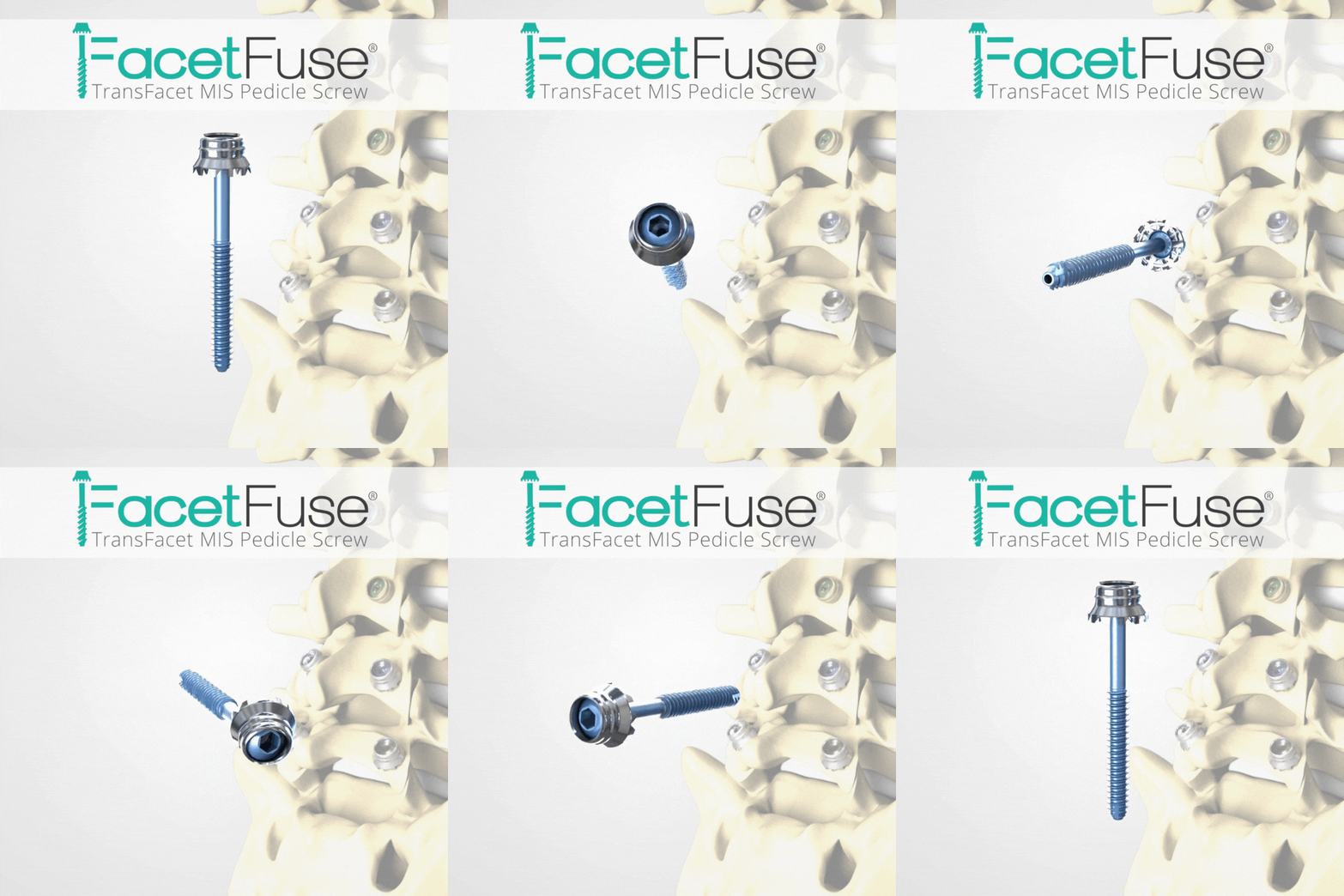
In some patients, decompression alone may not provide enough stability. InSpan alone may be enough for selected cases, but other cases benefit from additional stabilization across the facet joints.
FacetFuse may be considered when there is concern for:
- Facet degeneration contributing to mechanical instability
- Low-grade degenerative spondylolisthesis
- Rotational or posterior-column instability
- Mechanical back pain associated with facet arthropathy and instability
- Additional stabilization after decompression
- A need to reinforce a minimally invasive fusion construct
- A desire to avoid a larger pedicle screw construct when anatomy allows a smaller strategy
This does not mean every patient undergoing InSpan needs FacetFuse. It means the stabilization strategy should be tailored to the patient’s anatomy and mechanical problem.
InSpan and FacetFuse Stabilize Different Posterior Pathways
- InSpan: stabilizes through the spinous process and interspinous pathway.
- FacetFuse: stabilizes through the facet joint pathway.
- Pedicle screws: stabilize through the pedicle and vertebral body pathway.
- Bone graft: supports the biologic fusion goal. We do not perform these procedures as hardware-only shortcuts.
FacetFuse With InSpan
InSpan is an interspinous fixation device. It works through the midline spinous-process pathway and can be paired with direct decompression and bone graft-supported fusion in selected patients.
FacetFuse works differently. It provides stabilization across the facet joint pathway. In selected cases, adding FacetFuse can provide more posterior stabilization than an interspinous construct alone.
We may consider adding FacetFuse to an InSpan-based construct when the anatomy suggests that the treated level needs more support, especially if facet degeneration, rotational stress, decompression-related destabilization, or low-grade instability is part of the clinical picture.
This is not device stacking for sport. It is construct planning. Some patients need decompression alone. Some need InSpan with bone graft. Some may benefit from InSpan plus FacetFuse with bone graft. Others need pedicle screws, interbody fusion, or a more traditional spine surgery approach.
FacetFuse vs. Pedicle Screws
Pedicle screw fixation remains the stronger and more established posterior fixation strategy for many spine problems. It is often the better choice for high-grade instability, deformity, multilevel disease, revision surgery, poor posterior elements, or cases requiring stronger vertebral fixation.
FacetFuse may be attractive in selected cases because it can add stabilization through a smaller posterior pathway. It may involve less tissue disruption than traditional pedicle screw and rod constructs, but it should not be presented as universally stronger or universally better.
| Construct | Main Stabilization Pathway | Where It May Fit |
|---|---|---|
| Decompression Alone | No fusion construct | Stenosis without meaningful instability when the decompression itself does not create instability. |
| InSpan With Bone Graft | Spinous process / interspinous fixation pathway | Selected stenosis or low-grade instability cases where midline fixation with bone graft-supported fusion is appropriate. |
| FacetFuse With Bone Graft | Facet joint fixation pathway | Selected cases where additional stabilization across the facet joints is desirable. |
| InSpan + FacetFuse With Bone Graft | Spinous process pathway plus facet joint pathway | Selected patients where decompression plus interspinous fixation may benefit from additional facet-based stabilization. |
| Pedicle Screw Fusion | Pedicle and vertebral body fixation pathway | Higher-grade instability, deformity, revision complexity, multilevel disease, or cases requiring stronger traditional fixation. |
FacetFuse Is Not a Facet Injection or RFA
The word “facet” can cause confusion. Facet injections, medial branch blocks, radiofrequency ablation, and FacetFuse are very different treatments.
| Treatment | Target | Purpose |
|---|---|---|
| Facet Injection | Facet joint | Reduce inflammation or help diagnose joint-related pain. |
| Medial Branch Block | Small nerves that supply the facet joints | Diagnose facet-mediated pain before possible RFA. |
| Radiofrequency Ablation | Medial branch nerves | Reduce pain signaling from arthritic facet joints without fusing the spine. |
| FacetFuse | Facet joint fixation pathway with bone graft-supported fusion strategy | Stabilize the facet joint pathway in selected fusion or stabilization cases. |
FacetFuse is not a pain injection. It is a surgical stabilization tool. That difference matters.
When FacetFuse May Be Considered
FacetFuse may be considered when the clinical problem involves both nerve compression or spinal stenosis and a need for additional posterior stabilization across the facet joints.
Possible scenarios include:
- Selected low-grade degenerative spondylolisthesis
- Facet degeneration with mechanical instability
- Stenosis requiring decompression where added posterior stabilization is desirable
- Selected cases paired with InSpan when more stabilization is needed
- Selected degenerative disc disease with facet-based instability features
- Mechanical back pain with imaging-supported instability when fusion is being considered
- Patients where a less invasive construct may be appropriate compared with full pedicle screw fixation
Who May Not Be a Good Candidate?
FacetFuse is not appropriate for every patient with back pain, facet arthritis, stenosis, or instability.
Patients may not be good candidates when there is:
- High-grade spondylolisthesis
- Major instability requiring stronger fixation
- Severe scoliosis or deformity
- Severe osteoporosis or poor bone purchase
- Facet anatomy that does not support safe fixation
- Prior surgery that significantly disrupts the target anatomy
- Infection, tumor, fracture, or urgent neurologic compression
- Severe multilevel disease where a limited construct does not match the problem
- Symptoms that do not match imaging or mechanical findings
- Pure facet pain that may be better treated with medial branch blocks or RFA rather than fusion
Not Every Arthritic Facet Needs Fusion
Facet arthritis is common on MRI. FacetFuse is considered only when the clinical picture supports stabilization and fusion, not simply because a facet joint looks worn on imaging.
Bone Graft Matters
Facet fixation is not just about placing screws. Fusion requires biology. That is why bone graft is part of our approach when we use FacetFuse.
Bone graft helps support the goal of bony fusion across the intended spinal segment. Hardware can hold the spine while healing occurs, but hardware alone does not create the final fusion mass. The long-term goal is a stable fusion, not simply a stable X-ray on day one.
Fusion success depends on several factors, including bone quality, smoking status, diabetes control, nutrition, surgical technique, stability of the construct, graft biology, and postoperative compliance.
Hardware Holds. Bone Graft Heals.
FacetFuse provides fixation. Bone graft supports fusion. Both parts matter if the surgical goal is true stabilization over time.
How the Procedure Works
The exact surgical plan depends on the patient’s anatomy, diagnosis, decompression plan, and whether FacetFuse is being combined with another stabilization device such as InSpan.
In general, the level is confirmed with fluoroscopy. The facet joint region is identified. When fusion is intended, the joint surface is prepared and bone graft is used as part of the fusion strategy. Facet fixation is then placed across the facet joint pathway to provide compression and stability.
If FacetFuse is combined with InSpan, the goal is to stabilize both the interspinous and facet pathways. If decompression is performed, the compressive anatomy is addressed first or as part of the same surgical plan.
The sequence is tailored to the patient. The principle is consistent: decompress when needed, stabilize when needed, and graft when fusion is intended.
Potential Benefits
In carefully selected patients, FacetFuse may offer several potential advantages as part of a minimally invasive stabilization strategy.
- Additional posterior stabilization across the facet joint pathway
- Less tissue disruption than larger open fusion constructs in selected patients
- Compatibility with bone graft-supported fusion strategy
- Potential pairing with InSpan for additional stabilization
- May reduce the need for a larger pedicle screw construct in carefully selected anatomy
- May preserve future surgical options if a larger operation becomes necessary later
- Useful when the facet joint pathway is part of the instability problem
Risks and Limitations
FacetFuse is still spine surgery. A smaller construct does not mean zero risk.
Possible risks and limitations include:
- Infection
- Bleeding or hematoma
- Nerve injury
- Dural tear or spinal fluid leak
- Persistent back or leg pain
- Failure to improve symptoms
- Hardware loosening, malposition, backout, or failure
- Facet fracture or poor fixation
- Nonunion or incomplete fusion
- Adjacent segment degeneration over time
- Need for revision surgery
- Need for conversion to pedicle screw fixation or larger fusion in some cases
The risk profile depends on anatomy, bone quality, surgical level, prior surgery, medical comorbidities, and whether additional decompression or devices are used.
What the Evidence Says
Biomechanical studies of transfacet fixation, including FacetFuse-related cadaveric work, suggest that facet-based fixation can provide meaningful immediate stability in selected models. However, biomechanical testing is not the same as long-term clinical proof.
This is why we do not describe FacetFuse as a universal replacement for pedicle screws. It is a minimally invasive stabilization option that may fit selected cases when the anatomy, bone quality, and mechanical goals are appropriate.
How We Choose the Construct
We choose the construct based on the patient’s problem, not on device loyalty. The decision is made after reviewing symptoms, examination findings, imaging, instability, stenosis pattern, bone quality, and surgical goals.
Before recommending FacetFuse, we consider:
- Is the main problem stenosis, instability, facet-mediated pain, disc degeneration, or a combination?
- Does the patient need direct decompression?
- Would decompression alone be enough?
- Would InSpan with bone graft be enough?
- Is additional facet stabilization needed?
- Is the bone quality adequate?
- Is the facet anatomy suitable?
- Would pedicle screws or interbody fusion be more appropriate?
- Is the patient medically appropriate for outpatient or minimally invasive surgery?
Questions to Ask Before FacetFuse
- Why is facet fixation being considered in my case?
- Is my pain from facet arthritis, spinal stenosis, instability, disc disease, or another source?
- Will this be combined with InSpan or another stabilization device?
- Will bone graft be used?
- Do I need direct decompression?
- Why is this preferred over decompression alone?
- Why is this preferred over pedicle screw fusion?
- Is my bone quality strong enough for this construct?
- What are the chances I may need a larger fusion later?
- What restrictions will I have after surgery?
- What result would count as success?
Dr. Amit Sharma & our minimally invasive pain & spine team.
Frequently Asked Questions About FacetFuse
What is FacetFuse?
FacetFuse is a facet fixation option used in selected lumbar spine cases when stabilizing across the facet joint pathway is part of the surgical plan.
Do you use FacetFuse by itself?
At SpinePain Solutions, we generally do not use FacetFuse as a casual stand-alone procedure. We use it selectively as part of a broader stabilization and fusion strategy, often when additional facet-based support is desired.
Do you use bone graft with FacetFuse?
Yes. When we use FacetFuse as part of a fusion strategy, bone graft is part of the plan. Hardware provides fixation, while bone graft supports the biology of fusion.
How is FacetFuse different from InSpan?
InSpan stabilizes through the spinous process and interspinous pathway. FacetFuse stabilizes across the facet joint pathway. In selected cases, the two may be used together when more posterior stabilization is desired.
How is FacetFuse different from pedicle screws?
Pedicle screws stabilize through the pedicle and vertebral body pathway and are generally stronger for complex instability, deformity, revision surgery, and multilevel disease. FacetFuse may be less invasive but is not appropriate for every case.
Is FacetFuse the same as a facet injection?
No. Facet injections and medial branch blocks are pain procedures. FacetFuse is a surgical fixation and fusion tool.
Is FacetFuse the same as radiofrequency ablation?
No. Radiofrequency ablation treats pain signaling from facet joints by targeting medial branch nerves. FacetFuse is used when stabilization and fusion are being considered.
Who may be a candidate?
Selected patients with low-grade instability, facet degeneration with mechanical instability, stenosis requiring decompression and stabilization, or cases where additional posterior support is desired may be considered.
Who may not be a good candidate?
Patients with high-grade instability, severe osteoporosis, poor facet anatomy, major deformity, severe multilevel disease, infection, tumor, fracture, or symptoms that do not match imaging may not be good candidates.
Can FacetFuse be combined with InSpan?
Yes. In selected cases, FacetFuse may be combined with InSpan when both interspinous and facet-based stabilization are desired.
Does FacetFuse guarantee fusion?
No device guarantees fusion. Fusion depends on bone graft, stability, biology, bone quality, smoking status, diabetes control, nutrition, surgical technique, and postoperative healing.
Can I still need a larger surgery later?
Yes. Some patients may later require revision surgery, pedicle screw fixation, interbody fusion, or a larger decompression if symptoms persist, instability progresses, or fusion does not occur.
Key Takeaways
- FacetFuse is a facet fixation tool used in selected lumbar fusion and stabilization cases.
- At SpinePain Solutions, we do not use it as a casual stand-alone procedure.
- Bone graft is part of our FacetFuse fusion strategy.
- FacetFuse stabilizes through the facet joint pathway.
- InSpan stabilizes through the spinous process and interspinous pathway.
- In selected cases, InSpan and FacetFuse may be used together for added posterior stabilization.
- FacetFuse is not the same as facet injection, medial branch block, or radiofrequency ablation.
- Pedicle screw fusion remains the stronger choice for many complex instability, deformity, revision, and multilevel cases.
- Patient selection matters more than device selection.
- The goal is not smaller surgery at any cost. The goal is the right-sized construct for the actual spine problem.
Does Your Spine Need Added Facet Stabilization?
FacetFuse may help selected patients when additional stabilization across the facet joints is needed as part of a fusion strategy.
At SpinePain Solutions, we evaluate whether decompression alone, InSpan with bone graft, InSpan plus FacetFuse, pedicle screw fusion, or non-surgical care is the most appropriate path.
External Resources
- FacetFuse Patient and Physician Information
- FacetFuse Technology Overview
- Journal of Spine Surgery: FacetFuse Biomechanical Comparison Study
Internal Resources
This article is intended for educational purposes only and should not replace individualized medical advice. Lumbar spinal stenosis, degenerative disc disease, facet arthritis, spondylolisthesis, instability, back pain, leg pain, and spine surgery decisions can have multiple causes and treatment pathways. Treatment decisions should be based on a complete history, physical examination, imaging, diagnosis, risks, benefits, alternatives, bone quality, surgical goals, and a discussion with your physician.