
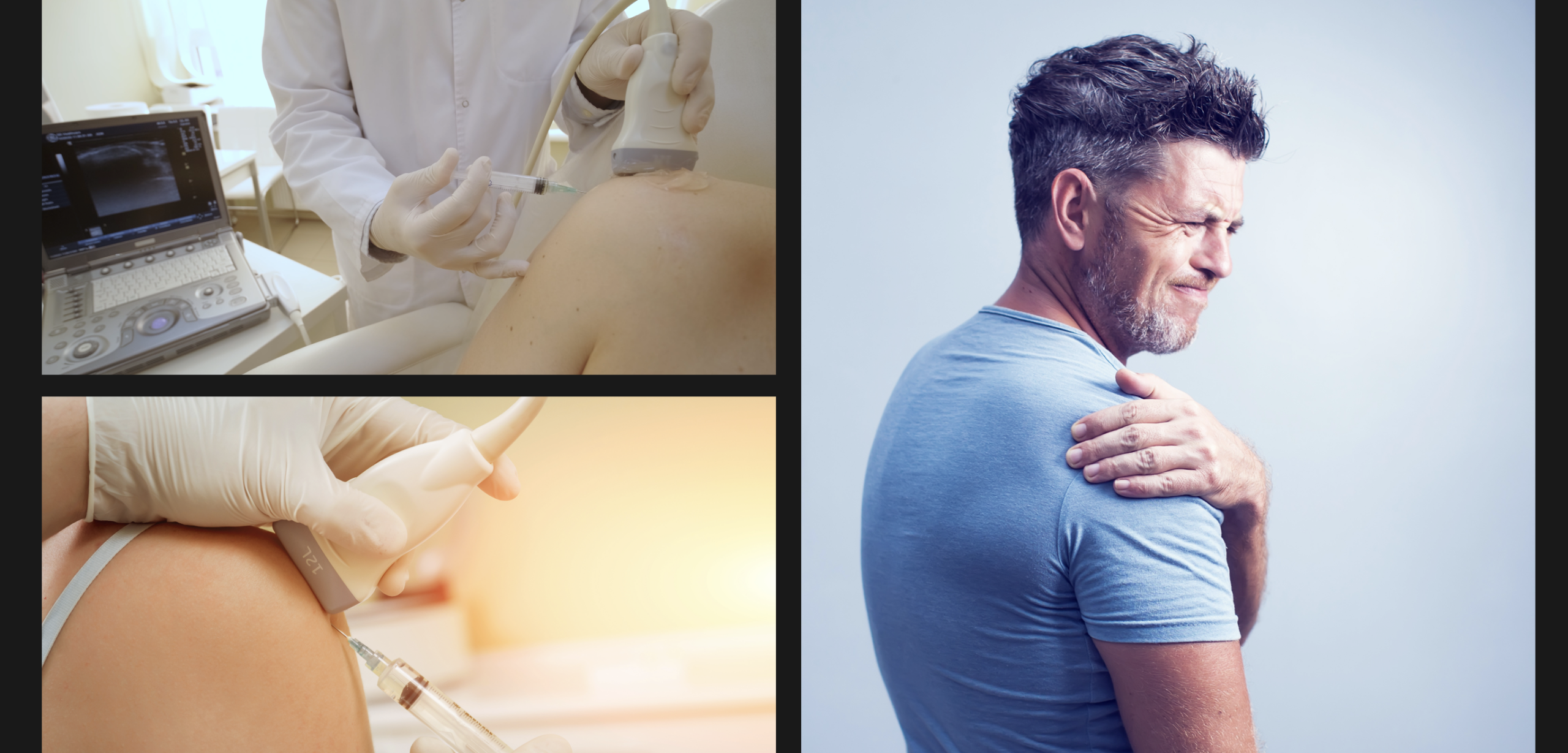
PRP for Rotator Cuff Injuries: Does It Work?
PRP for Rotator Cuff Injuries: Does It Work?
PRP for rotator cuff injuries is one of the most common reasons patients ask about regenerative medicine for shoulder pain. The rotator cuff is a group of tendons that helps lift, rotate, and stabilize the shoulder. When these tendons become inflamed, degenerated, or partially torn, even simple movements such as reaching overhead, sleeping on your side, putting on a jacket, or lifting a bag can become painful.
Platelet-Rich Plasma, or PRP, uses a concentrated preparation of your own platelets to support the body’s natural healing response. For selected shoulder conditions, PRP may help reduce pain, improve function, and support tendon recovery over time. It is most often considered for rotator cuff tendinopathy, chronic tendon degeneration, and partial-thickness rotator cuff tears.
PRP is not a magic repair glue. It cannot reliably reconnect a large full-thickness tendon tear that has pulled away from the bone. It cannot reverse severe shoulder arthritis or fix major structural instability. The key is matching the treatment to the actual shoulder problem.
The most important question is not simply whether PRP works for shoulder pain. The better question is: what exactly is causing your shoulder pain, and is the injured tendon still capable of healing?
Quick Answer: PRP for Rotator Cuff Injuries
- Best candidates: Rotator cuff tendinopathy, chronic tendon irritation, and partial-thickness rotator cuff tears.
- Less predictable results: Large full-thickness tears, tendon retraction, severe weakness, or advanced shoulder arthritis.
- Typical improvement: Gradual reduction in pain and improved shoulder function over several weeks to months.
- Not a surgical replacement: PRP may support tendon healing, but it cannot reliably repair a completely detached tendon.
- Most important step: Accurate diagnosis with exam and imaging before deciding whether PRP makes sense.
- Best approach: Image-guided injection, proper rehabilitation, realistic expectations, and careful follow-up.
What Is the Rotator Cuff?
The rotator cuff is made of four muscles and tendons that surround the shoulder joint. These tendons help keep the ball of the upper arm bone centered in the shoulder socket while allowing the arm to lift, rotate, and reach in different directions.
The four rotator cuff tendons are:
- Supraspinatus: commonly involved in shoulder impingement, tendinopathy, and tears.
- Infraspinatus: helps with external rotation of the shoulder.
- Teres minor: assists with rotation and shoulder stability.
- Subscapularis: helps rotate the arm inward and stabilize the front of the shoulder.
The supraspinatus tendon is especially vulnerable because it passes through a narrow space beneath the acromion, a bone at the top of the shoulder. Over time, repetitive overhead activity, age-related tendon degeneration, poor shoulder mechanics, trauma, or reduced tendon blood supply can contribute to pain and tearing.
Rotator cuff problems exist on a spectrum. A patient may have mild tendon irritation, chronic tendinosis, bursitis, a partial-thickness tear, a full-thickness tear, or a massive tear with tendon retraction. PRP may be reasonable for some of these problems, but not all of them.
Why Shoulder Pain Can Be Confusing
Shoulder pain is often more complicated than it first appears. Many patients are told they have a rotator cuff tear on MRI, but that tear may not be the only source of pain. Others have significant pain even when imaging shows only mild tendon changes.
Pain around the shoulder may come from several different structures, including:
- The rotator cuff tendons
- The subacromial bursa
- The biceps tendon
- The acromioclavicular joint
- The glenohumeral shoulder joint
- The labrum
- The cervical spine
- Nerves traveling from the neck into the arm
This is why diagnosis matters so much. A PRP injection into the rotator cuff tendon is unlikely to help if the main pain source is actually the neck, a frozen shoulder, severe arthritis, or nerve irritation. Before considering PRP, the true pain generator must be identified as carefully as possible.
A Common Mistake
Seeing a rotator cuff tear on MRI does not automatically mean the tear is responsible for all shoulder pain. Imaging findings must match the patient’s symptoms, physical examination, weakness pattern, and functional limitations. Treating the MRI instead of the patient is one of the easiest ways for any procedure, including PRP, to disappoint.
How Might PRP Help Rotator Cuff Tendon Pain?
Rotator cuff tendon pain is often not just inflammation. In many patients, the tendon has become chronically irritated, thickened, weakened, or partially damaged over time. This process is commonly called rotator cuff tendinopathy or tendinosis.
Tendons have a relatively limited blood supply compared with many other tissues. Because of this, healing can be slow and incomplete, especially when the tendon is repeatedly stressed by overhead activity, poor shoulder mechanics, aging, trauma, or chronic impingement.
Platelet-Rich Plasma, or PRP, may help by delivering a concentrated preparation of the patient’s own platelets directly to the injured tendon or surrounding painful tissue. These platelets release growth factors and signaling molecules that may help support collagen remodeling, regulate inflammation, and improve the biological environment for tendon healing.
PRP does not work like a painkiller. It does not simply numb the shoulder. It also does not work like a cortisone injection, which primarily suppresses inflammation. Instead, PRP attempts to support the tendon’s own repair process over time.
For a deeper explanation of how PRP is prepared and how platelets release healing signals, see our Complete Guide to Platelet-Rich Plasma (PRP) Injection.
The Key Idea
PRP is most useful when the tendon is irritated, weakened, or partially damaged but still has the potential to heal. It is less predictable when the tendon is completely torn, retracted, or structurally unable to repair itself without surgery.
Which Rotator Cuff Problems May Respond to PRP?
Not all rotator cuff injuries are the same. The term “rotator cuff problem” can describe several different conditions, each with a different likelihood of responding to PRP.
| Rotator Cuff Condition | PRP Response | Why It Matters |
|---|---|---|
| Rotator Cuff Tendinopathy | Often reasonable | The tendon is irritated or degenerative but not fully torn, which may allow a biologic treatment to support healing. |
| Partial-Thickness Tear | May be helpful in selected patients | Some tendon fibers remain intact, so PRP may support healing and reduce pain when surgery is not yet necessary. |
| Small Full-Thickness Tear | Variable | PRP may help symptoms in some cases, but structural healing is less predictable and surgical opinion may be appropriate. |
| Large Full-Thickness Tear | Less predictable | When the tendon is detached or retracted, PRP alone is unlikely to restore normal anatomy. |
| Massive Tear with Retraction or Severe Weakness | Usually poor candidate | The problem is often mechanical and structural rather than primarily biological. |
What Does the Research Show for PRP and Rotator Cuff Injuries?
The research on PRP for rotator cuff injuries is promising but still evolving. Some studies show improvement in pain and function, especially for rotator cuff tendinopathy and partial-thickness tears. Other studies show more modest results, particularly when patient selection, PRP preparation, or injection technique varies.
This is not surprising because “rotator cuff injury” is a broad term. A patient with chronic tendinosis is very different from a patient with a large full-thickness tear. A patient with shoulder pain from the neck is different from a patient with a true supraspinatus tendon injury. Even the location of the injection matters, because PRP may be placed into the tendon, around the tendon, into the bursa, or used during surgical repair depending on the clinical situation.
In general, PRP appears most reasonable when the goal is to support a healing tendon that is irritated, degenerative, or partially torn. It is less reliable when the goal is to repair a large structural tear that has already separated from the bone.
Why Studies Do Not Always Agree
PRP research can be difficult to interpret because studies often use different PRP systems, different platelet concentrations, different injection locations, different rehabilitation plans, and different definitions of rotator cuff disease. This is why the decision should not be based on the word “PRP” alone. The diagnosis, tear pattern, tendon quality, and technique all matter.
Who Is the Best Candidate for PRP for Rotator Cuff Pain?
The best candidates for PRP are usually patients whose rotator cuff problem is painful and persistent, but not so advanced that the tendon has completely failed mechanically.
In general, PRP is most often considered when shoulder pain has continued despite appropriate conservative treatment, such as activity modification, physical therapy, anti-inflammatory medication when medically appropriate, or a previous injection. The tendon should still have enough remaining structure to respond to a biologic healing signal.
Patients Who Often Do Well
- Rotator cuff tendinopathy or tendinosis
- Chronic supraspinatus tendon pain
- Partial-thickness rotator cuff tears
- Persistent shoulder pain despite physical therapy
- Patients who want to avoid repeated steroid injections
- Patients with pain during lifting, reaching, or sleeping on the affected side
- Active adults who want to preserve shoulder function
- Patients who understand that improvement is gradual rather than immediate
- Patients willing to participate in rehabilitation after treatment
Patients Who May Still Be Considered
Some patients are not perfect candidates but may still reasonably consider PRP after a careful discussion of expectations.
- Small full-thickness tears without major retraction
- Older adults with degenerative tendon changes
- Patients who are not surgical candidates
- Patients who want to delay surgery if medically reasonable
- Patients with persistent pain after a prior shoulder injection
- Patients with mixed bursitis and tendon irritation
In these situations, PRP may still help pain and function, but the likelihood of structural tendon healing is less predictable.
Who May Not Be a Good Candidate?
PRP is not the right treatment for every shoulder problem. In some cases, the tendon injury is too advanced for a biologic injection to provide a reliable solution.
- Large full-thickness rotator cuff tears
- Massive tears with tendon retraction
- Severe shoulder weakness from tendon detachment
- Advanced shoulder arthritis
- Frozen shoulder as the primary diagnosis
- Major traumatic injury requiring urgent surgical evaluation
- Severe loss of shoulder function
- Active infection
- Severe platelet or bleeding disorders
- Patients expecting immediate pain relief within a few days
- Patients expecting PRP to reconnect a completely detached tendon
When Surgery May Be the Better Option
If a rotator cuff tendon is completely torn, significantly retracted, or causing major weakness, a surgical opinion may be more appropriate than relying on PRP alone. PRP can support biology, but it cannot reliably restore normal shoulder anatomy when the tendon has mechanically failed.
PRP vs. Cortisone Injection for Rotator Cuff Pain
Cortisone injections and PRP injections are often discussed together because both may be used for shoulder pain. However, they work in very different ways.
A cortisone injection is primarily an anti-inflammatory treatment. It may reduce pain quickly, especially when bursitis or inflammation is a major contributor. PRP works more slowly because it attempts to support tendon healing and tissue remodeling rather than simply suppress inflammation.
| Feature | PRP Injection | Cortisone Injection |
|---|---|---|
| Main Goal | Support tendon healing and remodeling | Reduce inflammation quickly |
| Onset of Relief | Gradual, often weeks | Often days |
| Best For | Tendinopathy, chronic tendon degeneration, partial tears | Inflammatory flare-ups, bursitis, short-term symptom control |
| Healing Potential | Higher biologic healing intent | Primarily symptom suppression |
| Main Limitation | Does not work instantly and cannot reliably repair a detached tendon | Does not rebuild tendon tissue and may be less desirable when repeated frequently |
For some patients, cortisone is the right treatment, especially when short-term inflammation control is the priority. For others, particularly those with chronic tendon degeneration or partial tearing, PRP may be a more biologically appealing option.
PRP vs. Rotator Cuff Surgery
PRP and surgery are not interchangeable treatments. They are usually considered for different stages of rotator cuff disease.
PRP may be considered when the tendon is irritated, degenerative, or partially torn and still has enough structure to function. Surgery is usually considered when the tear is large, full-thickness, retracted, traumatic, or associated with significant weakness and loss of function.
| Treatment | Best Stage | Main Benefit | Main Limitation |
|---|---|---|---|
| PRP Injection | Tendinopathy or partial-thickness tear | May reduce pain and support tendon healing without surgery | Cannot reliably reconnect a fully detached tendon |
| Rotator Cuff Surgery | Large tear, traumatic tear, retraction, or significant weakness | Can mechanically repair the torn tendon | Requires surgery, anesthesia, rehabilitation, and recovery time |
The goal is not to avoid surgery at all costs. The goal is to identify whether the shoulder still has a reasonable nonsurgical window, or whether structural repair offers a better chance of restoring function.
What Happens During PRP for Rotator Cuff Pain?
PRP for rotator cuff pain is usually performed as an outpatient procedure. The exact technique depends on the diagnosis, the location of tendon injury, and whether the target is the tendon itself, the area around the tendon, the subacromial bursa, or another nearby pain generator.
Step 1: Confirming the Diagnosis
Before recommending PRP, we first confirm that the rotator cuff is truly the main source of pain. This usually involves a detailed history, physical examination, and review of imaging studies such as MRI, ultrasound, or X-rays.
This step is especially important because shoulder pain can come from many different places. A patient may have rotator cuff changes on MRI but actually be suffering from neck-related nerve pain, frozen shoulder, biceps tendon irritation, arthritis, or AC joint pain.
Step 2: Blood Draw
A small sample of blood is drawn from your arm, similar to a routine laboratory blood test. The amount collected depends on the PRP system used and the volume needed for treatment.
Step 3: PRP Preparation
The blood is processed in a centrifuge to separate and concentrate the platelet-rich portion. The goal is to create a preparation rich in platelets and growth factors that may support tendon healing and tissue remodeling.
Step 4: Image-Guided Injection
The shoulder is cleaned using sterile technique. PRP is then injected into the targeted region using ultrasound guidance when appropriate. Ultrasound allows the physician to visualize the rotator cuff tendon, surrounding bursa, and needle position in real time.
For rotator cuff conditions, image guidance can be especially valuable because the shoulder contains multiple nearby structures that can produce similar pain. Accurate placement helps ensure that the PRP reaches the intended target rather than being injected blindly into a general painful area.
Step 5: Going Home
Most patients go home shortly after the procedure. Sedation is usually not required, although patients who are very needle-phobic can discuss comfort options before treatment.
Why Image Guidance Matters
The rotator cuff is not one single structure. It is a group of tendons surrounded by the bursa, biceps tendon, shoulder joint, AC joint, and nearby nerves. Image guidance helps identify the exact treatment target and improves the accuracy of needle placement.
How Many PRP Injections Are Needed for Rotator Cuff Pain?
The number of PRP injections needed depends on the diagnosis, severity of tendon injury, treatment goals, and response to the first injection.
Some patients with rotator cuff tendinopathy or a partial-thickness tear may improve after one injection. Others may require a series of injections, especially when symptoms are chronic or tendon degeneration is more advanced. There is no single protocol that applies to every shoulder.
| Shoulder Condition | Common Approach | Important Note |
|---|---|---|
| Rotator Cuff Tendinopathy | Often begins with one injection | Response is monitored over several weeks to months. |
| Partial-Thickness Tear | May require one injection or a series | Tear depth, tendon quality, and symptoms influence the plan. |
| Small Full-Thickness Tear | Case-by-case decision | Surgical consultation may be appropriate depending on weakness, activity level, and tear pattern. |
| Large or Retracted Tear | Usually not ideal for PRP alone | Mechanical repair may be more appropriate when the tendon has separated significantly. |
PRP should not be repeated automatically. If there is no meaningful improvement after an appropriate healing period, the diagnosis, tear pattern, rehabilitation plan, and treatment options should be reconsidered before additional injections are performed.
Recovery After PRP for Rotator Cuff Injury
Recovery after PRP for rotator cuff pain is usually gradual. Because PRP is intended to stimulate a healing response, soreness after the injection is common. This is different from a cortisone injection, where patients may expect rapid anti-inflammatory relief within days.
The First Few Days
Temporary soreness, stiffness, aching, or increased shoulder pain can occur during the first several days. This does not necessarily mean the treatment has failed. In many cases, early soreness reflects the beginning of the inflammatory and healing response.
First One to Two Weeks
Most patients are able to use the arm for light daily activities, but heavy lifting, overhead activity, forceful pushing or pulling, and aggressive exercise are usually limited. The exact restrictions depend on the severity of the tendon injury and the treatment target.
Weeks Two to Six
Many patients begin noticing gradual improvement during this period. Sleeping on the affected side may become easier, reaching may become less painful, and daily shoulder use may improve. Progress is often uneven, with better days and worse days along the way.
Two to Six Months
Tendon remodeling may continue for several months. For chronic tendinopathy and partial tears, the goal is not simply short-term pain relief, but better tendon function over time. Rehabilitation often plays a major role in this phase.
Physical Therapy Still Matters
PRP may help improve the biological environment of an injured tendon, but it does not automatically correct shoulder mechanics. Strengthening the rotator cuff, improving scapular control, restoring mobility, and gradually rebuilding load tolerance are often essential for the best long-term result.
Risks and Side Effects of PRP for Rotator Cuff Pain
PRP is generally considered low risk because it is prepared from your own blood. However, every injection has potential risks.
- Temporary shoulder soreness
- Pain flare during the first several days
- Bruising or minor bleeding
- Swelling or stiffness
- Infection, which is rare
- Temporary limitation in shoulder activity
- Failure to improve
- Need for additional treatment if symptoms persist
Serious complications are uncommon. Risk can be reduced with appropriate patient selection, sterile technique, careful imaging review, and accurate injection placement.
Does Insurance Cover PRP for Rotator Cuff Injuries?
Most insurance plans, including Medicare, do not routinely cover PRP for rotator cuff tendinopathy or partial-thickness rotator cuff tears. This can be frustrating because many patients are trying to avoid surgery or repeated steroid injections.
Insurance coverage remains limited because PRP is not fully standardized. Different preparation systems, platelet concentrations, injection locations, and rehabilitation protocols make it difficult for insurers to treat PRP as one uniform therapy.
Before choosing PRP, patients should understand the expected cost, the number of injections being considered, and the available alternatives. PRP should be selected because it fits the diagnosis and treatment goals, not because it is marketed as a universal solution for shoulder pain.
Can PRP Heal a Rotator Cuff Tear?
This is one of the most important questions patients ask about PRP for shoulder pain.
PRP may help some rotator cuff tendon injuries heal better, but it should not be described as a guaranteed way to repair every rotator cuff tear.
For rotator cuff tendinopathy and partial-thickness tears, PRP may help reduce pain, support tendon remodeling, and improve function over time. These are the situations where the tendon still has enough remaining structure to respond to a biological healing signal.
A large full-thickness tear is different. If the tendon has completely detached from the bone, pulled back, or caused major weakness, PRP alone is unlikely to restore normal anatomy. In that setting, the problem is often mechanical rather than purely biological, and surgical evaluation may be appropriate.
The Honest Answer
PRP may be very reasonable for tendon degeneration, chronic rotator cuff irritation, and selected partial tears. It is much less reliable when the tendon is fully torn, retracted, or no longer mechanically functional. The MRI findings, strength exam, pain pattern, and functional limitations all matter.
Frequently Asked Questions About PRP for Rotator Cuff Injuries
How long does PRP take to work for rotator cuff pain?
PRP usually works gradually. Many patients begin noticing improvement within several weeks, but more meaningful improvement often develops between 6 weeks and 3 months. Tendon remodeling may continue for several months.
Is PRP painful in the shoulder?
Most patients tolerate the procedure well. There may be pressure or brief discomfort during the injection, followed by soreness for several days. Temporary pain flare is common and does not necessarily mean the treatment failed.
Can I use my arm after PRP?
Most patients can use the arm for light daily activities after treatment. Heavy lifting, overhead activity, forceful pushing or pulling, and aggressive exercise are usually limited early in recovery.
Can I drive home after shoulder PRP?
Many patients can drive home after a routine shoulder PRP injection if sedation is not used. If you are very sore, anxious, or receive sedating medication, transportation should be arranged.
How many PRP injections are needed for a rotator cuff injury?
Some patients improve after one injection. Others may benefit from a series, depending on the severity of tendon injury, chronicity of symptoms, and response to the first treatment.
Is PRP better than cortisone for rotator cuff pain?
PRP and cortisone work differently. Cortisone may provide faster short-term relief by reducing inflammation. PRP usually works more slowly and is intended to support tendon healing and remodeling. The better option depends on the diagnosis and treatment goals.
Can PRP avoid rotator cuff surgery?
PRP may help some patients avoid or delay surgery, especially when the problem is tendinopathy or a partial-thickness tear. It is less likely to replace surgery when there is a large full-thickness tear, tendon retraction, or significant weakness.
Does PRP work for shoulder bursitis?
PRP is usually considered for tendon-related problems rather than simple bursitis alone. If inflammation in the bursa is the primary issue, other treatments may be more appropriate. If bursitis occurs along with rotator cuff tendinopathy, PRP may still be discussed depending on the overall picture.
Does PRP help a partial rotator cuff tear?
PRP may be helpful for selected partial-thickness tears, especially when the tendon still has good structural integrity and the goal is to reduce pain, improve function, and support healing.
Does PRP help a full-thickness rotator cuff tear?
Results are less predictable. Small full-thickness tears may be considered on a case-by-case basis, but large, retracted, or traumatic tears often require surgical-level decision-making.
Should I do physical therapy after PRP?
In many cases, yes. PRP may improve the biological environment of the tendon, but rehabilitation helps restore shoulder mechanics, strength, flexibility, and load tolerance. Physical therapy is often an important part of achieving the best outcome.
Is PRP covered by insurance for rotator cuff injuries?
Most insurance plans, including Medicare, do not routinely cover PRP for rotator cuff tendinopathy or partial-thickness tears. Patients should understand expected costs before treatment.
What happens if PRP does not work?
If PRP does not provide meaningful improvement after an appropriate healing period, the diagnosis and treatment plan should be reconsidered. Other options may include physical therapy, medication, cortisone injection, further imaging, orthopedic consultation, or surgery depending on the tear pattern and symptoms.
Dr. Sharma’s Perspective
Rotator cuff pain is one of the areas where regenerative medicine requires careful judgment. Many patients are told they have a “rotator cuff tear,” but that phrase can mean very different things. A degenerative tendon, a small partial tear, a painful bursa, and a large retracted full-thickness tear are not the same condition.
In my experience, PRP is most useful when the tendon is painful, irritated, degenerative, or partially torn but still has enough structural integrity to heal. These are the patients who may benefit from improving the biological environment of the tendon while also correcting shoulder mechanics through rehabilitation.
When the tendon is completely detached, significantly retracted, or causing major weakness, the discussion changes. In those cases, PRP may not be enough because the problem is no longer just inflammation or poor healing. It is a structural failure.
The goal is not to inject PRP into every painful shoulder. The goal is to determine whether the patient’s specific shoulder problem has a reasonable chance of responding to a regenerative approach. When the diagnosis, imaging, physical exam, injection technique, and rehabilitation plan all fit together, PRP can be a valuable option for selected rotator cuff injuries.
Key Takeaways
- PRP is most commonly considered for rotator cuff tendinopathy, chronic tendon degeneration, and partial-thickness tears.
- PRP is less predictable for large full-thickness tears, tendon retraction, severe weakness, or advanced shoulder arthritis.
- Improvement is usually gradual and may continue for several months.
- PRP is not a guaranteed way to reconnect a completely torn tendon.
- Accurate diagnosis is essential because shoulder pain can also come from the neck, biceps tendon, AC joint, frozen shoulder, arthritis, or nerve irritation.
- Image guidance helps ensure that PRP is delivered to the intended target.
- Rehabilitation remains important because PRP does not automatically correct shoulder mechanics.
Wondering Whether PRP Can Help Your Shoulder Pain?
Rotator cuff pain can come from tendon irritation, partial tearing, bursitis, arthritis, neck-related nerve pain, or several overlapping problems. The right treatment depends on identifying the true source of pain.
At SpinePain Solutions, we review your symptoms, examination findings, and imaging before recommending PRP or any other treatment. Our goal is to help you understand whether regenerative medicine, rehabilitation, another injection, or surgical consultation makes the most sense for your shoulder.
This article is intended for educational purposes only and should not replace an individualized medical evaluation. Treatment recommendations should always be based on a complete history, physical examination, appropriate imaging, and a discussion between you and your physician.