
PRP for Arthritis: Joint Injections, Benefits, Risks, Recovery & Evidence
Arthritis can gradually transform ordinary activities such as walking, climbing stairs, exercising, gripping objects, or getting out of a chair into persistent sources of pain. Exercise, physical therapy, weight management, medications, bracing, corticosteroid injections, and hyaluronic acid injections may help, but some patients continue to experience symptoms or wish to explore a treatment made from their own blood.
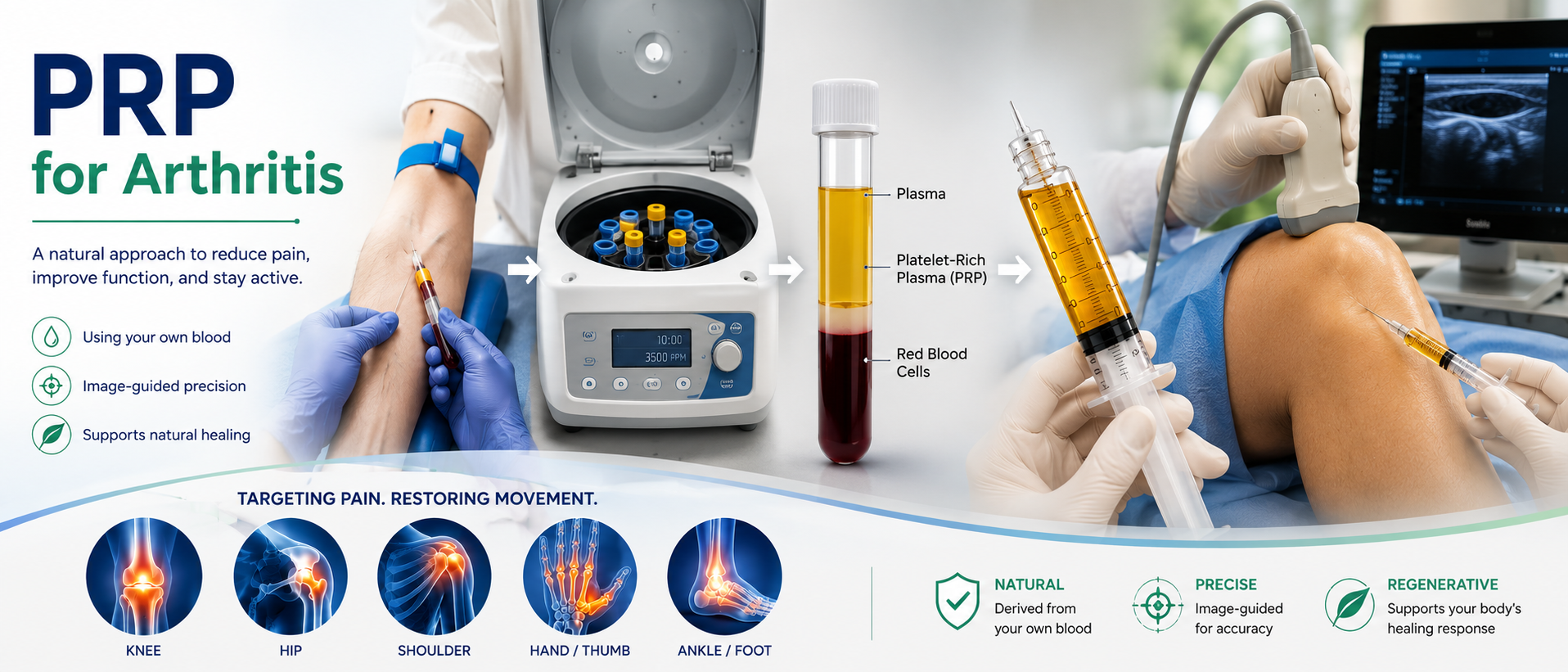
Platelet-rich plasma, commonly called PRP, is an autologous treatment prepared by concentrating platelets from a sample of the patient’s blood. The resulting preparation is injected into the affected joint with the goal of influencing inflammation, pain signaling, and the biological environment within the joint.
PRP has been studied most extensively for knee osteoarthritis. Research involving the hip, shoulder, thumb, hand, ankle, and other joints is more limited, and the evidence should not be assumed to be identical across all forms of arthritis or every anatomical location.
PRP is not a stem-cell treatment, is not proven to regrow substantial lost cartilage, and should not be presented as a cure for arthritis. In appropriately selected patients, however, it may reduce pain and improve function while helping some individuals remain active without immediately moving toward surgery.
This guide from Dr. Amit Sharma explains how PRP is prepared, how it may work, which joints may be treated, the difference between leukocyte-poor and leukocyte-rich PRP, candidacy, image guidance, recovery, risks, scientific evidence, cost, and how PRP compares with corticosteroid and hyaluronic acid injections.
Quick Answer
PRP for arthritis is prepared by concentrating platelets from a patient’s own blood and injecting the resulting plasma into an arthritic joint. Evidence is strongest for selected patients with mild to moderate knee osteoarthritis. PRP may reduce pain and improve function, but results vary, treatment protocols are not standardized, and it is not proven to restore advanced cartilage loss or cure arthritis.
Clinical Perspective
PRP occupies an unusual space between established conservative treatment and evolving biologic medicine. It is supported by a growing body of research, especially for knee osteoarthritis, but remains difficult to evaluate because “PRP” is not one uniform medication. Different systems produce preparations with different platelet concentrations, leukocyte levels, red blood cell contamination, injection volumes, and dosing schedules. Thoughtful treatment therefore requires more than simply offering a blood-derived injection. The diagnosis, joint, arthritis severity, PRP composition, injection accuracy, rehabilitation plan, cost, and patient expectations all matter.
What Is Platelet-Rich Plasma?
Platelet-rich plasma is a blood-derived preparation containing a higher concentration of platelets than ordinary circulating plasma. It is produced from the patient’s own blood, which is why it is described as an autologous biologic treatment.
A sample of blood contains several major components:
- Plasma: the liquid portion of blood
- Red blood cells: cells that carry oxygen
- White blood cells: immune cells involved in inflammation and defense
- Platelets: small cell fragments involved in clotting, tissue signaling, and the response to injury
During PRP preparation, these components are separated so that a selected portion of plasma containing concentrated platelets can be collected. Depending on the processing system, the final preparation may contain relatively few or relatively many white blood cells.
Key Point: PRP is not a single standardized drug. It is a family of blood-derived preparations whose cellular composition can differ significantly.
What Do Platelets Do?
Platelets are best known for helping blood clot after an injury. When activated, they adhere to damaged tissue, interact with other cells, and release numerous signaling proteins stored within internal structures called granules.
These proteins include growth factors and cytokines involved in:
- Cell communication
- Inflammatory regulation
- Blood-vessel signaling
- Extracellular matrix activity
- Recruitment and behavior of repair-related cells
- Responses within cartilage, synovium, tendon, and other connective tissues
Frequently discussed platelet-associated proteins include platelet-derived growth factor, transforming growth factor beta, vascular endothelial growth factor, insulin-like growth factor, and other mediators. These substances do not function as independent miracle ingredients. They act within a complex biological network that may influence inflammation, pain, and tissue homeostasis.
The purpose of PRP is to deliver a concentrated mixture of these naturally occurring platelets and signaling molecules to a selected anatomical target.
How PRP Is Prepared
PRP is usually prepared immediately before the injection. Although individual systems differ, the process generally involves four steps.
1. Blood Collection
Blood is drawn from a vein in the arm using sterile technique. The amount collected depends on the preparation system, desired final volume, and number of joints being treated.
2. Centrifugation
The blood is placed into a centrifuge, which spins at a controlled speed. Centrifugal force separates blood components according to their density.
3. Separation and Collection
The desired platelet-containing portion is isolated from red blood cells and other components. Some systems involve a single spin, while others use more than one processing stage.
4. Injection
The final PRP preparation is transferred into a sterile syringe and injected into the intended joint, commonly under ultrasound or fluoroscopic guidance.
Is All PRP the Same?
No. Two preparations labeled “PRP” may differ considerably. Important variables include:
- Total platelet concentration
- Total platelet dose delivered
- White blood cell concentration
- Neutrophil concentration
- Red blood cell contamination
- Injection volume
- Use of an external activating substance
- Fresh versus stored preparation
- Single injection versus multiple injections
- Processing equipment and centrifugation method
This variability helps explain why PRP studies sometimes reach different conclusions. A positive trial involving one formulation and protocol does not automatically prove that every commercially available PRP preparation will produce the same result.
Leukocyte-Poor vs Leukocyte-Rich PRP
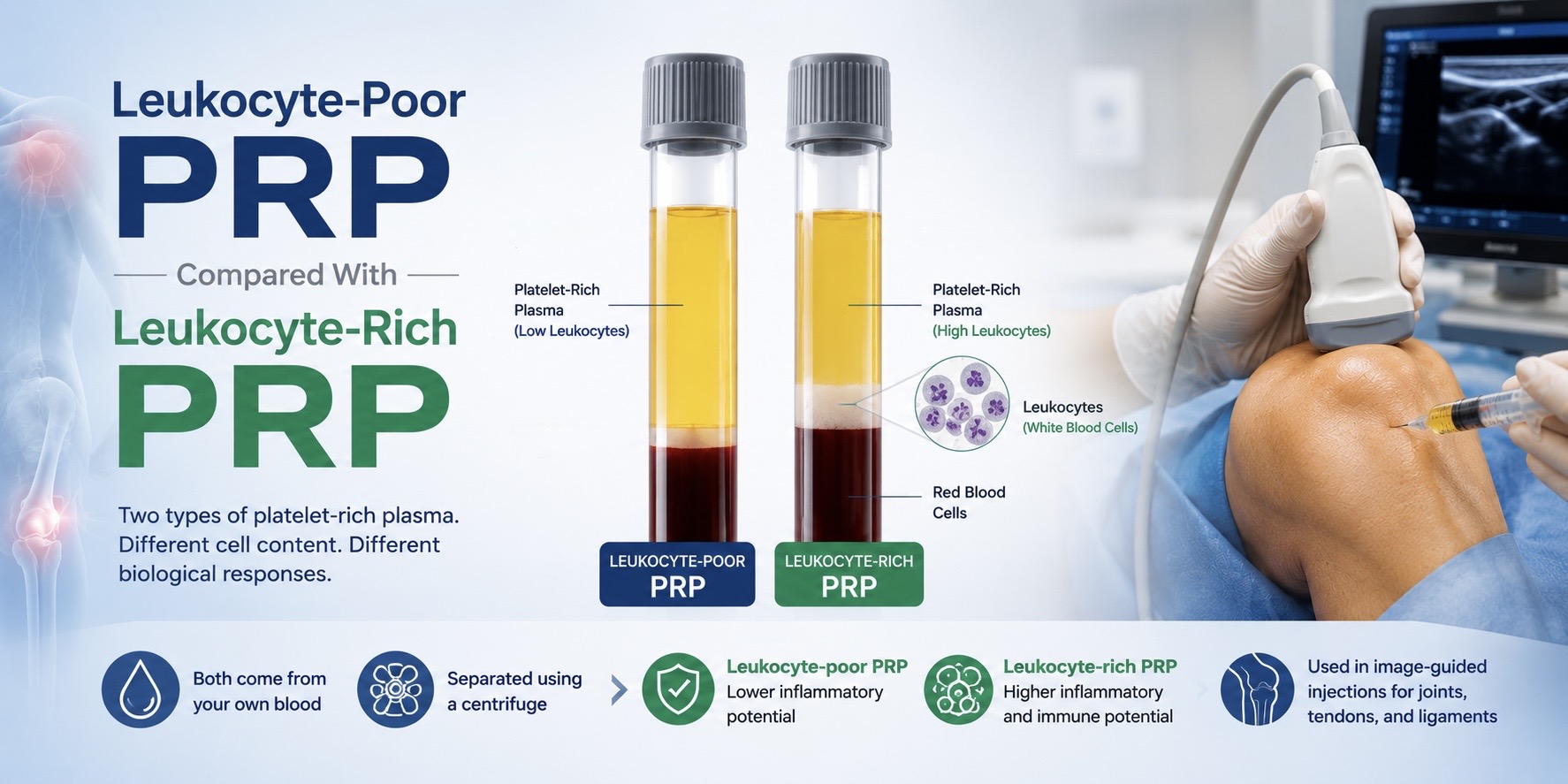
One of the most important distinctions is the amount of white blood cells, or leukocytes, in the final preparation.
Leukocyte-Poor PRP
Leukocyte-poor PRP contains concentrated platelets with relatively fewer white blood cells. It is commonly selected for intra-articular treatment of osteoarthritis because some laboratory and clinical evidence suggests that reducing neutrophils may limit an excessive inflammatory response inside the joint.
Leukocyte-Rich PRP
Leukocyte-rich PRP contains a higher concentration of white blood cells in addition to platelets. It may be selected for certain tendon, ligament, or other soft-tissue applications, although there is no universal rule that one preparation is correct for every condition.
| Feature | Leukocyte-Poor PRP | Leukocyte-Rich PRP |
|---|---|---|
| White blood cells | Relatively reduced | Relatively concentrated |
| Common arthritis use | Frequently selected for intra-articular osteoarthritis treatment | Less consistently favored for an arthritic joint |
| Inflammatory response | May produce less post-injection inflammation in some patients | May produce a greater inflammatory response |
| Evidence | Supported by several knee osteoarthritis studies and reviews | Findings remain mixed and depend on the application |
Research has not produced a single universally accepted formula for the ideal platelet count, leukocyte concentration, injection volume, or number of treatments. For joint arthritis, many physicians favor leukocyte-poor PRP, but patient selection and the total treatment protocol remain important.
How PRP May Work in an Arthritic Joint
PRP is often described as stimulating healing, but that phrase can be misleading when discussing osteoarthritis. A joint with established cartilage loss, bone remodeling, and mechanical deformity cannot simply be returned to normal by activating a single repair pathway.
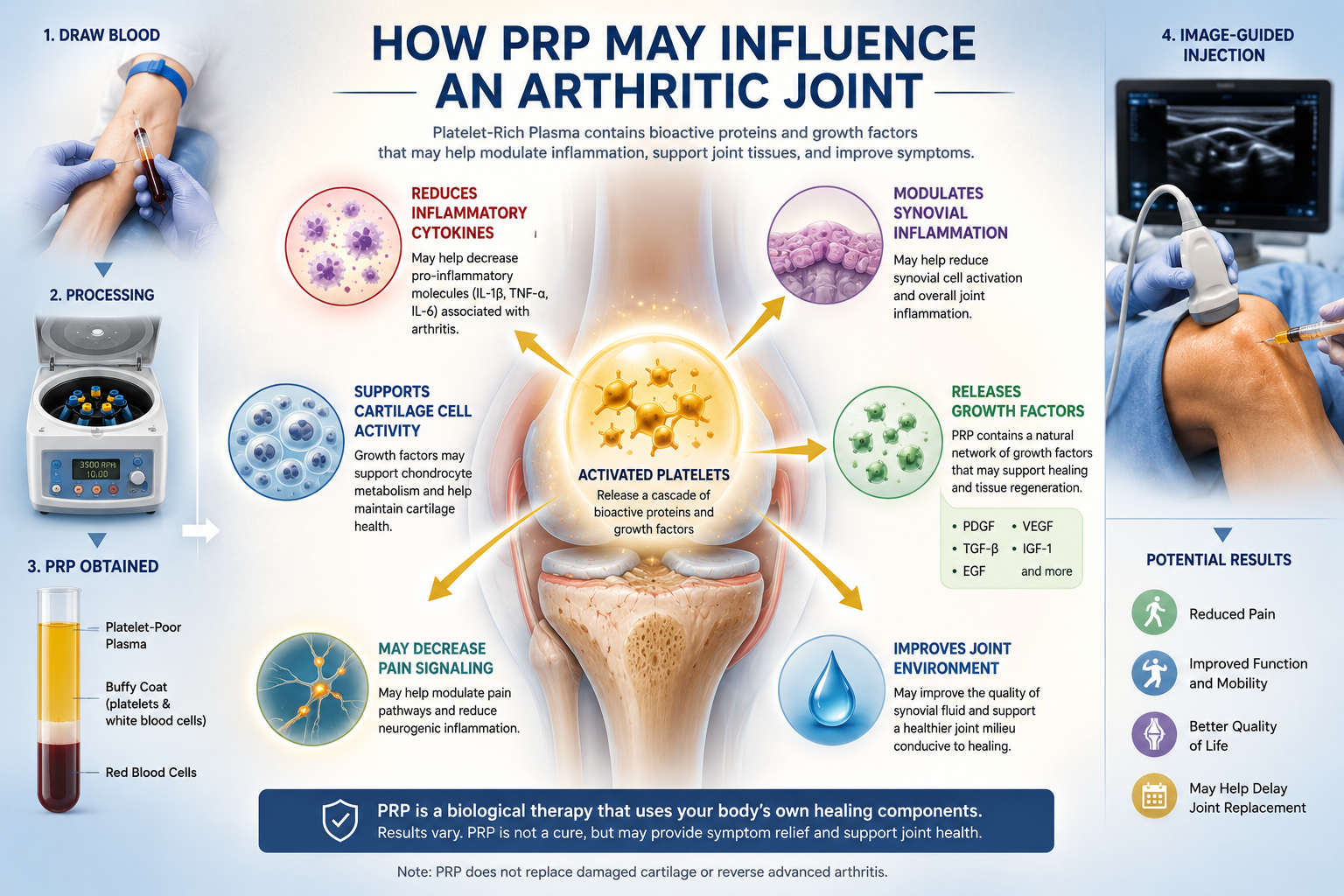
Current research suggests that PRP may influence arthritis symptoms through several interacting mechanisms.
Modulation of Inflammation
Osteoarthritis involves low-grade inflammatory activity within the synovial lining and joint fluid. PRP may alter the balance of pro-inflammatory and anti-inflammatory signaling molecules. This is modulation rather than complete suppression of the immune response.
Effects on the Synovial Environment
PRP may influence synovial cells and the chemical environment inside the joint. This may help reduce irritation, stiffness, recurrent swelling, and pain in some patients.
Cellular Signaling
Activated platelets release numerous proteins that communicate with cartilage cells, connective-tissue cells, immune cells, and blood vessels. Experimental studies suggest potential effects on extracellular matrix production and cellular metabolism.
Pain Signaling
Changes in inflammatory mediators and the synovial environment may reduce stimulation of pain-sensitive nerve endings. A patient can therefore experience meaningful symptom improvement even without measurable restoration of lost cartilage.
Support of Tissue Homeostasis
PRP may support a more favorable balance between tissue breakdown and maintenance. This remains an active area of research and should not be equated with proven joint regeneration.
Key Point: The principal clinical goal of PRP for arthritis is to reduce pain and improve function. Biological activity does not automatically mean that damaged cartilage will regrow.
What Types of Arthritis May Be Treated With PRP?
Most clinical research involving PRP joint injections concerns osteoarthritis, particularly knee osteoarthritis. Osteoarthritis affects cartilage, synovium, subchondral bone, ligaments, and the surrounding muscles. It differs substantially from autoimmune inflammatory disorders.
Osteoarthritis
PRP may be considered for symptomatic osteoarthritis when exercise, physical therapy, weight management, medication, bracing, activity modification, or other injections have not provided acceptable relief.
Post-Traumatic Arthritis
Arthritis may develop after a fracture, ligament injury, meniscal injury, instability, or prior surgery. PRP may help symptoms in selected cases, but it cannot correct malalignment, instability, loose hardware, or a mechanical defect requiring surgery.
Inflammatory Arthritis
Rheumatoid arthritis, psoriatic arthritis, gout, pseudogout, and other inflammatory conditions require diagnosis-specific medical management. PRP is not a replacement for disease-modifying medication or appropriate rheumatologic treatment.
Important: An acutely hot, red, or markedly swollen joint should be evaluated for infection, crystal arthritis, bleeding, or another inflammatory disorder before an elective PRP injection is considered.
Which Joints Can Be Treated With PRP?
Knee Arthritis
The knee has the largest body of evidence supporting PRP for arthritis. Studies most consistently involve patients with mild to moderate osteoarthritis. Many trials report improvements in pain and function lasting six to twelve months, although treatment protocols and results vary.
Patients with severe joint-space loss, major deformity, instability, or advanced bone changes may still seek treatment, but the likelihood of a substantial response may be lower and expectations should be more modest.
Detailed Knee Guide
For knee-specific candidacy, arthritis severity, injection protocols, and knee replacement considerations, read PRP for Knee Arthritis.
Hip Arthritis
PRP has been studied for hip osteoarthritis, but the evidence is smaller and less consistent than it is for the knee. Some studies report improvement, while comparisons with hyaluronic acid have not consistently established clear superiority.
The hip is a deep joint located near important nerves and blood vessels. A hip PRP injection should be performed with ultrasound or fluoroscopic guidance.
Shoulder Arthritis
PRP may be considered for glenohumeral osteoarthritis in selected patients, but evidence is limited. Shoulder pain frequently arises from the rotator cuff, bursa, biceps tendon, acromioclavicular joint, or cervical spine rather than the main shoulder joint. Establishing the correct pain generator is essential.
Thumb and Hand Arthritis
Small studies have explored PRP for thumb carpometacarpal arthritis and other hand joints. The available evidence is less mature than the knee literature. Because these joints are small, ultrasound or fluoroscopic guidance may improve placement confidence.
Ankle and Foot Arthritis
Evidence for ankle osteoarthritis remains limited and is not equivalent to evidence for knee osteoarthritis. Current AAOS guidance recommends against routine intra-articular PRP for symptomatic ankle osteoarthritis. Any use should therefore involve a clear discussion of the uncertain benefit and available alternatives.
Other Joints
PRP may occasionally be considered for the elbow, wrist, sacroiliac joint, or other articulations. Evidence, regulatory considerations, anatomy, and insurance coverage differ by location. Treatment should not be generalized merely because PRP has been studied in the knee.
Who May Be a Good Candidate for PRP?
A potential candidate generally has a well-established diagnosis of symptomatic osteoarthritis and continues to experience pain or functional limitation despite an appropriate trial of conservative treatment.
Factors that may support consideration of PRP include:
- Mild to moderate osteoarthritis, particularly in the knee
- Pain arising primarily from inside the joint
- Persistent symptoms despite exercise, therapy, medication, or activity modification
- A desire to reduce repeated corticosteroid exposure
- Inadequate or short-lived relief from another injection
- Ability to participate in rehabilitation after treatment
- Realistic expectations regarding pain relief and cartilage regeneration
- Understanding that PRP is commonly self-pay
Younger age and less advanced structural disease are sometimes associated with better outcomes, but they do not guarantee success. Older adults may also benefit when the diagnosis, joint mechanics, and treatment goals are appropriate.
Clinical Perspective
Imaging severity is important, but it is not the only criterion. A treatment decision should also consider alignment, stability, range of motion, muscle strength, inflammation, body weight, activity demands, prior treatment response, and whether the pain is truly arising from the targeted joint.
Who Should Avoid or Postpone PRP?
PRP is not appropriate for every patient. Treatment may need to be postponed, modified, or avoided when safety or treatment quality could be compromised.
Potential concerns include:
- Active infection inside the joint
- Skin infection or open wound near the injection site
- Fever or significant systemic illness
- Severe thrombocytopenia or a clinically important platelet disorder
- Severe anemia
- Uncontrolled bleeding disorder
- Hemodynamic instability or serious acute medical illness
- Unexplained acute joint swelling
- A fracture, unstable joint, or mechanical condition requiring another treatment
- Inability to safely interrupt or manage medication that affects platelet function when interruption is considered necessary
- Pregnancy when an elective procedure has not been adequately discussed with the appropriate clinicians
- Active malignancy or treatment affecting blood counts, depending on the individual clinical context
Blood-Thinning Medication
Anticoagulants and antiplatelet medications require individualized review. These drugs may affect bleeding risk, platelet function, or PRP composition. They should never be stopped solely for PRP without approval from the clinician who manages the medication.
Cancer and Blood Disorders
A history of cancer does not automatically exclude every patient, but active malignancy, chemotherapy, abnormal blood counts, or hematologic disease may alter the safety and quality of the preparation. Coordination with the treating oncologist or hematologist may be necessary.
Important: Do not stop aspirin, clopidogrel, warfarin, apixaban, rivaroxaban, or another prescribed medication unless the clinician responsible for that medication approves the change.
Why Image Guidance Matters
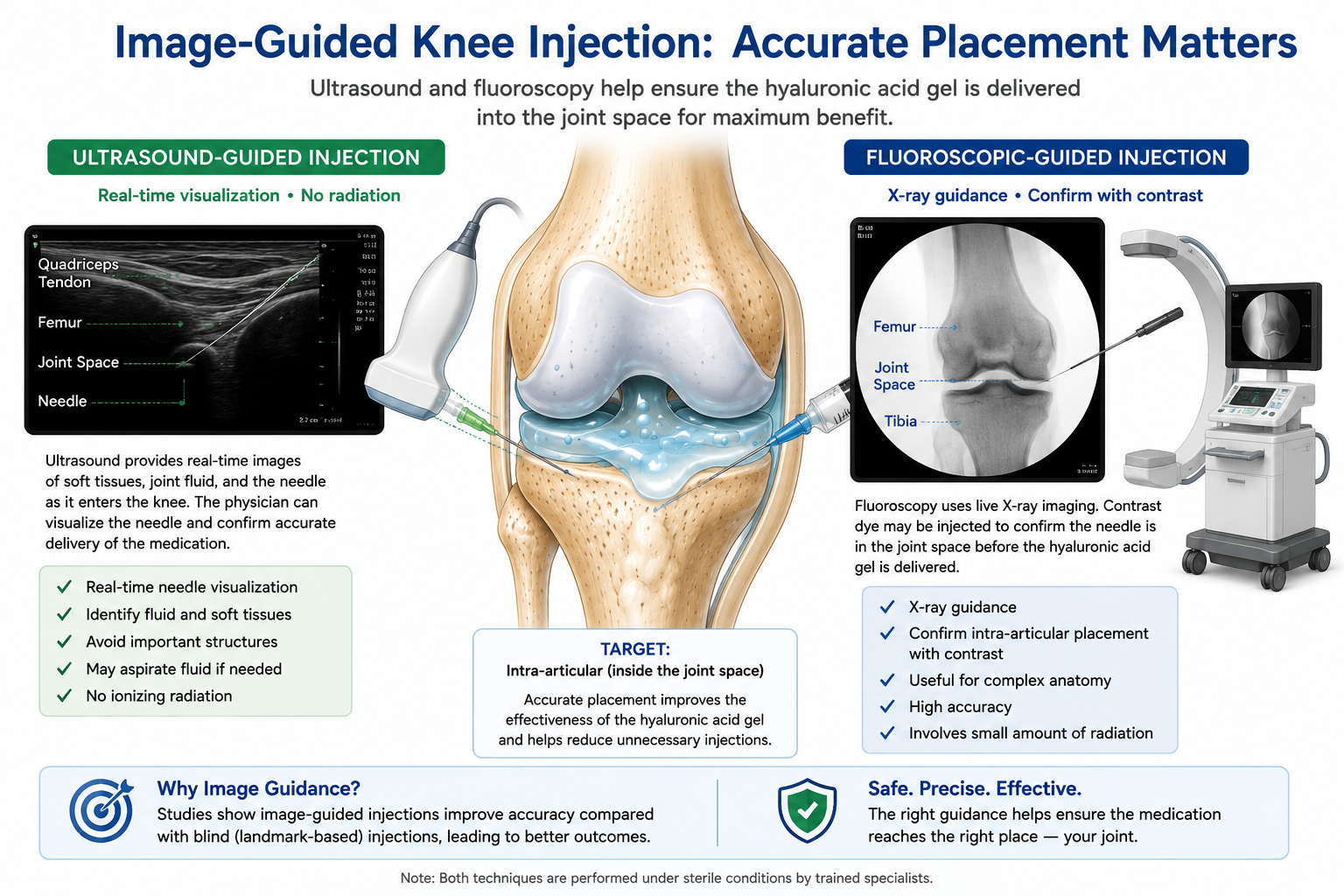
PRP is typically available in a limited volume and may involve substantial out-of-pocket cost. Accurate placement is therefore especially important. Image guidance helps confirm that the preparation reaches the intended joint rather than surrounding muscle, tendon, bursa, or soft tissue.
Ultrasound Guidance
Ultrasound provides real-time visualization of the joint, needle, tendons, blood vessels, and surrounding soft tissues without ionizing radiation. It can also identify and guide aspiration of excess joint fluid before the PRP is injected.
Fluoroscopic Guidance
Fluoroscopy uses real-time X-ray imaging and can confirm intra-articular needle placement with a small amount of contrast. It is particularly useful for deep joints, altered anatomy, and situations in which the bony joint space is difficult to access confidently.
Image guidance cannot guarantee that PRP will produce a clinical response, but it reduces uncertainty regarding whether the preparation reached the intended target.
What Happens During a PRP Joint Injection?
Clinical Evaluation
The physician reviews symptoms, examination findings, imaging, medications, allergies, prior injections, relevant blood disorders, and treatment goals. The diagnosis and injection target should be established before blood is drawn.
Blood Draw and Processing
Blood is collected from the arm and processed in a centrifuge. Preparation commonly takes approximately 15 to 30 minutes, although timing varies by system.
Sterile Preparation
The skin over the target joint is cleaned with antiseptic solution. Sterile technique is used to reduce infection risk.
Aspiration When Appropriate
If the joint contains a substantial effusion, excess fluid may be removed before PRP is administered. Fluid may be sent for laboratory testing when infection, gout, pseudogout, inflammatory arthritis, or bleeding is suspected.
Needle Placement and Injection
The needle is advanced into the joint using ultrasound, fluoroscopy, or an appropriate anatomical approach. The PRP is then injected slowly. Patients may feel pressure, fullness, or temporary discomfort.
After the Procedure
A small dressing is applied. Most patients leave shortly afterward without sedation. Instructions vary according to the joint, injection approach, and patient’s medical history.
Is Local Anesthetic Used With PRP?
A local anesthetic may be used in the skin or along the needle path to improve comfort. Some clinicians avoid mixing anesthetic directly into the PRP because laboratory studies have raised questions about potential effects on platelet activity or local cells.
The approach varies according to the target, injection technique, preparation protocol, and physician preference. Avoiding intra-articular anesthetic does not mean that the entire procedure must be performed without pain control.
How Many PRP Injections Are Needed?
Clinical studies have used one, two, or three injections, often separated by one to several weeks. There is no universally accepted regimen for every joint or degree of arthritis.
The treatment plan may depend on:
- The joint being treated
- Arthritis severity
- PRP formulation and platelet dose
- Response to a previous injection
- Available clinical evidence
- Patient preference and cost
- Whether treatment is being combined with another intervention
More injections do not automatically produce a better result. A predetermined package of repeated injections should not replace individualized reassessment.
Recovery After a PRP Joint Injection
Recovery is usually outpatient, but PRP often causes more temporary soreness than a routine corticosteroid injection. The joint may feel achy, stiff, swollen, or irritated for several days as the local biological response develops.
| Time | What May Occur | General Guidance |
|---|---|---|
| First 24 hours | Pressure, aching, stiffness, or temporary increase in pain | Rest the joint without prolonged complete immobility |
| Days 2 to 3 | Soreness may persist or temporarily peak | Continue gentle movement and avoid strenuous loading |
| Days 4 to 7 | Procedure-related discomfort generally begins improving | Gradually resume normal daily activity as tolerated |
| Weeks 1 to 4 | Early functional improvement may begin | Progress strengthening and rehabilitation as directed |
| Weeks 4 to 12 | Improvement may become more noticeable | Continue exercise and assess functional response |
Can I Walk After PRP?
Most patients can walk after a knee injection. Routine household movement is generally acceptable, but long-distance walking, prolonged standing, running, jumping, and heavy exercise are usually limited during the initial recovery period.
Can I Drive Home?
Driving may be possible after a routine injection without sedation when the patient can safely control the vehicle. A driver may be advisable when a lower-extremity joint is treated, substantial soreness is anticipated, or medication affecting alertness has been administered.
Exercise and Physical Therapy
A gradual return to strengthening and low-impact aerobic exercise is usually encouraged. PRP should create an opportunity to improve function rather than become a reason for prolonged inactivity. The timing of rehabilitation depends on the joint and the severity of the post-injection response.
Should Anti-Inflammatory Medication Be Avoided Around PRP?
Many PRP protocols recommend temporarily avoiding nonsteroidal anti-inflammatory drugs, commonly called NSAIDs, because these medications may affect platelet function or inflammatory pathways involved in the intended treatment response.
Examples include:
- Ibuprofen
- Naproxen
- Diclofenac
- Meloxicam
- Celecoxib
- Indomethacin
The optimal avoidance period has not been conclusively established and varies among clinicians. Acetaminophen may be permitted when medically appropriate, but each patient should follow individualized instructions.
Important: Aspirin prescribed for prevention of heart attack or stroke should not be stopped merely to optimize PRP without approval from the prescribing clinician.
Should Ice or Heat Be Used After PRP?
Post-procedure recommendations vary. Brief cold application may reduce discomfort, but some clinicians limit intensive icing because the treatment is intended to initiate a controlled biological response. Gentle warmth may feel more comfortable after the initial period for some patients.
Patients should follow the treating physician’s instructions rather than applying prolonged extreme heat or cold directly to the skin.
When Should PRP Begin Working?
PRP does not typically provide immediate relief. The joint may temporarily feel worse before it feels better. Some patients notice improvement within several weeks, while others require six to twelve weeks before the response can be judged fairly.
Potential improvements include:
- Reduced pain during walking or exercise
- Less stiffness after rest
- Improved stair tolerance
- Greater ability to participate in physical therapy
- Reduced reliance on pain medication
- Improved sleep or daily function
Key Point: A meaningful PRP response is better measured by improved function than by expecting the pain score to become zero.
How Long May PRP Relief Last?
For patients who respond, improvement may last six to twelve months and occasionally longer. Some experience shorter relief, while others do not improve meaningfully.
Duration may be influenced by:
- Joint and arthritis severity
- Alignment and stability
- PRP composition and platelet dose
- Number and timing of injections
- Accuracy of placement
- Body weight and activity demands
- Muscle strength and conditioning
- Presence of synovitis or recurrent effusion
- Participation in rehabilitation
How Effective Is PRP for Arthritis?
The strongest evidence concerns knee osteoarthritis. Numerous randomized trials and meta-analyses report improvements in pain and function following PRP, and several comparisons suggest that PRP may provide greater or longer-lasting improvement than hyaluronic acid for selected knee patients.
The findings are not uniform. Some well-designed studies have found smaller benefits or no significant difference compared with saline placebo. Differences in PRP preparation, platelet dose, patient selection, arthritis severity, injection number, control treatment, and outcome measurement make the literature difficult to combine.
Evidence for other joints is less mature:
- Knee: most supportive and extensive evidence
- Hip: promising but limited and inconsistent evidence
- Shoulder: limited evidence for glenohumeral arthritis
- Thumb and hand: small studies with uncertain conclusions
- Ankle: insufficient evidence to support routine use
Why Do Professional Guidelines Differ on PRP?
Professional organizations evaluate evidence using different methods and may reach different recommendations. One organization may focus on average improvement across all trials, while another may emphasize selected patient groups or comparative outcomes against other injections.
PRP research is especially challenging because studies differ in:
- Platelet concentration and total platelet dose
- Leukocyte and neutrophil content
- Presence of red blood cells
- Activation method
- Single-spin versus double-spin preparation
- Fresh versus processed product
- One injection versus a series
- Injection volume
- Image-guided versus landmark-based placement
- Arthritis severity and patient age
- Comparison with saline, hyaluronic acid, corticosteroid, or another treatment
- Outcome measures and follow-up duration
The American Academy of Orthopaedic Surgeons states that PRP may reduce pain and improve function in symptomatic knee osteoarthritis but assigns limited strength to that recommendation. The American College of Rheumatology recommends against routine PRP use for knee and hip osteoarthritis, largely because preparations and techniques are heterogeneous.
Clinical Perspective
A guideline that does not endorse routine PRP use is not necessarily stating that no patient can benefit. It means the evidence is not sufficiently standardized or predictable to recommend the treatment broadly for everyone. Selective use requires transparent discussion of uncertainty, cost, alternatives, and realistic goals.
Does PRP Regrow Cartilage?
PRP should not be advertised as a proven method for regrowing substantial lost cartilage. Laboratory studies suggest that platelet-derived signaling molecules can influence cartilage cells and extracellular matrix activity, but these biological effects do not establish predictable cartilage regeneration in patients.
PRP does not reliably:
- Restore a severely narrowed joint space
- Remove bone spurs
- Correct major deformity or instability
- Reverse bone-on-bone arthritis
- Recreate a normal joint surface
A patient may experience less pain and better function without visible cartilage regrowth. Symptom relief and structural regeneration are different outcomes.
Further Reading
Read our detailed guide:
Does PRP Regrow Cartilage?
Can PRP Help Bone-on-Bone Arthritis?
Patients with severe cartilage loss may still experience temporary symptom improvement, but outcomes are less predictable. PRP cannot replace missing cartilage or correct advanced mechanical damage.
A trial may occasionally be considered when:
- Surgery must be delayed
- The patient is not a surgical candidate
- Other non-surgical treatments have failed
- The patient understands that improvement may be modest or absent
- A previous PRP treatment produced meaningful relief
Severe night pain, marked deformity, instability, major loss of motion, and progressive functional limitation may indicate that joint replacement or another surgical treatment should be discussed rather than repeatedly postponing definitive care.
PRP vs Corticosteroid Injections
| Feature | PRP | Corticosteroid |
|---|---|---|
| Source | Prepared from the patient’s blood | Manufactured anti-inflammatory medication |
| Primary action | Modulates inflammatory and cellular signaling | Suppresses inflammation |
| Onset | Gradual over several weeks | Often faster, sometimes within several days |
| Duration | May last six to twelve months in responders | Often shorter, although results vary |
| Post-procedure flare | Temporary soreness is relatively common | A brief steroid flare may occur |
| Blood sugar | Does not usually cause steroid-related glucose elevation | May temporarily increase blood glucose |
| Insurance | Frequently self-pay | Frequently covered when medically appropriate |
Corticosteroid may be more appropriate for an acutely inflamed, swollen joint when rapid relief is the priority. PRP may be considered when a slower onset is acceptable and the patient seeks a potentially longer-duration treatment without additional corticosteroid exposure.
Further Reading
Learn more about
corticosteroid injections for arthritis.
PRP vs Hyaluronic Acid Injections
| Feature | PRP | Hyaluronic Acid |
|---|---|---|
| Source | Patient’s own blood | Manufactured hyaluronic acid product |
| Intended effect | Biological and inflammatory modulation | Synovial-fluid supplementation and symptom modulation |
| Evidence | Growing evidence, strongest for knee osteoarthritis | Mixed evidence with disagreement among guidelines |
| Standardization | Preparation varies substantially | Commercial products have defined formulations |
| Insurance | Usually not covered | Often covered for qualifying knee osteoarthritis |
| Cartilage regrowth | Not reliably established | Not established |
Several meta-analyses suggest that PRP may outperform hyaluronic acid for pain and function in selected patients with knee osteoarthritis, particularly at later follow-up points. However, differences in PRP preparation and study quality prevent a universal conclusion that PRP is always superior.
Further Reading
Learn more about
hyaluronic acid joint injections.
Can PRP Be Combined With Hyaluronic Acid?
PRP and hyaluronic acid have been studied together. The rationale is that hyaluronic acid may supplement the mechanical properties of synovial fluid while PRP provides concentrated biological signaling molecules.
Some studies suggest that combined treatment may improve outcomes compared with either treatment alone, but protocols vary and the evidence is not yet sufficiently standardized to establish one preferred combination regimen.
Additional considerations include:
- Added cost
- Insurance restrictions
- Product compatibility
- Whether treatments are mixed or separated
- Difficulty determining which component produced the response
- Limited evidence for joints other than the knee
Can PRP Delay Joint Replacement?
PRP may functionally postpone surgery when it provides enough pain relief and improved mobility for the patient to remain satisfied with non-surgical care. This does not prove that PRP stops structural progression or alters the natural history of osteoarthritis.
Delaying surgery is beneficial only while function and quality of life remain acceptable. Repeating costly injections while severe disability progresses may not serve the patient’s best interest.
Treatment Tip: The goal is not merely to postpone an operation. The goal is to preserve acceptable mobility, independence, and quality of life using the least invasive appropriate treatment.
PRP Before Joint-Replacement Surgery
Patients considering joint replacement should inform the orthopedic surgeon about every recent injection, including PRP. Surgeons and healthcare systems may require a specific interval between an intra-articular injection and elective surgery because of concern regarding infection risk.
The interval may vary according to the surgeon, joint, procedure, injection type, and patient’s medical risk. An injection should not be scheduled shortly before planned joint replacement without coordination with the surgeon.
Risks and Potential Complications
Because PRP is prepared from the patient’s blood, allergic reaction to the injected plasma itself is uncommon. Nevertheless, the procedure carries risks associated with blood collection, needle placement, and intra-articular injection.
Temporary Pain Flare
Increased pain, stiffness, swelling, or warmth may occur for several days. This is usually self-limited but may occasionally be more pronounced.
Infection
Joint infection is uncommon but potentially serious. Increasing redness, severe pain, fever, chills, drainage, or inability to bear weight requires prompt evaluation.
Bleeding or Bruising
Bruising may occur at the blood-draw site or injection site. Bleeding risk may be greater in patients with coagulation disorders or those taking anticoagulant medication.
Nerve or Blood-Vessel Injury
Injury to a nearby nerve or blood vessel is uncommon. Knowledge of anatomy and image guidance may reduce risk in anatomically complex regions.
Vasovagal Reaction
Some patients become lightheaded, sweaty, nauseated, or faint during blood collection or injection. Inform the staff if this has occurred during previous medical procedures.
Failure to Improve
The most common unfavorable outcome is inadequate benefit. A technically accurate injection may still fail to provide meaningful pain relief or functional improvement.
Seek Prompt Medical Attention: Contact the treating office for severe or rapidly increasing pain, marked swelling, redness, fever, chills, drainage, rash, difficulty breathing, new weakness, or inability to bear weight.
Can PRP Be Repeated?
PRP may be repeated when the initial treatment produced meaningful benefit that later diminished and no significant complication occurred. There is no universally accepted repeat interval.
Before repeating treatment, the physician should review:
- Degree and duration of pain relief
- Improvement in walking, exercise, sleep, or daily function
- Change in medication use
- Adverse effects
- Progression of arthritis
- Development of deformity or instability
- Whether surgery or another treatment is now more appropriate
Repeating an expensive procedure that produced no measurable benefit is generally difficult to justify without a meaningful change in diagnosis, technique, or formulation.
PRP Cost and Insurance Coverage
Most health insurance plans do not routinely cover PRP for arthritis because they classify it as investigational, experimental, or insufficiently standardized. Patients commonly pay directly for the blood processing, disposable kit, image guidance, physician procedure, and facility resources.
Cost may vary according to:
- Geographic region
- PRP preparation system
- Joint and procedural complexity
- Ultrasound or fluoroscopic guidance
- Number of joints treated
- Single injection versus a series
- Whether additional treatment is combined with PRP
Patients should request a clear explanation of the total expected cost, number of treatments, refund policy for unused sessions, and what follow-up care is included before proceeding.
Key Point: A higher price does not necessarily mean a better PRP product. Ask what preparation is used, whether the injection is image guided, and what evidence supports the proposed protocol.
An Individualized Treatment Approach
PRP should not be selected simply because an MRI mentions cartilage loss or because another patient responded well. A thoughtful plan begins by identifying the principal pain generator and deciding whether the biological and financial cost of PRP is justified.
Questions to consider include:
- Is osteoarthritis truly responsible for the symptoms?
- Is the pain intra-articular or arising from a tendon, bursa, ligament, nerve, or spine?
- How advanced is the structural damage?
- Is there substantial malalignment or instability?
- Has an appropriate strengthening program been attempted?
- What happened after previous injections?
- Is rapid relief or longer-term improvement the priority?
- Is surgery becoming more appropriate?
- What measurable outcome would make the cost worthwhile?
Frequently Asked Questions
What does PRP stand for?
PRP stands for platelet-rich plasma. It is prepared by concentrating platelets from a sample of the patient’s blood.
Is PRP a stem-cell treatment?
No. PRP contains concentrated platelets and plasma. It is not the same as a stem-cell or bone-marrow-derived treatment.
Is PRP FDA approved for arthritis?
PRP preparation devices may be cleared for processing blood, but that is not the same as FDA approval of PRP as a drug proven to treat arthritis. PRP injections for osteoarthritis are generally performed as an autologous medical procedure based on clinical judgment and available evidence.
Which arthritis has the strongest PRP evidence?
The strongest evidence concerns mild to moderate knee osteoarthritis. Evidence for hip, shoulder, thumb, hand, ankle, and other joints is more limited.
How painful is a PRP injection?
Patients usually feel the blood draw, brief needle discomfort, and pressure as PRP enters the joint. The joint may remain sore for several days afterward.
Why might pain increase after PRP?
PRP may produce a temporary inflammatory response. Mild to moderate soreness can be expected, but severe or progressively worsening symptoms require medical evaluation.
When should I expect improvement?
Some patients notice improvement within several weeks, while others require six to twelve weeks. PRP is not intended to provide immediate anesthetic relief.
How long may the benefit last?
Benefit may last six to twelve months and sometimes longer in responders. Some patients experience shorter relief or no meaningful improvement.
How many PRP injections are necessary?
Studies have used one to three injections. The appropriate number depends on the joint, arthritis severity, preparation, evidence, response, and cost.
Can both knees be treated?
Both knees may be treated when each has symptomatic osteoarthritis and treatment is clinically appropriate. Treating both sides may increase procedure time, blood-volume requirements, soreness, and cost.
Can I walk after knee PRP?
Most patients can walk after treatment, but strenuous activity and prolonged weight-bearing are usually limited during the early recovery period.
Can I exercise after PRP?
High-impact exercise is initially restricted. Gentle movement followed by progressive strengthening and low-impact exercise is usually encouraged according to individualized instructions.
Can I take ibuprofen after PRP?
Many physicians recommend temporarily avoiding ibuprofen and other NSAIDs. The exact timing varies, and patients should follow their individual medication instructions.
Can I take acetaminophen?
Acetaminophen may be permitted when medically appropriate because it does not have the same platelet effects as many NSAIDs. Dose limits and liver health must still be considered.
Does PRP raise blood sugar?
PRP does not usually cause the temporary blood-sugar elevation associated with corticosteroid injections.
Does PRP regrow cartilage?
PRP is not proven to reliably regrow substantial lost cartilage or reverse advanced osteoarthritis. Its principal goal is reducing symptoms and improving function.
Can PRP help bone-on-bone arthritis?
Some patients report temporary improvement, but advanced arthritis is less predictable. PRP cannot replace missing cartilage or correct severe deformity.
Is leukocyte-poor PRP better for arthritis?
Leukocyte-poor PRP is commonly favored for intra-articular knee osteoarthritis and may produce less post-injection inflammation. Research has not established one preparation as universally best for every patient and joint.
Is ultrasound guidance necessary?
Not every superficial knee injection requires ultrasound, but image guidance can improve placement accuracy and is particularly valuable for deep, small, deformed, or previously operated joints.
Can joint fluid be removed first?
Yes. A significant effusion may be aspirated before PRP is injected. Fluid may also be tested when infection, gout, bleeding, or inflammatory arthritis is suspected.
Can PRP be combined with cortisone?
The treatments are usually separated because corticosteroids suppress inflammation while PRP is intended to influence a biological response. Combining them may also make it difficult to identify which treatment produced the result.
Can PRP be combined with hyaluronic acid?
Yes, combined treatment has been studied, particularly for knee osteoarthritis. Evidence is promising but protocols remain inconsistent and additional cost must be considered.
Does insurance cover PRP?
Most insurers do not routinely cover PRP for arthritis. Patients should confirm benefits and obtain a written estimate before treatment.
Can PRP be repeated?
PRP may be repeated when prior treatment produced meaningful relief. Repeating treatment after no measurable benefit should prompt reconsideration of the diagnosis and plan.
Can I still have joint replacement later?
Yes. PRP does not prevent later joint replacement. The surgeon should be told the date and type of every recent injection because a waiting interval may be required.
What happens if PRP does not work?
The diagnosis, pain generator, joint mechanics, rehabilitation program, and alternative treatments should be reassessed. Options may include medication, bracing, another type of injection, nerve-targeting treatment, or surgical consultation.
Key Takeaways
- PRP for arthritis is prepared by concentrating platelets from the patient’s own blood.
- The strongest evidence supports selected patients with mild to moderate knee osteoarthritis.
- PRP preparations vary in platelet dose, leukocyte content, processing method, and treatment schedule.
- Improvement usually develops gradually over several weeks and may last six to twelve months in responders.
- PRP may reduce pain and improve function, but it is not proven to regrow substantial cartilage or cure arthritis.
- Evidence for hip, shoulder, hand, thumb, ankle, and other joints is less established than evidence for the knee.
- Image guidance, accurate diagnosis, realistic expectations, and a structured rehabilitation plan are important parts of treatment.
Related Educational Articles
- Joint Injections: Steroid, Gel, PRP and Image-Guided Treatment
- Corticosteroid Joint Injections for Arthritis
- Hyaluronic Acid Joint Injections
- PRP for Knee Arthritis
- Does PRP Regrow Cartilage?
- PRP vs Hyaluronic Acid vs Cortisone Injections
- Knee Joint Injections
- Hip Joint Injections
- Shoulder Joint Injections
- Sacroiliac (SI) Joint Injections
- Hand, Wrist & Thumb Joint Injections
- Ankle & Foot Joint Injections
- Bursa Injections for Bursitis
References
- American Academy of Orthopaedic Surgeons. Management of Osteoarthritis of the Knee (Non-Arthroplasty), Third Edition. Evidence-Based Clinical Practice Guideline. Published August 31, 2021.
- American Academy of Orthopaedic Surgeons. Platelet-Rich Plasma for Knee Osteoarthritis: Technology Overview.
- Kolasinski SL, Neogi T, Hochberg MC, et al. 2019 American College of Rheumatology/Arthritis Foundation Guideline for the Management of Osteoarthritis of the Hand, Hip, and Knee. Arthritis Care & Research. 2020;72(2):149-162.
- Bannuru RR, Osani MC, Vaysbrot EE, et al. OARSI guidelines for the non-surgical management of knee, hip, and polyarticular osteoarthritis. Osteoarthritis and Cartilage. 2019;27(11):1578-1589.
- Belk JW, Kraeutler MJ, Houck DA, Goodrich JA, Dragoo JL, McCarty EC. Platelet-rich plasma versus hyaluronic acid for knee osteoarthritis: a systematic review and meta-analysis of randomized controlled trials. American Journal of Sports Medicine. 2021;49(1):249-260.
- Oeding JF, et al. Platelet-rich plasma versus alternative injections for osteoarthritis of the knee: a systematic review and meta-analysis of randomized controlled trials. Arthroscopy. 2024.
- Bensa A, et al. PRP injections for the treatment of knee osteoarthritis: a meta-analysis of randomized controlled trials. 2025.
- Mende E, et al. A comprehensive summary of meta-analyses and systematic reviews examining platelet-rich plasma for knee osteoarthritis. 2024.
- Berrigan WA, et al. A greater platelet dose may yield better clinical outcomes for platelet-rich plasma in knee osteoarthritis: a systematic review and meta-analysis. Arthroscopy. 2025.
- Berney M, et al. Platelet-rich plasma injections for hip osteoarthritis: a review of the evidence. Hip International. 2021.
- Phillips M, et al. A systematic review of current clinical practice guidelines on intra-articular hyaluronic acid, corticosteroid, and platelet-rich plasma injection for knee osteoarthritis. Orthopaedic Journal of Sports Medicine. 2021;9(8).
- American Academy of Orthopaedic Surgeons. Clinical Practice Guideline for the Management of Ankle Osteoarthritis. 2026.
- American Academy of Orthopaedic Surgeons, OrthoInfo. Platelet-Rich Plasma.
PRP research and professional recommendations continue to evolve. References, clinical statements, and treatment protocols should be reviewed periodically as higher-quality evidence and more standardized reporting become available.
About This Guide
This resource is provided for educational purposes and should not replace personalized medical advice, diagnosis, or treatment from a qualified healthcare professional. Recommendations regarding PRP depend on the joint involved, diagnosis, examination findings, imaging, arthritis severity, blood counts, medication use, prior treatments, available evidence, and individual goals.