
PRP for Discogenic Back Pain: Can It Help a Painful Degenerative Disc?
PRP for discogenic back pain is an emerging regenerative medicine option for selected patients whose lower back pain appears to come from a painful intervertebral disc. This type of pain is different from sciatica, spinal stenosis, facet joint pain, muscle strain, or sacroiliac joint pain. The disc itself may be the primary pain generator.
Discogenic back pain often causes deep, aching, central low back pain that may worsen with sitting, bending, lifting, coughing, or prolonged activity. Some patients describe pressure, stiffness, or a feeling that the back is “unstable” or easily irritated. Others may have pain that spreads into the buttock or thigh without true nerve compression.
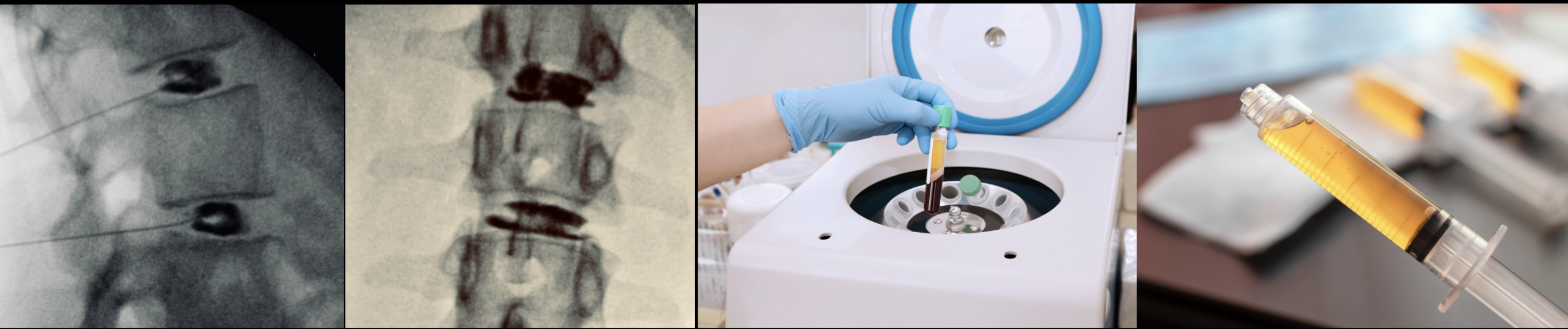
Platelet-Rich Plasma, or PRP, uses a concentrated preparation of your own platelets to support the body’s natural healing response. When used for discogenic back pain, PRP is most often discussed as an intradiscal PRP injection, meaning PRP is placed into the painful disc under precise imaging guidance.
This treatment is not appropriate for every degenerative disc. A dark disc on MRI does not automatically mean the disc is causing pain. Many people have disc degeneration on imaging and no symptoms at all. The key is determining whether the disc is truly the pain generator and whether the disc still has enough biological potential to respond to a regenerative approach.
The most important question is not simply whether PRP works for back pain. The better question is: is your back pain truly discogenic, and is your disc the right type of disc for intradiscal PRP?
Quick Answer: PRP for Discogenic Back Pain
- Best candidates: Selected patients with chronic axial low back pain, suspected painful degenerative disc, annular tear, or internal disc disruption who have not improved with conservative care.
- Less predictable results: Severe disc collapse, advanced spinal stenosis, major instability, progressive nerve compression, infection, tumor, fracture, or pain mainly from another structure.
- Typical improvement: Gradual reduction in pain and improved function over several weeks to months in responders.
- Not instant relief: PRP works more slowly than steroid injections because it aims to support healing and reduce irritation over time.
- Most important step: Confirming that the disc is truly the pain generator before treatment.
- Best approach: Careful MRI review, physical examination, image-guided injection, realistic expectations, and a structured rehabilitation plan.
What Is Discogenic Back Pain?
Discogenic back pain means pain that originates from an intervertebral disc. The intervertebral discs sit between the bones of the spine and act as shock absorbers, spacers, and load-distribution structures.
Each disc has two main parts:
- Nucleus pulposus: the softer inner portion of the disc that helps absorb pressure.
- Annulus fibrosus: the tougher outer ring that helps contain the nucleus and stabilize the disc.
Over time, a disc may lose hydration, develop small tears in the annulus, become inflamed, or lose some of its ability to distribute load. When nerve fibers grow into damaged areas of the annulus or inflammatory chemicals irritate surrounding tissues, the disc itself may become painful.
This is different from a disc herniation pressing on a nerve root. A patient with discogenic back pain may have severe low back pain without classic sciatica. Another patient may have both discogenic pain and nerve-related leg pain. Sorting this out is one of the most important parts of spine care.
A Common Mistake
Disc degeneration on MRI does not automatically prove that the disc is causing pain. Many adults have degenerative discs, bulges, or annular tears on imaging without having significant symptoms. Treatment should be based on the full clinical picture, not the MRI alone.
Discogenic Back Pain vs. Sciatica
Discogenic back pain and sciatica are often confused, but they are not the same problem.
Sciatica usually refers to nerve-related pain that travels down the leg because a nerve root is irritated, inflamed, or compressed. Discogenic back pain usually refers to pain coming from the disc itself, often felt mainly in the lower back.
| Feature | Discogenic Back Pain | Sciatica / Radiculopathy |
|---|---|---|
| Main Pain Source | Painful disc, annular tear, internal disc disruption, or disc inflammation | Irritated or compressed nerve root |
| Typical Pain Pattern | Deep low back pain, often worse with sitting, bending, or lifting | Sharp, burning, electric, or shooting pain down the leg |
| Neurologic Symptoms | Usually absent unless another problem is present | May include numbness, tingling, weakness, or reflex changes |
| PRP Target | Often intradiscal in carefully selected patients | May involve epidural, perineural, disc, or soft tissue targets depending on diagnosis |
This distinction matters because the injection target, expected outcome, and treatment alternatives are different. A patient with true discogenic pain may need a different strategy than a patient with nerve compression from a large disc herniation.
How Might PRP Help a Painful Degenerative Disc?
PRP may help selected patients with discogenic back pain by targeting inflammation, annular injury, and poor healing inside a painful disc. The goal is not to “rebuild a brand-new disc,” but to improve the biological environment of a disc that appears to be irritated, degenerative, or internally disrupted.
A painful disc may contain inflammatory chemicals, small annular tears, reduced hydration, and abnormal nerve ingrowth into areas that normally should not be pain-sensitive. These changes can make the disc behave like a chronic pain generator, especially during sitting, bending, lifting, or twisting.
Platelet-Rich Plasma, or PRP, contains concentrated platelets from the patient’s own blood. These platelets release growth factors and signaling molecules that may help regulate inflammation, support collagen remodeling, and encourage a more organized healing response.
When PRP is used for discogenic back pain, it is usually placed directly into the disc under fluoroscopic guidance. This is called an intradiscal PRP injection. Because the disc is deep and close to important spinal structures, this is a highly specialized procedure that requires careful patient selection, sterile technique, and precise imaging guidance.
For a broader explanation of how PRP is prepared and why not all PRP treatments are the same, see our Complete Guide to Platelet-Rich Plasma (PRP) Injection.
The Key Idea
PRP may be most reasonable when the disc is painful but still structurally suitable for a regenerative approach. It is less predictable when the disc is severely collapsed, infected, unstable, or when the pain is actually coming from the nerves, facet joints, sacroiliac joint, hip, or muscles.
What Is Intradiscal PRP?
Intradiscal PRP means Platelet-Rich Plasma is injected into the intervertebral disc itself. This is different from an epidural injection, facet injection, SI joint injection, or trigger point injection.
The procedure is typically performed with fluoroscopic, or X-ray, guidance. The physician carefully advances a needle into the target disc and places a small amount of PRP into the disc space. The goal is to deliver platelet-derived healing signals directly into the painful disc environment.
Because the disc has a limited blood supply and poor natural healing capacity, researchers have studied whether PRP can improve pain, function, and the biochemical environment within the disc. Early studies have shown encouraging results in some patients, but the evidence remains mixed and the treatment is still considered investigational for many disc-related conditions.
| Injection Type | Primary Target | Main Purpose |
|---|---|---|
| Intradiscal PRP | Painful intervertebral disc | Support healing biology within a suspected disc pain generator. |
| Epidural Injection | Inflamed nerve root or epidural space | Reduce nerve irritation or inflammation causing leg pain. |
| Facet Injection | Arthritic spinal joint | Treat pain from posterior spinal joints. |
| SI Joint Injection | Sacroiliac joint or ligament complex | Treat pain from the pelvis/spine connection rather than the disc. |
What Does the Research Show for Intradiscal PRP?
The research on intradiscal PRP for discogenic back pain is promising but not settled. Some studies show meaningful improvement in pain and function after intradiscal PRP, while others show more modest or inconsistent results.
This mixed picture is not surprising. Discogenic back pain is difficult to diagnose, and not every degenerative disc is painful. Studies also differ in how patients are selected, whether discography is used, the severity of disc degeneration, whether Modic changes are present, the PRP preparation method, injection volume, and follow-up duration.
Some clinical studies and systematic reviews suggest that intradiscal PRP may help selected patients with chronic discogenic low back pain. At the same time, at least one randomized trial found no significant 1-year benefit compared with control in a specific group of patients without Modic changes. This does not mean intradiscal PRP never works. It means patient selection and diagnosis are critical.
Why Studies Do Not Always Agree
“Discogenic back pain” is not one simple condition. A mildly dehydrated disc, an annular tear, a severely collapsed disc, a disc with Modic changes, and a disc causing nerve compression may behave very differently. Intradiscal PRP should be judged by whether it fits the specific disc problem, not by the word “disc degeneration” alone.
Who Is the Best Candidate for PRP for Discogenic Back Pain?
The best candidates are usually patients with chronic axial low back pain where the disc appears to be the likely pain generator, conservative care has not provided enough relief, and there is no urgent need for surgery.
Patients Who May Benefit
- Chronic low back pain lasting several months or longer
- Pain that worsens with sitting, bending, lifting, or prolonged activity
- Suspected painful degenerative disc or annular tear
- Internal disc disruption without severe instability
- Persistent symptoms despite physical therapy, activity modification, and medications
- Patients who want to avoid repeated steroid injections when medically reasonable
- Patients who are not ready for surgery or are not surgical candidates
- Patients willing to participate in rehabilitation and gradual strengthening
Patients Who May Still Be Considered
Some patients are not ideal candidates but may still consider intradiscal PRP after a careful discussion of limitations and alternatives.
- Older adults with degenerative disc changes
- Patients with mixed disc and facet symptoms
- Patients with recurrent symptoms after prior injections
- Patients with mild leg symptoms but no major nerve compression
- Patients with more than one degenerative disc, if one level appears dominant
Who May Not Be a Good Candidate?
PRP is not appropriate for every patient with degenerative disc disease or low back pain. In some situations, another diagnosis or treatment may be more important.
- Severe disc collapse with advanced mechanical failure
- Major spinal instability or high-grade spondylolisthesis
- Advanced spinal stenosis with significant nerve compression
- Large disc herniation causing progressive neurologic symptoms
- Active infection or suspected discitis
- Tumor, fracture, or inflammatory spine disease
- Severe Modic or endplate-driven pain where another treatment may be more appropriate
- Pain mainly from facet joints, SI joint, hip, cluneal nerves, or myofascial sources
- Patients expecting immediate relief within a few days
- Patients expecting PRP to rebuild a collapsed disc or reverse all degeneration
When PRP May Not Be Enough
If back pain is driven mainly by severe instability, advanced stenosis, infection, fracture, tumor, or major structural collapse, intradiscal PRP is unlikely to be the right solution. In those cases, the priority is identifying the true cause of pain and choosing a treatment that addresses the dominant problem.
Discogenic Pain vs. Disc Resorption: Why This Difference Matters
Discogenic back pain and disc herniation resorption are related topics, but they are not the same diagnosis.
Discogenic back pain usually means the disc itself is painful, often because of annular tears, internal disc disruption, inflammation, or degenerative changes inside the disc. The main symptom is often deep axial low back pain.
Disc resorption refers to the body’s ability to shrink or absorb herniated disc material over time. This is more relevant when a disc fragment has herniated outward and may be irritating or compressing a nerve root.
PRP may be discussed in both conversations, but the goals are different. In discogenic pain, intradiscal PRP aims to improve the biological environment inside a painful disc. In disc resorption, the discussion focuses more on whether the body can shrink herniated disc material and reduce nerve irritation over time.
If your main issue is a herniated disc pressing on a nerve, you may also want to read our guide to accelerated disc resorption. If your main issue is deep low back pain coming from the disc itself, this page is more directly relevant.
The Key Difference
Discogenic back pain asks, “Is the disc itself painful?” Disc resorption asks, “Can the body shrink herniated disc material?” A patient may have one problem, both problems, or neither. The treatment plan depends on identifying which process is actually causing symptoms.
PRP vs. Epidural Steroid Injection for Disc-Related Pain
Epidural steroid injections and intradiscal PRP injections are often discussed in patients with disc-related spine pain, but they are not the same procedure and they do not target the same structure.
An epidural steroid injection is usually designed to reduce inflammation around an irritated nerve root. It may be very helpful when leg pain, sciatica, or radiculopathy is the dominant symptom.
Intradiscal PRP is different. It is designed to place platelet-rich plasma into the disc itself when the disc appears to be the main pain generator. This is usually considered for selected patients with axial discogenic low back pain rather than classic nerve-compression sciatica.
| Feature | Intradiscal PRP | Epidural Steroid Injection |
|---|---|---|
| Main Target | Painful intervertebral disc | Inflamed nerve root or epidural space |
| Main Goal | Support disc healing biology and reduce internal disc irritation | Reduce nerve inflammation and leg pain |
| Best For | Selected discogenic axial low back pain | Sciatica, radiculopathy, and nerve root inflammation |
| Speed of Relief | Gradual, often weeks to months | Often faster, sometimes days to weeks |
| Main Limitation | Evidence is still evolving and diagnosis must be very precise | Does not repair the disc or reverse degeneration |
PRP vs. Basivertebral Nerve Ablation
Some patients with chronic low back pain have pain that appears to come from the vertebral endplates rather than the disc itself. This is often called vertebrogenic pain and is commonly associated with Modic changes on MRI.
Basivertebral nerve ablation is a minimally invasive procedure designed to treat selected patients with vertebrogenic pain by targeting the nerve inside the vertebral body. Intradiscal PRP, by contrast, targets the disc itself.
This distinction is important. A patient with a painful annular tear may be very different from a patient with Modic endplate changes. Both may have chronic low back pain. Both may have degenerative MRI findings. But the best treatment target may be completely different.
| Feature | Intradiscal PRP | Basivertebral Nerve Ablation |
|---|---|---|
| Main Target | Painful disc | Basivertebral nerve inside the vertebral body |
| Typical MRI Clue | Annular tear, disc degeneration, internal disc disruption | Modic type 1 or type 2 endplate changes |
| Main Goal | Support disc healing biology | Reduce vertebral endplate pain signaling |
| Important Limitation | Not ideal if the main pain source is vertebrogenic rather than discogenic | Not intended to regenerate the disc itself |
Why This Matters
Discogenic pain and vertebrogenic pain can look similar to patients because both may cause deep chronic low back pain. The MRI pattern, physical examination, symptom behavior, and treatment history help determine whether the disc, endplate, facet joints, SI joint, or another structure is the best target.
PRP vs. Surgery for Discogenic Back Pain
Surgery for discogenic back pain is a complex topic. Unlike surgery for a large disc herniation compressing a nerve, surgery for axial discogenic low back pain is usually considered only after careful evaluation and failure of appropriate nonsurgical care.
Intradiscal PRP may be discussed earlier in the treatment pathway when the disc appears painful but the spine does not show severe instability, major deformity, advanced stenosis, infection, tumor, or fracture. Surgery may be considered when there is severe structural failure, instability, deformity, neurologic compression, or disabling pain that has not improved with appropriate nonsurgical options.
| Treatment | Best Situation | Main Benefit | Main Limitation |
|---|---|---|---|
| Intradiscal PRP | Selected painful degenerative disc, annular tear, or internal disc disruption | May support healing biology without surgery | Cannot rebuild a collapsed disc or correct major instability |
| Surgery | Severe structural failure, instability, deformity, neurologic compression, or failed nonsurgical care | May address mechanical or structural problems more directly | Requires surgery, anesthesia, recovery time, and surgical risk |
The goal is not to avoid surgery at all costs. The goal is to determine whether the disc still has a reasonable nonsurgical window, or whether a structural problem requires a structural solution.
What Happens During Intradiscal PRP?
Intradiscal PRP is a specialized image-guided spine procedure. It should not be approached like a routine injection because the target is deep, the disc is biologically sensitive, and sterile technique is essential.
Step 1: Confirming the Diagnosis
Before considering intradiscal PRP, we review the patient’s history, physical examination, MRI findings, and prior treatment response. The goal is to determine whether the disc is truly the likely pain generator and whether other sources of pain have been considered.
Step 2: Blood Draw
A sample of blood is drawn from the patient’s arm. The amount depends on the PRP system used and the volume needed for the planned injection.
Step 3: PRP Preparation
The blood is processed in a centrifuge to concentrate the platelet-rich portion. The final preparation is created from the patient’s own blood and used the same day.
Step 4: Fluoroscopic Needle Placement
The procedure is performed using fluoroscopic, or X-ray, guidance. A needle is carefully advanced toward the target disc using sterile technique. Contrast may be used when appropriate to confirm positioning.
Step 5: Intradiscal PRP Injection
A small volume of PRP is injected into the disc. Because the disc is a confined space, the injection may create pressure or deep aching during the procedure. Sedation or comfort options may be discussed depending on the patient and clinical setting.
Step 6: Recovery and Follow-Up
Patients usually go home the same day. Activity is typically limited at first, followed by a gradual return to movement and rehabilitation as symptoms allow. Improvement, when it occurs, is usually gradual rather than immediate.
Why Sterile Technique Is Critical
The intervertebral disc has limited blood supply and poor ability to fight infection. Any intradiscal procedure must be performed with meticulous sterile technique, careful patient selection, and appropriate procedural safeguards.
How Many Intradiscal PRP Injections Are Needed?
The number of intradiscal PRP injections needed depends on the diagnosis, severity of disc degeneration, number of painful levels, prior treatment response, and how the patient improves after the first procedure.
Some patients may improve after one intradiscal PRP injection. Others may require a more individualized plan, especially when more than one disc appears involved or symptoms are longstanding. However, PRP should never be repeated automatically. If the first treatment does not provide meaningful improvement after an appropriate healing period, the diagnosis and treatment strategy should be reconsidered.
| Situation | Common Approach | Important Note |
|---|---|---|
| Single Suspected Painful Disc | Often begins with one carefully targeted injection | Response is monitored over several weeks to months. |
| Multiple Degenerative Discs | Requires careful level selection | Not every abnormal disc on MRI should be treated. |
| Severe Disc Collapse | Less predictable | A collapsed disc may represent mechanical failure rather than a biologically responsive target. |
| No Meaningful Response | Reassess diagnosis before repeating | Pain may be coming from the facet joints, SI joint, endplates, nerves, hip, or muscles instead. |
Recovery After Intradiscal PRP
Recovery after intradiscal PRP is usually gradual. Unlike a steroid injection, which may reduce inflammation quickly, PRP is intended to support a biological healing response inside a painful disc. That process takes time.
The First Few Days
Temporary soreness, aching, stiffness, or a pain flare can occur after the procedure. Because the disc is a pressure-sensitive structure, some patients may feel deep back discomfort for several days.
Patients are usually advised to avoid strenuous activity, heavy lifting, repetitive bending, and twisting during the early recovery period. Medication instructions vary, but anti-inflammatory medications may be limited around the time of PRP because inflammation is part of the healing response PRP is designed to stimulate.
First One to Two Weeks
Most patients gradually return to light daily activities. Walking is often encouraged when tolerated. Prolonged sitting, aggressive stretching, heavy lifting, and high-impact exercise are usually limited early in recovery.
Weeks Two to Six
Some patients begin noticing gradual improvement during this period. Sitting tolerance may improve, bending may become less painful, and daily activity may feel easier. Progress is often uneven, with good days and bad days along the way.
Two to Six Months
In patients who respond, improvement may continue for several months as irritation decreases and the disc environment becomes less painful. Rehabilitation, core strength, hip mobility, movement mechanics, and activity modification may all influence the final result.
Disc Healing Is Slow
The intervertebral disc has limited blood supply and limited natural healing capacity. That is one reason disc pain can last so long. PRP is intended to support the healing environment, but improvement should be expected gradually rather than overnight.
Why Rehabilitation Still Matters After Disc PRP
PRP may help improve the biological environment of a painful disc, but it does not automatically correct the mechanical stresses that contributed to the problem in the first place.
Many patients with discogenic back pain also have reduced core endurance, hip stiffness, poor lifting mechanics, fear of movement, deconditioning, or compensatory movement patterns. If those factors are not addressed, the disc may continue to be overloaded even after a technically successful procedure.
A thoughtful rehabilitation plan may include:
- Gradual walking progression
- Core stabilization
- Hip mobility work
- Gluteal strengthening
- Neutral-spine lifting mechanics
- Activity pacing
- Gradual return to exercise
- Education about movements that irritate discogenic pain
The goal is not simply to reduce pain. The goal is to help the spine tolerate normal life again.
Risks and Side Effects of Intradiscal PRP
Because PRP is prepared from the patient’s own blood, allergic reaction is uncommon. However, intradiscal PRP is still a spine procedure, and it has risks that must be taken seriously.
Potential risks and side effects include:
- Temporary increase in low back pain
- Deep aching or pressure after the procedure
- Temporary stiffness or soreness
- Bruising or minor bleeding
- Temporary irritation of nearby nerves
- Failure to improve
- Need for additional treatment if symptoms persist
- Infection, including discitis, which is rare but potentially serious
Disc infection is uncommon, but it is one of the most important risks of any intradiscal procedure because the disc has limited blood supply and does not fight infection as well as many other tissues. This is why strict sterile technique, careful patient selection, and appropriate procedural safeguards are essential.
Call Your Doctor Promptly After an Intradiscal Procedure If You Develop:
- Fever or chills
- Severe worsening back pain that does not improve
- New leg weakness
- New numbness or neurologic symptoms
- Loss of bowel or bladder control
- Redness, drainage, or increasing swelling near the injection site
Does Insurance Cover Intradiscal PRP?
Most insurance plans, including Medicare, do not routinely cover intradiscal PRP for discogenic back pain or degenerative disc disease.
Coverage remains limited because intradiscal PRP is still considered investigational for many spine conditions. Although research is growing, PRP preparation methods, patient selection criteria, injection protocols, and long-term outcome data are not yet standardized enough for broad insurance coverage.
Before choosing intradiscal PRP, patients should understand the expected cost, the number of treatments being considered, the available alternatives, and the uncertainty that still exists in the evidence. PRP should be selected because it fits the diagnosis and treatment goals, not because it is advertised as a guaranteed disc repair treatment.
PRP vs. Other Disc Biologics
Patients researching regenerative spine care often encounter several biologic options, including PRP, bone marrow aspirate concentrate, adipose-derived products, Wharton’s Jelly, exosomes, and other investigational therapies. These are not all the same.
PRP is autologous, meaning it is prepared from the patient’s own blood. Other biologic products may involve cells, tissue matrices, extracellular vesicles, or donor-derived materials. Each has different regulatory considerations, evidence levels, risks, costs, and scientific uncertainty.
At this time, no biologic injection should be presented as a guaranteed way to regenerate a normal disc. The field is promising, but it remains evolving. The most responsible approach is to match the treatment to the diagnosis, explain what is known, explain what is uncertain, and avoid exaggerated claims.
Be Careful With “Disc Regeneration” Claims
Some clinics advertise regenerative injections as if they can reliably rebuild damaged spinal discs. Current science does not support that level of certainty. In selected patients, biologic treatments may reduce pain, improve function, and possibly support a healthier disc environment. That is very different from promising a brand-new disc.
Frequently Asked Questions About PRP for Discogenic Back Pain
Does PRP work for discogenic back pain?
PRP may help selected patients with discogenic back pain, especially when pain appears to come from an annular tear, internal disc disruption, or a painful degenerative disc. However, it is not a guaranteed treatment and results depend heavily on diagnosis, disc condition, and patient selection.
What is intradiscal PRP?
Intradiscal PRP means Platelet-Rich Plasma is injected directly into the intervertebral disc under imaging guidance. The goal is to deliver platelet-derived growth factors into the painful disc environment to support healing biology and reduce irritation over time.
Is PRP for disc pain the same as an epidural steroid injection?
No. An epidural steroid injection usually targets inflammation around an irritated nerve root, often for sciatica or radiculopathy. Intradiscal PRP targets the disc itself when the disc appears to be the main source of axial low back pain.
Can PRP regenerate a damaged disc?
PRP should not be described as a guaranteed way to regenerate or rebuild a damaged spinal disc. In selected patients, it may reduce pain, improve function, and support a healthier disc environment, but it should not be marketed as a proven way to create a brand-new disc.
Can PRP help an annular tear?
PRP may be considered in selected patients when an annular tear appears to be a meaningful pain generator. The goal is to support healing and reduce disc-related irritation, but the response is variable and depends on the overall disc condition.
Can PRP help degenerative disc disease?
PRP may help some patients with painful degenerative disc disease, but not every degenerative disc is painful. Many people have disc degeneration on MRI without symptoms. The key is determining whether the disc is truly the source of pain.
How long does intradiscal PRP take to work?
Improvement, when it occurs, is usually gradual. Some patients notice changes within several weeks, while others may improve over several months. PRP is not intended to provide immediate numbing or rapid steroid-like relief.
How many intradiscal PRP injections are needed?
Some patients may improve after one injection. Others may require a more individualized plan. PRP should not be repeated automatically if the first treatment does not provide meaningful improvement after an appropriate healing period.
Is intradiscal PRP painful?
Patients may feel pressure, deep aching, or temporary soreness because the disc is a confined and pressure-sensitive structure. Local anesthesia and comfort options may be used depending on the clinical situation.
What are the risks of intradiscal PRP?
Possible risks include temporary pain flare, soreness, bleeding, nerve irritation, failure to improve, and infection. Disc infection, also called discitis, is rare but potentially serious, which is why sterile technique is extremely important.
Is PRP FDA-approved for disc injections?
PRP is prepared from the patient’s own blood and is used in many areas of medicine. However, intradiscal PRP for degenerative disc disease or discogenic back pain is generally considered investigational and is not broadly FDA-approved as a specific disc repair treatment.
Does insurance cover intradiscal PRP?
Most insurance plans, including Medicare, do not routinely cover intradiscal PRP for discogenic back pain or degenerative disc disease. Patients should understand expected costs, alternatives, and the evolving nature of the evidence before proceeding.
Who is not a good candidate for intradiscal PRP?
Patients with severe disc collapse, major instability, advanced spinal stenosis, infection, tumor, fracture, progressive nerve compression, or pain mainly from another structure may not be good candidates. Accurate diagnosis is essential before considering treatment.
What happens if PRP does not work?
If intradiscal PRP does not provide meaningful improvement, the diagnosis should be reconsidered. Other pain sources such as facet joints, SI joint, vertebral endplates, nerves, hip pathology, or myofascial pain may need to be evaluated.
Dr. Sharma’s Perspective
Discogenic back pain is one of the most difficult diagnoses in spine care because the MRI can be both helpful and misleading. A dark or degenerative disc does not automatically mean that disc is painful. At the same time, a painful disc can be profoundly disabling even when there is no obvious nerve compression or surgical emergency.
In my experience, intradiscal PRP requires careful judgment. It may be a thoughtful option for selected patients with chronic axial low back pain, annular injury, internal disc disruption, or a painful degenerative disc who have not improved with conservative care and who do not have severe instability, advanced stenosis, infection, fracture, tumor, or progressive neurologic symptoms.
At the same time, PRP should not be presented as a guaranteed disc-regeneration treatment. The science is promising, but still evolving. Some patients may improve meaningfully. Others may not respond because the disc was not the true pain generator, the degeneration was too advanced, or another structure such as the facet joint, sacroiliac joint, vertebral endplate, hip, nerve, or muscle was driving the pain.
The goal is not to inject every abnormal disc. The goal is to determine whether the specific disc has a reasonable biological opportunity to improve. When the diagnosis, imaging, injection target, sterile technique, rehabilitation plan, and expectations all line up, intradiscal PRP may be a reasonable regenerative option for carefully selected patients with discogenic back pain.
Key Takeaways
- PRP for discogenic back pain is an emerging regenerative treatment, not a guaranteed cure.
- Discogenic back pain means the disc itself may be the pain generator.
- A degenerative disc on MRI does not automatically mean the disc is causing pain.
- Intradiscal PRP places platelet-rich plasma directly into the painful disc under imaging guidance.
- PRP may be most reasonable for selected patients with annular tears, internal disc disruption, or painful degenerative discs.
- PRP is less predictable when there is severe disc collapse, major instability, advanced stenosis, infection, fracture, tumor, or pain from another structure.
- PRP does not reliably rebuild a collapsed disc or create a brand-new disc.
- Sterile technique is especially important because disc infection, although rare, can be serious.
- Recovery is gradual and may take weeks to months.
- Rehabilitation remains important because PRP does not automatically correct spine mechanics, movement patterns, or load tolerance.
Wondering Whether PRP Can Help Your Disc Pain?
Painful discs, annular tears, degenerative disc disease, sciatica, facet pain, SI joint pain, and vertebrogenic pain can overlap. The right treatment depends on identifying the true source of pain.
At SpinePain Solutions, we review your symptoms, examination findings, MRI, prior treatment response, and overall spine mechanics before recommending intradiscal PRP or any other treatment. Our goal is to help you understand whether regenerative medicine, rehabilitation, epidural injection, basivertebral nerve ablation, another spine procedure, or surgical consultation makes the most sense for your situation.
This article is intended for educational purposes only and should not replace an individualized medical evaluation. Discogenic back pain can overlap with other spine, hip, pelvic, nerve, and muscle conditions. Treatment recommendations should always be based on a complete history, physical examination, appropriate imaging, and a discussion between you and your physician.