

Hyaluronic Acid Joint Injections (Gel Shots): Benefits, Risks, Recovery & Success Rates
Joint pain from osteoarthritis can make even simple activities such as walking, climbing stairs, or opening a jar increasingly difficult. While lifestyle modifications, physical therapy, medications, and corticosteroid injections often provide meaningful relief, some patients continue to experience pain that limits daily function. For appropriately selected individuals, hyaluronic acid joint injections, commonly known as gel shots, may offer another non-surgical treatment option.
Hyaluronic acid is a naturally occurring substance found within healthy joints where it helps lubricate cartilage, absorb shock, and promote smooth movement. As osteoarthritis progresses, both the concentration and quality of naturally occurring hyaluronic acid decline. Injecting a purified form of hyaluronic acid into the joint, a treatment known as viscosupplementation, is intended to improve lubrication and reduce pain in selected patients.
Although hyaluronic acid injections are most commonly used for knee osteoarthritis, they may also be considered for certain patients with arthritis involving other joints. Treatment recommendations continue to evolve as new research emerges, making it important to understand both the potential benefits and the limitations of this therapy.
This guide from Dr. Amit Sharma explains how gel injections work, who may benefit, what to expect during the procedure, recovery, potential risks, available products, current scientific evidence, and how hyaluronic acid compares with corticosteroid injections, platelet-rich plasma (PRP), and other non-surgical treatment options.
Quick Answer
Hyaluronic acid joint injections, commonly called gel shots, are non-surgical treatments used primarily for osteoarthritis. The injected gel supplements the joint’s natural lubricating fluid and may improve pain, stiffness, and function in selected patients. Unlike corticosteroid injections, which primarily reduce inflammation, hyaluronic acid is intended to improve the mechanical properties of joint fluid. Pain relief often develops gradually over several weeks and may last for several months, although individual results vary.
Clinical Perspective
Hyaluronic acid injections remain one of the most frequently discussed treatments for knee osteoarthritis, yet they are also among the most misunderstood. Some patients expect them to rebuild cartilage or permanently eliminate arthritis, while others dismiss them because they have heard conflicting opinions. The reality is more nuanced. Current research suggests that hyaluronic acid injections may provide meaningful pain relief and improved joint function for carefully selected patients, particularly when combined with exercise, weight management, physical therapy, and other evidence-based treatments. They are not a cure for arthritis, but they may help reduce symptoms, improve mobility, and delay the need for more invasive procedures in appropriate individuals.
What Are Hyaluronic Acid Joint Injections?
Hyaluronic acid joint injections are injections of a purified, gel-like substance directly into a joint affected by osteoarthritis. They are commonly called gel injections, gel shots, knee lubrication injections, or viscosupplementation.
The treatment is used most often for osteoarthritis of the knee. Depending on the product selected, treatment may consist of a single injection or a series of injections performed over several weeks.
The goal is not to numb the joint immediately or to remove arthritis. Instead, the injected hyaluronic acid supplements the joint fluid and may improve lubrication, reduce friction, and influence some of the inflammatory and pain-related processes associated with osteoarthritis.
Hyaluronic acid injections are different from corticosteroid injections. Corticosteroids primarily suppress inflammation and may provide relatively rapid symptom relief. Hyaluronic acid generally works more gradually, and patients who respond may notice improvement over several weeks rather than immediately.
Key Point: Gel injections are intended to reduce osteoarthritis symptoms. They do not remove bone spurs, reverse advanced joint damage, or reliably regrow lost cartilage.
What Is Hyaluronic Acid?
Hyaluronic acid, also called hyaluronan, is a naturally occurring molecule found throughout the body. It is present in the skin, eyes, connective tissues, and synovial fluid surrounding movable joints.
One of its most important properties is its ability to bind and retain water. Within a healthy joint, hyaluronic acid contributes to the thickness and elasticity of synovial fluid. This fluid helps the joint surfaces glide smoothly while distributing forces during walking, bending, lifting, and other activities.
Hyaluronic acid also contributes to the joint’s ability to absorb changing loads. Under slow movement, healthy synovial fluid helps lubricate the joint. Under faster or heavier loading, it behaves more elastically and assists with shock absorption.
Hyaluronic Acid in a Healthy Joint
A normal synovial joint contains several structures that work together:
- Articular cartilage covers the ends of the bones and provides a smooth bearing surface.
- Synovial fluid lubricates the joint and helps nourish cartilage.
- The synovial membrane lines the inner joint capsule and produces components of synovial fluid.
- Hyaluronic acid helps give joint fluid its lubricating and shock-absorbing properties.
- Ligaments, tendons, and muscles stabilize and move the joint.
Osteoarthritis affects more than cartilage alone. It can alter the synovial lining, joint fluid, underlying bone, ligaments, muscles, and surrounding soft tissues. This is one reason no single injection can address every source of arthritis-related pain.
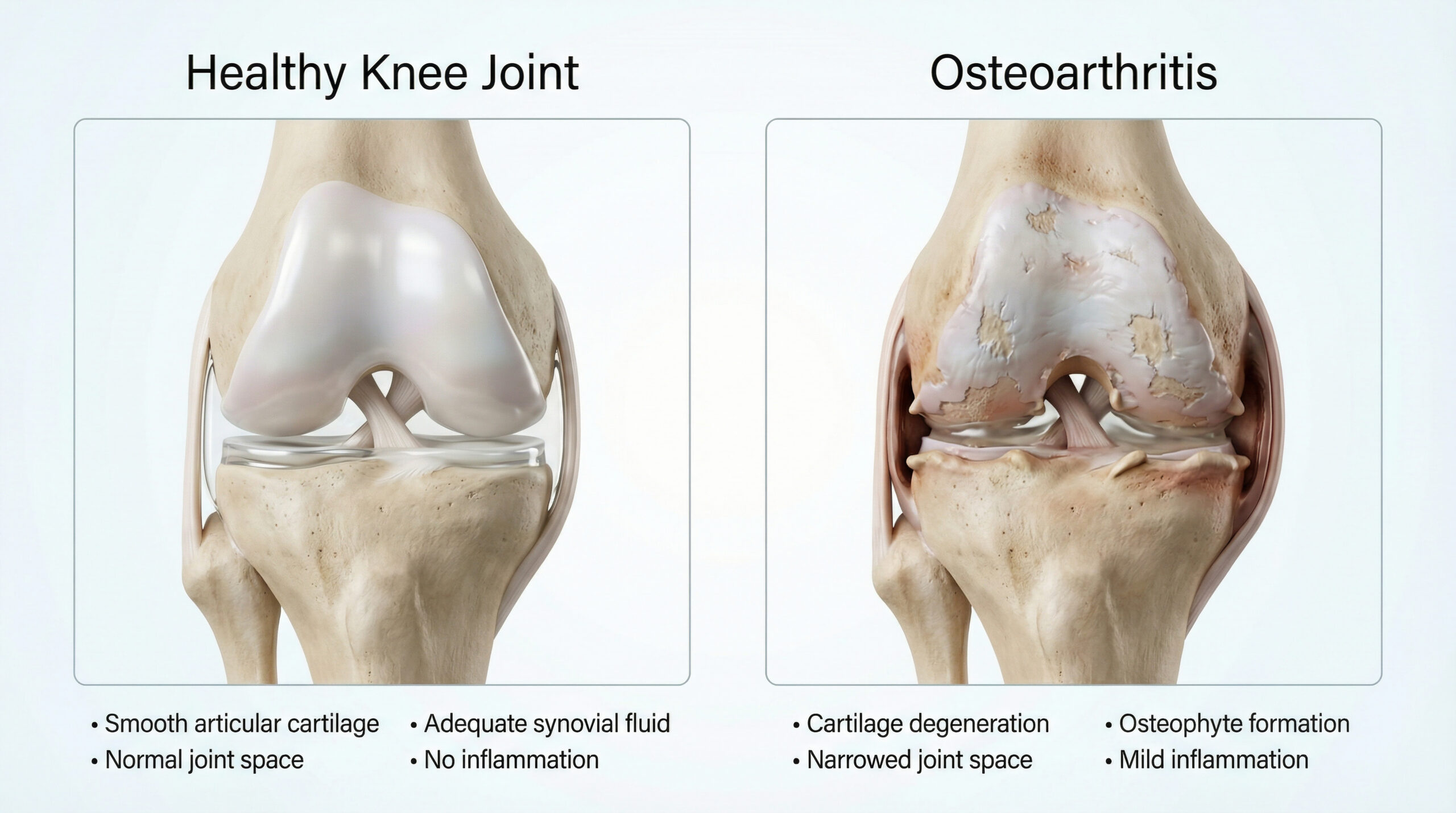
A healthy knee has smooth cartilage and well-functioning synovial fluid, while osteoarthritis can produce cartilage loss, joint-space narrowing, inflammation, and changes in joint lubrication.
Understanding Osteoarthritis
Osteoarthritis is a chronic disorder involving the entire joint. It is often described as “wear-and-tear arthritis,” but that description is incomplete. Mechanical loading contributes to the condition, yet osteoarthritis also involves inflammation, cellular changes, altered bone remodeling, loss of cartilage integrity, and changes within the synovial fluid.
Healthy articular cartilage allows opposing bone surfaces to move with very little friction. Over time, osteoarthritis can cause that cartilage to soften, thin, fissure, and gradually wear away. The bone beneath the cartilage may become denser, and bone spurs may form around the joint margins.
The synovial lining can also become irritated and produce inflammatory chemicals that contribute to pain and swelling. Joint fluid may become less effective at lubricating and cushioning the joint.
Common Symptoms of Osteoarthritis
- Pain during walking, standing, climbing stairs, gripping, or other joint activity
- Stiffness after rest or inactivity
- Reduced range of motion
- Swelling or recurrent joint fluid accumulation
- Grinding, clicking, or a sensation of rough movement
- Difficulty with exercise and daily activities
- Loss of strength in the muscles surrounding the joint
- Progressive limitation in mobility and function
The severity of pain does not always match the degree of arthritis visible on an X-ray. Some patients have significant radiographic changes with relatively modest symptoms, while others experience substantial pain despite less dramatic imaging findings.
Clinical Perspective
An injection decision should not be based on an X-ray alone. Symptoms, physical examination findings, functional limitations, prior treatment response, joint alignment, instability, body weight, muscle strength, and the patient’s goals all influence whether viscosupplementation is reasonable.
What Happens to Hyaluronic Acid in an Arthritic Joint?
In osteoarthritis, the concentration, molecular size, and mechanical behavior of naturally occurring hyaluronic acid may change. Synovial fluid can become less viscous and less effective at performing its normal lubricating and shock-absorbing functions.
Inflammation within the joint can accelerate the breakdown of hyaluronic acid. The altered joint environment may then contribute to further irritation, creating a cycle of pain, reduced movement, muscle weakness, and worsening function.
Viscosupplementation was developed to supplement the altered synovial fluid with manufactured hyaluronic acid. The injected material does not remain inside the joint permanently. Its clinical effects, when they occur, may last longer than the product itself remains physically present, suggesting that its actions may involve more than simple mechanical lubrication.
How Hyaluronic Acid Injections May Work
Hyaluronic acid injections are frequently described as adding lubrication to an arthritic joint. That explanation is useful, but it is only part of the picture. Laboratory and clinical research suggests several possible mechanisms.
1. Improving the Mechanical Properties of Joint Fluid
Injected hyaluronic acid may temporarily improve the viscosity and elasticity of synovial fluid. This may help the joint surfaces move more smoothly and may improve the fluid’s ability to distribute mechanical forces.
2. Reducing Friction During Movement
By supplementing the joint fluid, hyaluronic acid may reduce friction between moving joint surfaces. This does not replace missing cartilage, but it may make movement more comfortable for some patients.
3. Modulating Inflammatory Activity
Hyaluronic acid may interact with cells and receptors in the synovial lining and cartilage. These interactions may influence inflammatory signaling and reduce the activity of certain substances involved in joint irritation and cartilage breakdown.
4. Influencing Pain Signaling
Some evidence suggests that hyaluronic acid may affect pain-sensitive nerve endings within the joint. This may partly explain why clinical improvement can continue after the injected material has begun to break down.
5. Supporting the Joint Environment
Experimental research has examined whether hyaluronic acid may support cartilage cells and encourage the joint to produce more of its own hyaluronic acid. These potential biological effects remain an area of investigation and should not be interpreted as proof that gel injections rebuild damaged cartilage.
Key Point: Hyaluronic acid may work through a combination of lubrication, mechanical cushioning, inflammatory modulation, and altered pain signaling. Its effect is more complex than simply placing “oil” inside the joint.
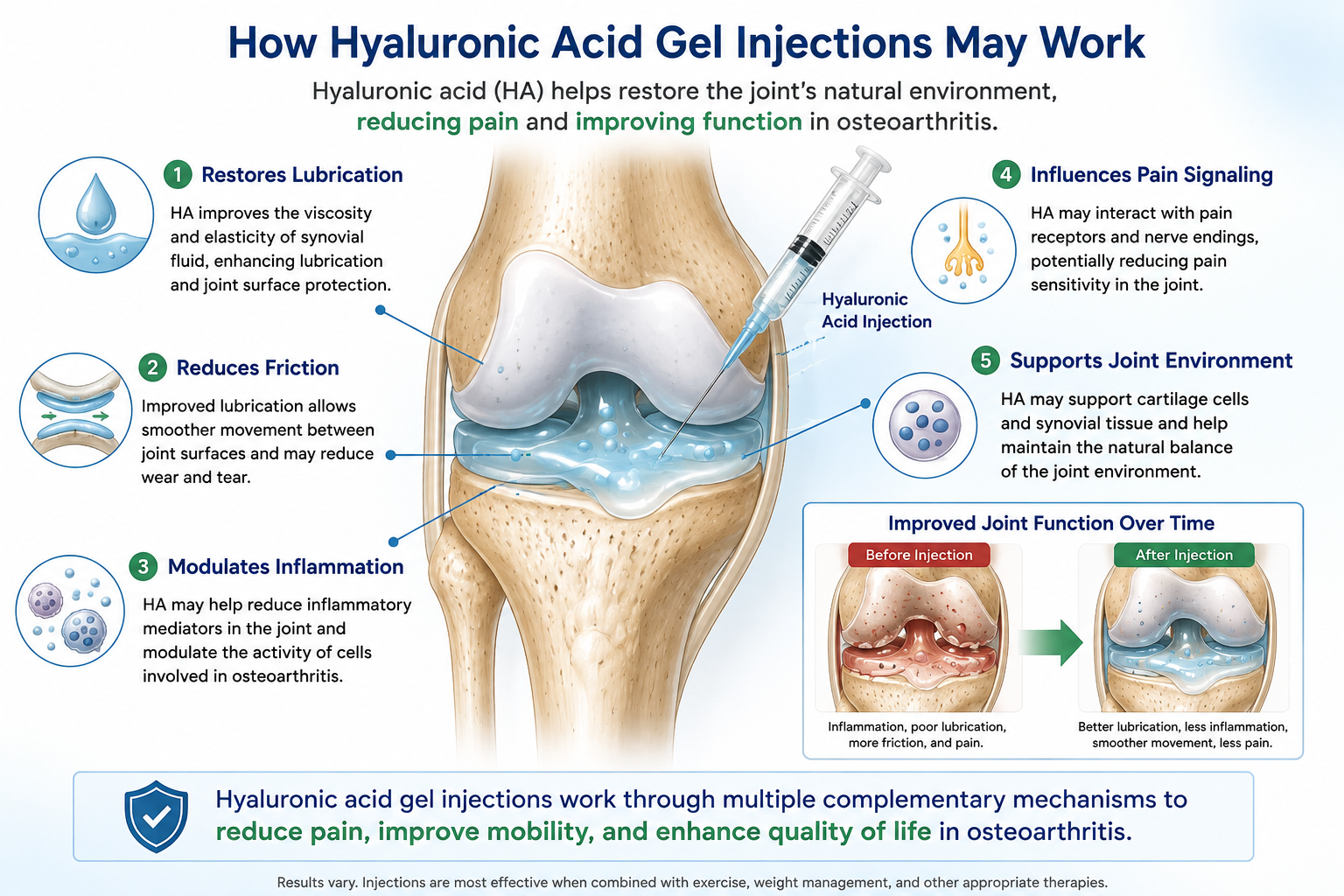
Hyaluronic acid injections may reduce osteoarthritis symptoms through mechanical lubrication, improved synovial fluid properties, inflammatory modulation, and effects on pain signaling.
Which Joints Can Be Treated With Hyaluronic Acid?
Hyaluronic acid injections are used predominantly for knee osteoarthritis. Most products marketed in the United States are specifically authorized for injection into the knee, and the largest body of clinical research concerns knee arthritis.
Use in other joints may be considered in selected circumstances, but the scientific evidence, insurance coverage, regulatory status, and professional-society recommendations differ substantially by joint.
Knee Joint
The knee is the most commonly treated joint. Gel injections may be considered when knee osteoarthritis continues to cause pain despite exercise, physical therapy, activity modification, weight management, topical medications, oral medications, bracing, or other conservative care.
Some patients seek hyaluronic acid because corticosteroid injections provided only brief relief, produced unwanted blood-sugar elevation, or are not preferred for repeated use. Other patients consider gel injections while trying to postpone knee replacement surgery.
Hip Joint
Hyaluronic acid injection into the hip is not supported as strongly as its use in the knee. Major professional guidelines have recommended against routine use for symptomatic hip osteoarthritis because clinical trials have not consistently demonstrated meaningful benefit.
The hip is also a deep joint located near important nerves and blood vessels. Any hip injection should therefore be performed with image guidance when clinically appropriate. Patients considering an off-label hip injection should understand the uncertainty in the evidence before proceeding.
Shoulder Joint
Hyaluronic acid has been studied for glenohumeral osteoarthritis and certain other shoulder disorders, but results have been inconsistent. It is not generally considered a routine first-line injection for shoulder pain.
Shoulder pain may originate from the joint, rotator cuff, bursa, biceps tendon, acromioclavicular joint, or cervical spine. Accurate diagnosis is essential before selecting an injection target.
Thumb and Hand Joints
Hyaluronic acid has been investigated for thumb carpometacarpal arthritis and arthritis affecting smaller hand joints. Evidence remains limited, and some professional guidelines conditionally recommend against its routine use for thumb-base osteoarthritis.
Ankle and Foot Joints
Small studies have evaluated viscosupplementation for ankle and foot arthritis, but the evidence is less established than it is for the knee. When used in small or anatomically complex joints, ultrasound or fluoroscopic guidance may improve confidence that the medication reaches the intended joint space.
Important: A product’s use in the knee does not automatically mean that the same product is approved, covered, or proven effective for the hip, shoulder, hand, ankle, or other joints. Off-label use should be discussed transparently.
Where Hyaluronic Acid Fits in an Arthritis Treatment Plan
Hyaluronic acid injections are generally considered one component of a broader osteoarthritis treatment strategy. They should not replace treatments that improve strength, mobility, balance, cardiovascular health, and long-term joint function.
Depending on the patient, a comprehensive treatment plan may include:
- Low-impact aerobic exercise
- Strengthening of the muscles surrounding the joint
- Physical therapy or a structured home exercise program
- Weight reduction when excess body weight increases joint loading
- Activity modification without unnecessary inactivity
- Topical anti-inflammatory medication
- Oral medication when medically appropriate
- Bracing, orthotics, or assistive devices
- Corticosteroid injection in selected situations
- Platelet-rich plasma or other procedures when appropriate
- Surgical consultation when non-surgical care no longer provides acceptable function
Professional recommendations regarding knee viscosupplementation are not uniform. Some guidelines recommend against its routine use because average improvements in clinical trials may be modest or inconsistent. Other clinicians and organizations recognize that selected patients may experience worthwhile relief after other conservative treatments have failed.
These apparently conflicting positions are not necessarily irreconcilable. A treatment may have a limited average effect across a large population while still helping a subgroup of appropriately selected patients. The challenge is identifying who is most likely to benefit and maintaining realistic expectations.
Treatment Tip: The most useful question is often not simply, “Do gel injections work?” A better question is, “Given this patient’s diagnosis, arthritis severity, prior treatments, medical risks, and goals, is a trial of viscosupplementation reasonable?”
Who May Be a Good Candidate for Hyaluronic Acid Injections?
Hyaluronic acid injections are most commonly considered for adults with symptomatic knee osteoarthritis whose pain continues despite an appropriate trial of non-surgical treatment. The decision should be based on the individual patient rather than on age, an X-ray, or a single symptom alone.
A reasonable candidate may have:
- Knee pain that is consistent with osteoarthritis
- Stiffness or reduced function affecting walking, stairs, exercise, work, or daily activities
- Imaging findings that support the diagnosis
- Persistent symptoms despite exercise, physical therapy, weight management, medication, bracing, or activity modification
- Inadequate or short-lived relief from a prior corticosteroid injection
- A medical reason to limit repeated corticosteroid exposure
- A preference to continue non-surgical treatment before considering joint replacement
- Realistic expectations regarding the likely benefits and limitations
Patients with mild to moderate osteoarthritis are often considered more likely to respond than patients with severe joint destruction, major deformity, or advanced loss of joint space. However, arthritis severity is only one factor. Some patients with advanced disease may still experience temporary symptom relief, while some patients with less severe imaging changes may not respond.
The Diagnosis Should Be Clear
Not every painful knee is painful because of osteoarthritis. Symptoms may arise from a meniscal injury, ligament instability, inflammatory arthritis, referred pain from the hip or spine, a stress injury, tendon disease, bursitis, or another condition. Injecting hyaluronic acid into the knee is unlikely to help when the principal pain generator is outside the joint.
Expectations Matter
A good candidate understands that viscosupplementation is a symptom-management treatment. It may reduce pain and improve function, but it cannot restore a severely damaged joint to normal. Improvement is usually gradual, and a meaningful response cannot be guaranteed.
Clinical Perspective
The best candidate is not necessarily the patient with the most dramatic X-ray. It is the patient with a well-established diagnosis, symptoms arising primarily from the joint, reasonable treatment goals, and a clinical situation in which the potential benefit justifies the cost and procedural burden.
Who Should Not Receive a Hyaluronic Acid Injection?
Hyaluronic acid injections are generally well tolerated, but they are not appropriate in every situation. Treatment should usually be postponed or avoided when the joint or surrounding tissues may be infected.
Potential reasons not to proceed include:
- An active infection inside the joint
- A skin infection, open wound, or significant rash near the proposed injection site
- Unexplained fever or systemic illness
- A known serious hypersensitivity to the selected product or one of its components
- A previous severe reaction to a hyaluronic acid injection
- Unexplained acute joint swelling that requires diagnostic evaluation
- A fracture or other condition requiring a different treatment
- A diagnosis other than osteoarthritis that has not been adequately evaluated
Large or Unexplained Joint Effusion
A swollen joint may contain excess synovial fluid, blood, crystals, inflammatory material, or infection. When the cause is uncertain, aspiration and laboratory analysis may be more important than immediately injecting hyaluronic acid.
When a known osteoarthritic knee has a substantial effusion, removing excess fluid before viscosupplementation may reduce pressure and create more room within the joint. The decision depends on the clinical circumstances.
Pregnancy and Breastfeeding
Safety information during pregnancy and breastfeeding is limited for many hyaluronic acid products. Elective treatment should therefore be discussed with the treating physician and obstetric clinician, with attention to the specific product information and the reason for treatment.
Blood-Thinning Medication
Patients taking anticoagulants or antiplatelet medication should inform the physician before the procedure. Joint injections can often be performed without interrupting necessary medication, but the bleeding risk, medication indication, needle approach, and individual medical history should be reviewed.
Important: Do not stop aspirin, anticoagulants, or other prescribed medication unless the clinician managing that medication specifically advises you to do so.
Understanding the Different Hyaluronic Acid Products
Several hyaluronic acid products are available for knee osteoarthritis. Patients often ask whether one brand is clearly better than another. Products differ in their concentration, molecular characteristics, source, processing, injection volume, and recommended number of injections. However, research has not established one product as universally superior for every patient.
The product selected may depend on:
- Insurance formulary requirements
- Prior authorization rules
- Previous response to a particular product
- History of allergy or injection reaction
- Preference for one injection versus a series
- The physician’s clinical judgment and familiarity with the product
- Current availability and cost
| Product | Commonly Used Schedule | General Product Feature |
|---|---|---|
| Synvisc-One | One injection | Cross-linked hylan product |
| Synvisc | Three weekly injections | Cross-linked hylan product |
| Monovisc | One injection | Single-injection formulation |
| Durolane | One injection | Stabilized single-injection formulation |
| Orthovisc | Series of injections | High-molecular-weight hyaluronan formulation |
| Euflexxa | Three weekly injections | Biofermentation-derived formulation |
| Gelsyn-3 | Three weekly injections | Multi-injection sodium hyaluronate formulation |
| Hymovis | Two injections one week apart | Modified hyaluronan formulation |
Product availability, labeling, dosing schedules, and insurance coverage may change. The current manufacturer instructions and payer requirements should be reviewed before treatment.
What Does Molecular Weight Mean?
Hyaluronic acid consists of long molecular chains. Products are often described as having low, intermediate, or high molecular weight. Some are also chemically cross-linked or otherwise modified to increase their resistance to breakdown and allow a longer residence time within the joint.
Although these properties may affect viscosity and laboratory behavior, they do not provide a simple formula for predicting which product will work best for an individual patient. Studies comparing formulations have produced mixed results.
What Does Cross-Linked Mean?
Cross-linking connects hyaluronic acid chains to create a larger, more durable gel structure. This can increase viscosity and slow degradation. A thicker or more highly cross-linked product is not automatically more effective, and some patients may experience more pronounced temporary swelling or an inflammatory-type reaction after certain formulations.
Avian-Derived vs Biofermentation-Derived Products
Some older or established products are produced from avian tissue, traditionally associated with rooster combs. This is the origin of the patient term “rooster comb injection.” Other products are manufactured through bacterial biofermentation and do not use avian tissue.
Patients with a history of significant allergy to avian proteins, feathers, or eggs should discuss that history with the physician. The relevance depends on the specific product and its current prescribing information.
Key Point: Brand names are less important than confirming the correct diagnosis, placing the medication accurately inside the joint, selecting an appropriate patient, and setting realistic expectations.
Single Injection vs Multiple Injection Series
Some hyaluronic acid products are administered as one injection, while others require two, three, or more visits. Patients often assume that a single injection must be stronger or that a longer series must be more effective. Neither assumption is consistently supported for every product or patient.
| Consideration | Single-Injection Product | Multiple-Injection Series |
|---|---|---|
| Convenience | One procedure visit | Requires several visits |
| Needle procedures | One injection | More than one injection |
| Injection volume | May involve a larger amount at one visit | Total treatment divided across visits |
| Temporary fullness or swelling | May occur after the single treatment | May occur after any injection in the series |
| Effectiveness | May provide meaningful relief in selected patients | May provide meaningful relief in selected patients |
| Insurance | Coverage depends on plan and formulary | Coverage depends on plan and formulary |
There is no universal rule that a single-injection product is better or worse than a multi-injection product. Convenience may favor a one-visit treatment, especially for patients who travel a long distance or have difficulty attending repeated appointments. A multi-injection series may be required when that product is preferred by the insurer or physician.
Each treatment course should follow the approved schedule for the specific product. Doses from different brands should not be combined into an improvised regimen.
Why Image Guidance May Matter
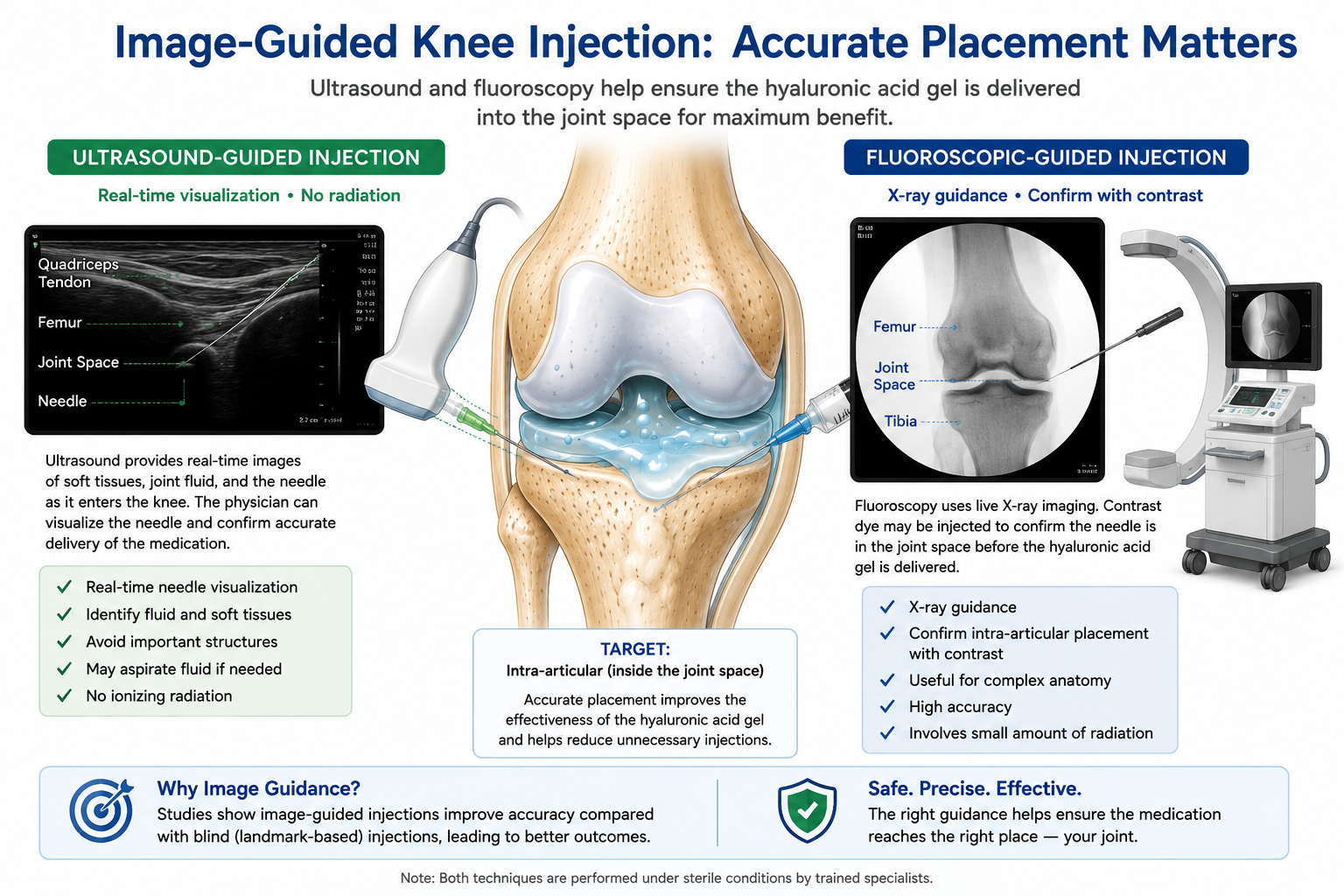
For viscosupplementation to have its intended effect, the medication must be delivered into the joint space. Landmark-guided knee injections can be performed successfully, particularly when the anatomy is easily identified and the clinician is experienced. However, accuracy varies according to the approach, the patient’s anatomy, body habitus, joint deformity, prior surgery, and the presence of an effusion.
Image guidance allows the physician to visualize or confirm the needle path and improve confidence that the medication reaches the intended location.
Ultrasound Guidance
Ultrasound uses sound waves to create real-time images of the joint and surrounding soft tissues. It can identify fluid, synovial thickening, tendons, blood vessels, and the needle as it advances.
Potential advantages include:
- No ionizing radiation
- Real-time visualization of the needle
- Identification of joint fluid before injection
- Ability to aspirate an effusion during the same procedure
- Improved injection accuracy compared with landmark guidance in many studies
- Visualization of nearby tendons and blood vessels
Fluoroscopic Guidance
Fluoroscopy uses real-time X-ray imaging. A small amount of contrast material may be injected to confirm that the needle is inside the joint before the hyaluronic acid is administered.
Fluoroscopy can be particularly useful for deep joints, complex anatomy, substantial deformity, or situations in which confirmation of intra-articular contrast spread is desirable. It does involve a small amount of radiation and usually requires a dedicated procedure setting.
Is Image Guidance Always Required for a Knee Injection?
Not every routine knee injection must be image guided. Experienced clinicians can perform accurate landmark-guided injections in many patients. Nevertheless, ultrasound guidance may be especially valuable when:
- Previous landmark-guided injections were unsuccessful
- The knee has significant deformity
- The patient has a larger body habitus
- There is a substantial or recurrent effusion
- Prior surgery has altered the anatomy
- The target joint is small, deep, or difficult to access
- Precise placement is particularly important because of medication cost
Treatment Tip: Image guidance does not make an ineffective treatment effective, but it can reduce uncertainty about whether the medication actually entered the intended joint.
What Happens During a Hyaluronic Acid Injection?
A hyaluronic acid injection is usually performed as an outpatient procedure. The precise steps vary according to the joint, the product, the presence of excess fluid, and whether ultrasound or fluoroscopy is used.
Before the Injection
The physician reviews the diagnosis, imaging, symptoms, prior treatments, allergies, medications, and relevant medical history. The joint is examined to identify swelling, tenderness, range-of-motion loss, instability, warmth, or signs that another diagnosis may be present.
Patients should report:
- Fever, illness, or recent infection
- Skin irritation near the joint
- Medication allergies
- Prior reactions to gel injections
- Use of anticoagulants or antiplatelet medication
- Pregnancy or possible pregnancy
- A planned joint-replacement operation
Positioning and Sterile Preparation
The patient is positioned to provide safe access to the joint. The skin is cleaned with an antiseptic solution, and sterile technique is used. A local anesthetic may be applied to the skin or injected along the anticipated needle path when appropriate.
Aspiration of Excess Fluid
When substantial fluid is present, the physician may aspirate it before administering the gel. This can reduce pressure and may help confirm that the needle is positioned within the joint.
Fluid may be sent for laboratory testing when infection, gout, pseudogout, bleeding, or inflammatory arthritis is suspected.
Needle Placement
The needle is advanced into the joint using anatomical landmarks, ultrasound, or fluoroscopy. With ultrasound, the physician watches the needle enter the joint in real time. With fluoroscopy, contrast may be used to confirm the position.
Injection of Hyaluronic Acid
After satisfactory placement is established, the prescribed hyaluronic acid product is injected slowly. Patients may feel pressure, fullness, or temporary discomfort as the material enters the joint.
After the Injection
The needle is removed, a small dressing is applied, and the patient is observed briefly when appropriate. Most patients leave shortly afterward and walk out of the office or procedure facility.
Sedation is generally unnecessary for a routine knee injection. Arrangements may differ for deeper joints, unusually difficult procedures, or patients with special medical needs.
Key Point: The injection itself is only one part of treatment. Accurate diagnosis, sterile technique, correct product selection, intra-articular placement, and an appropriate rehabilitation plan all influence the overall result.
Recovery After a Hyaluronic Acid Injection
Recovery after a routine knee gel injection is usually brief. Most patients can stand and walk shortly after the procedure and return home the same day. Mild soreness, pressure, warmth, or fullness in the joint can occur for a day or two.
The injection does not usually require sedation, stitches, or a prolonged recovery period. However, the joint should be treated gently immediately afterward, particularly when a larger-volume single-injection product has been used.
| Time After Injection | What Patients Commonly Experience | General Guidance |
|---|---|---|
| First several hours | Mild pressure, tenderness, or temporary numbness if local anesthetic was used | Walk as needed but avoid unnecessary strain |
| First 24 to 48 hours | Possible soreness, fullness, or mild swelling | Avoid running, jumping, heavy lifting, prolonged standing, or strenuous exercise |
| After 48 hours | Most procedure-related discomfort should be improving | Gradually resume usual activity as tolerated |
| Following weeks | Potential gradual reduction in arthritis pain and stiffness | Continue the prescribed exercise and rehabilitation program |
Can I Walk After the Injection?
Most patients can walk immediately afterward. Routine walking around the home or office is generally acceptable, but prolonged standing, long-distance walking, strenuous exercise, and high-impact activity are usually limited for approximately 24 to 48 hours.
Can I Drive Home?
Many patients can drive after a routine knee injection when no sedating medication has been used and they can control the vehicle safely. Driving may not be appropriate when the treated leg feels weak, painful, or numb, or when the procedure involves a deeper joint or sedation.
Managing Temporary Soreness
A wrapped cold pack may be applied for approximately 10 to 15 minutes at a time, with a protective layer between the cold pack and skin. Medication may be used when medically appropriate and consistent with the treating clinician’s instructions.
Important: Increasing redness, marked swelling, fever, chills, drainage, severe pain, inability to bear weight, or symptoms that rapidly worsen rather than improve require prompt medical evaluation.
When Should Pain Relief Begin?
Hyaluronic acid does not usually provide the immediate anti-inflammatory effect associated with a corticosteroid injection. Some patients begin noticing improvement within one or two weeks, while others require several weeks before judging the response.
When treatment consists of a series, improvement may not become apparent until after the series has been completed. The response should therefore not be judged solely by how the joint feels during the first few days.
Potential improvements may include:
- Reduced pain during walking or standing
- Less stiffness after sitting or resting
- Improved ability to climb stairs
- Greater tolerance for exercise or physical therapy
- Reduced reliance on pain medication
- Improved participation in work, recreation, or daily activities
Key Point: A successful result does not always mean complete pain relief. A meaningful improvement in walking, sleep, exercise tolerance, medication use, or daily function may represent a worthwhile response.
How Long Do Gel Injections Last?
For patients who respond, symptom improvement commonly lasts several months. Some experience a shorter benefit, while others report relief lasting six months or longer. The duration cannot be predicted precisely before treatment.
The injected material itself does not remain inside the joint for the entire period of symptom relief. Its clinical effect may continue after much of the product has been broken down, possibly because of changes in pain signaling, inflammation, and the joint environment.
Factors that may influence duration include:
- Severity and distribution of osteoarthritis
- Joint alignment and stability
- Muscle strength and conditioning
- Body weight and mechanical loading
- Activity demands
- Presence of synovitis or recurrent effusion
- Accuracy of intra-articular placement
- Response to previous injection therapy
- Participation in exercise and rehabilitation
How Effective Are Hyaluronic Acid Injections?
The effectiveness of hyaluronic acid injections remains debated. Some randomized trials, systematic reviews, and clinical experiences suggest that viscosupplementation can reduce pain and improve function in selected patients with knee osteoarthritis. Other analyses find that the average benefit compared with saline injection is small and may not reach a clinically meaningful threshold.
Professional recommendations therefore differ. The American Academy of Orthopaedic Surgeons does not recommend hyaluronic acid injections for the routine treatment of symptomatic knee osteoarthritis. The American College of Rheumatology guideline conditionally recommends against their routine use for knee osteoarthritis, while acknowledging that they may still be considered through shared decision-making after other treatments have not provided adequate relief.
Other consensus groups and clinicians take a more favorable view for carefully selected patients, particularly those with knee-predominant disease, earlier stages of osteoarthritis, contraindications to other therapies, or a prior favorable response.
Why Do Studies Reach Different Conclusions?
Trials vary substantially in their design. Differences include:
- The hyaluronic acid product studied
- Single-injection versus multi-injection regimens
- Arthritis severity
- Patient age and body weight
- Use or absence of image guidance
- Outcome measures and follow-up periods
- Study quality and sample size
- Whether saline injection is considered an inactive placebo
- How clinically meaningful improvement is defined
- Industry sponsorship and publication bias
An injection of saline into a painful joint may itself produce a therapeutic response through joint aspiration, lavage, dilution of inflammatory mediators, needling effects, and patient expectations. This makes it difficult to isolate the specific effect of hyaluronic acid from the broader response to an intra-articular procedure.
Clinical Perspective
The research does not support promising that gel injections will work for every patient. It also does not mean that no patient benefits. The most defensible approach is selective use, transparent discussion of the uncertain average benefit, and reassessment based on measurable changes in pain and function.
Why Results Differ Among Patients
Osteoarthritis is not identical from one patient to another. Two people with apparently similar X-rays may have different pain generators, levels of inflammation, joint mechanics, physical demands, and nervous-system sensitivity.
Patients may be less likely to experience substantial improvement when pain is driven primarily by:
- Severe joint-space loss with major mechanical deformity
- Marked instability or malalignment
- Advanced bone damage
- Inflammatory arthritis rather than osteoarthritis
- Referred pain from the hip, spine, or peripheral nerves
- Tendon, bursa, or ligament disease outside the joint
- Central sensitization or widespread chronic pain
- Insufficient muscle strength and conditioning
A technically successful injection cannot correct every structural or mechanical problem. This is why viscosupplementation should usually be integrated with rehabilitation rather than used as an isolated treatment.
Do Gel Shots Regrow Cartilage?
Hyaluronic acid injections should not be presented as a proven method for regrowing lost cartilage. They do not restore a severely narrowed joint space, remove bone spurs, reverse deformity, or recreate a normal joint surface.
Laboratory research has identified possible effects on cartilage cells, inflammatory signaling, and production of naturally occurring hyaluronic acid. These findings are scientifically interesting, but they do not establish reliable cartilage regeneration in patients with osteoarthritis.
The primary clinical purpose of viscosupplementation is symptom management:
- Reducing pain
- Improving movement
- Supporting participation in exercise
- Improving daily function
- Potentially reducing reliance on other treatments
Key Point: Gel injections may improve how an arthritic joint feels and functions without repairing the underlying cartilage loss.
Can Gel Injections Help Bone-on-Bone Arthritis?
“Bone-on-bone” is a common description for advanced osteoarthritis with severe joint-space narrowing and extensive cartilage loss. Hyaluronic acid cannot replace the missing cartilage or reverse the underlying structural damage.
Some patients with advanced arthritis may still experience temporary pain reduction, but the likelihood and magnitude of benefit may be lower than in patients with less advanced disease. Major deformity, instability, loss of motion, persistent night pain, and substantial functional impairment may indicate that the joint has reached a stage at which injection therapy is unlikely to provide sufficient relief.
A trial may still be reasonable when:
- Surgery must be delayed for medical or personal reasons
- The patient is not currently a surgical candidate
- Other conservative treatments have been exhausted
- The patient understands that relief may be modest or absent
- A previous course provided meaningful benefit
Clinical Perspective
Advanced arthritis does not automatically make an injection inappropriate, but expectations must change. The goal may be temporary functional improvement rather than substantial or lasting pain elimination.
Hyaluronic Acid vs Corticosteroid Injections
Corticosteroid and hyaluronic acid injections are not interchangeable. They have different mechanisms, time courses, strengths, and limitations.
| Feature | Hyaluronic Acid | Corticosteroid |
|---|---|---|
| Primary purpose | Supplement synovial fluid properties and influence pain and inflammation | Suppress inflammation |
| Onset | Usually gradual over several weeks | Often faster, sometimes within several days |
| Duration | May last several months in responders | Often shorter, although individual responses vary |
| Best suited for | Selected patients with symptomatic knee osteoarthritis | Inflammatory flare, synovitis, swelling, or short-term symptom control |
| Blood sugar | Does not usually produce the steroid-related glucose rise | May temporarily increase blood glucose |
| Cartilage concerns | Not proven to regenerate cartilage | Repeated exposure requires thoughtful use because of potential joint-tissue effects |
| Insurance process | Often requires prior authorization and a preferred product | Often easier to authorize |
A corticosteroid injection may be more appropriate when the joint is acutely inflamed and rapid relief is needed. Hyaluronic acid may be considered when a more gradual treatment is acceptable, steroid exposure is undesirable, or prior conservative treatment has not provided adequate relief.
Further Reading
Learn more in our guide to
corticosteroid injections for arthritis
, including benefits, limitations, blood-sugar effects, repeat injections, and recovery.
Hyaluronic Acid vs Platelet-Rich Plasma
Platelet-rich plasma, commonly called PRP, is prepared from a sample of the patient’s blood. The blood is processed to concentrate platelets and associated signaling proteins before the preparation is injected into the affected joint.
Some comparative studies and meta-analyses suggest that PRP may provide greater or longer-lasting improvement than hyaluronic acid for selected patients with knee osteoarthritis. However, PRP preparation methods vary substantially, and insurance coverage is limited because many plans consider it investigational.
| Feature | Hyaluronic Acid | PRP |
|---|---|---|
| Source | Manufactured hyaluronic acid product | Prepared from the patient’s blood |
| Intended action | Improve synovial fluid properties and modulate symptoms | Deliver concentrated platelets and biological signaling factors |
| Evidence | Mixed, with disagreement among guidelines | Promising for selected knee-OA patients, but protocols vary |
| Insurance | Frequently covered for qualifying knee osteoarthritis | Frequently not covered |
| Standardization | Commercial products have defined formulations and schedules | Concentration, leukocyte content, activation, and preparation vary |
| Cartilage regeneration | Not established | Not reliably established in routine clinical care |
The choice between PRP and hyaluronic acid depends on the diagnosis, arthritis severity, age, health history, prior treatment, cost, insurance coverage, and the patient’s preferences. Neither treatment should be marketed as a guaranteed method of regenerating cartilage.
Can Hyaluronic Acid Be Combined With Other Injections?
Hyaluronic acid has been studied in combination with corticosteroid and PRP. A combination may theoretically offer a faster initial response from corticosteroid or complementary biological effects from PRP, but treatment protocols are not standardized.
Combining products should not be automatic. Important considerations include:
- Whether the combination has supportive evidence for the specific condition
- Compatibility with the selected product’s instructions
- Potential dilution or alteration of the injected preparation
- Additional cost
- Insurance restrictions
- Increased difficulty identifying which treatment produced the response or reaction
In many cases, treatments are separated so that effectiveness and tolerability can be assessed more clearly.
Can Gel Injections Delay Knee Replacement?
Observational studies have reported an association between hyaluronic acid treatment and a longer interval before knee replacement. However, these studies cannot prove that the injection itself caused the delay.
Patients who choose injections may differ from patients who proceed directly to surgery. They may have less advanced arthritis, different medical risks, stronger preferences against surgery, or better responses to non-surgical care. Insurance requirements and access to orthopedic care may also affect timing.
A gel injection may functionally postpone surgery when it provides enough relief for the patient to remain active and satisfied with non-surgical treatment. It should not, however, be used to prolong severe disability indefinitely when joint replacement is medically appropriate and the patient is otherwise a suitable surgical candidate.
Treatment Tip: Delaying surgery is valuable only when function and quality of life remain acceptable. Time alone is not the goal.
Hyaluronic Acid Before Joint-Replacement Surgery
Patients considering knee or hip replacement should tell both the injecting physician and orthopedic surgeon about all recent joint injections. Surgeons and healthcare systems may establish a minimum interval between an intra-articular injection and elective joint replacement because of concern about infection risk.
The recommended interval may differ by surgeon, injection type, joint, and patient risk factors. A gel injection should not be scheduled shortly before planned surgery without coordinating with the orthopedic surgeon.
Important: Tell your orthopedic surgeon the exact date, joint, and type of every injection received before joint-replacement surgery.
Risks and Potential Complications
Hyaluronic acid injections are generally well tolerated, and most adverse effects are temporary reactions around the treated joint. Nevertheless, any procedure that places a needle inside a joint carries potential risk.
Temporary Pain, Swelling, or Stiffness
The most common reaction is temporary soreness, warmth, stiffness, swelling, or fluid accumulation after injection. Symptoms are usually mild and improve with reduced activity, cold application, and time.
Post-Injection Flare
A post-injection flare can produce increased discomfort during the first several days. A mild flare can resemble temporary aggravation of arthritis, but marked or progressive symptoms require evaluation to exclude infection or a more significant inflammatory reaction.
Severe Acute Localized Reaction
Rarely, a patient develops pronounced pain, swelling, warmth, and limited motion after viscosupplementation. This has sometimes been called a pseudoseptic reaction because it can resemble an infected joint even when cultures are negative.
Because infection cannot be excluded by appearance alone, substantial swelling or severe pain may require aspiration, laboratory analysis, and urgent treatment while the cause is determined.
Infection
Joint infection is uncommon but potentially serious. Warning signs include worsening pain, marked swelling, redness, fever, chills, drainage, and inability to move or bear weight on the joint.
Bleeding or Bruising
Minor bleeding or bruising can occur where the needle enters the skin. The risk may be greater in patients with a bleeding disorder or those taking anticoagulant or antiplatelet medication.
Allergic or Hypersensitivity Reaction
Allergic reactions are uncommon. Patients should disclose prior reactions to hyaluronic acid products and relevant avian allergies when an avian-derived product is being considered.
Failure to Improve
The most frequent unfavorable outcome is simply inadequate relief. The procedure may be technically successful even when the patient does not experience a meaningful clinical response.
Seek Prompt Medical Attention: Contact the treating office promptly for severe or rapidly increasing pain, substantial swelling, redness, fever, chills, drainage, rash, difficulty breathing, or inability to bear weight.
Can Hyaluronic Acid Injections Be Repeated?
A course may be repeated when the first course produced meaningful relief that later wore off, the diagnosis remains appropriate, and the patient did not experience a serious reaction. The interval depends on the product instructions, clinical circumstances, and insurance policy.
Before repeating treatment, the physician should review:
- How much pain relief occurred
- How long the benefit lasted
- Whether function improved
- Whether medication use declined
- Whether adverse reactions occurred
- Whether the arthritis or diagnosis has changed
- Whether surgery or another treatment is now more appropriate
Repeated courses are difficult to justify when the prior injection produced no measurable benefit.
Insurance Coverage and Prior Authorization
Insurance coverage is most established for FDA-authorized hyaluronic acid products used to treat qualifying knee osteoarthritis. Coverage for the hip, shoulder, hand, ankle, or other joints is much less consistent and may be denied as off-label or investigational.
Many insurers require documentation of:
- A clinical diagnosis of symptomatic knee osteoarthritis
- Supporting imaging
- Failure or intolerance of conservative treatment
- Duration and severity of symptoms
- Prior medication, therapy, or injection history
- Absence of contraindications
- Use of the insurer’s preferred product
Does Medicare Cover Gel Injections?
Medicare may cover viscosupplementation for symptomatic knee osteoarthritis when applicable medical-necessity criteria are satisfied. Coverage details can vary by Medicare contractor, documentation, product, treatment interval, and individual circumstances.
Does Insurance Decide Which Brand Is Used?
Frequently, yes. An insurance plan may designate one or more preferred products and require use of those products before approving another formulation. The medication may need to be obtained through a specialty pharmacy rather than supplied directly by the physician’s office.
Key Point: Insurance authorization confirms coverage criteria, not that the treatment is guaranteed to help. Clinical appropriateness and coverage are related but separate questions.
An Individualized Treatment Approach
There is no single injection sequence that is correct for every patient with osteoarthritis. Treatment should account for the joint involved, symptom pattern, arthritis severity, inflammation, medical history, previous treatment response, insurance coverage, and personal goals.
A thoughtful treatment plan may ask:
- Is osteoarthritis truly the principal pain generator?
- Is pain arising from inside the joint or from surrounding structures?
- Has an appropriate exercise and strengthening program been attempted?
- Is there an effusion that should be evaluated or aspirated?
- Is rapid anti-inflammatory relief or gradual symptom management the priority?
- Did a previous corticosteroid, gel, or PRP injection help?
- Is joint replacement becoming appropriate?
- What outcome would make the procedure worthwhile to the patient?
The response should be measured using function as well as pain. Walking distance, stair tolerance, sleep, exercise participation, medication use, and ability to perform daily activities may provide a more meaningful assessment than a pain score alone.
Frequently Asked Questions
What are gel shots?
Gel shots are injections of hyaluronic acid into an arthritic joint. The treatment is formally called viscosupplementation and is used primarily for knee osteoarthritis.
Are gel shots the same as cortisone?
No. Cortisone is a corticosteroid that suppresses inflammation. Hyaluronic acid is intended to supplement the mechanical and biological properties of synovial fluid. Cortisone often works faster, while hyaluronic acid usually has a more gradual onset.
Are gel shots made from rooster combs?
Some products are derived from avian tissue, historically including rooster combs. Others are manufactured through bacterial biofermentation and contain no avian source material.
Which brand is best?
No brand has been proven universally superior for every patient. Product selection may be influenced by dosing schedule, prior response, allergy history, insurance formulary, availability, and physician judgment.
Is one injection better than a three-injection series?
A single injection is more convenient, but convenience does not necessarily mean greater effectiveness. Different products have different approved schedules, and evidence does not establish one schedule as best for every patient.
How painful is the procedure?
Most patients experience brief needle discomfort followed by pressure or fullness as the medication enters the joint. Local anesthetic and image guidance may improve comfort in appropriate circumstances.
How soon will I feel better?
Improvement is usually gradual. Some patients notice a change within one or two weeks, while others require several weeks or completion of the injection series.
How long does relief last?
Relief may last several months in patients who respond. Duration varies, and some patients experience little or no benefit.
Can I walk afterward?
Yes. Most patients can walk after a knee injection, although strenuous activity and prolonged weight-bearing are generally limited for approximately 24 to 48 hours.
Can I exercise afterward?
Gentle daily activity is usually acceptable, but running, jumping, heavy lifting, and strenuous exercise should be avoided during the initial recovery period. Exercise can then be resumed gradually as directed.
Can I drive after the injection?
Driving may be reasonable after a routine injection without sedation when the patient has normal control of the treated leg and can operate the vehicle safely. Individual instructions may differ.
Do gel shots regrow cartilage?
No reliable clinical evidence shows that hyaluronic acid injections regrow substantial lost cartilage or reverse advanced osteoarthritis. Their principal purpose is symptom relief.
Can they help bone-on-bone arthritis?
Some patients with advanced arthritis report temporary improvement, but responses may be less predictable and less substantial. The treatment cannot recreate missing cartilage or correct severe deformity.
Do hyaluronic acid injections raise blood sugar?
Hyaluronic acid does not usually cause the temporary blood-sugar elevation associated with corticosteroid injections. Patients with diabetes should still follow their usual monitoring and medical instructions.
Can both knees be treated?
Both knees may be treated when each has symptomatic osteoarthritis and the treatment is clinically appropriate. Insurance authorization may be required for each knee.
Is ultrasound guidance necessary?
Not every routine knee injection requires ultrasound. However, image guidance can improve placement accuracy and may be particularly useful with difficult anatomy, obesity, deformity, prior surgery, effusion, or an unsuccessful landmark-guided injection.
Can fluid be drained at the same time?
Yes. Excess fluid may be aspirated before the injection when clinically appropriate. Fluid may also be sent for testing if infection, crystal arthritis, bleeding, or inflammatory disease is suspected.
What is a pseudoseptic reaction?
It is a severe inflammatory-type reaction that can cause marked pain, warmth, and swelling after an injection and can resemble infection. Because the two conditions cannot be distinguished safely by symptoms alone, prompt medical evaluation may be necessary.
Can the injections be repeated?
They may be repeated when a previous course provided meaningful relief and no serious reaction occurred. Product instructions and insurance rules determine the minimum interval.
What happens if the injection does not work?
The diagnosis and treatment plan should be reconsidered. Options may include rehabilitation changes, medication, bracing, corticosteroid injection, PRP, radiofrequency treatment in selected knee-pain conditions, or surgical consultation.
Can I still have knee replacement later?
Yes. A prior gel injection does not prevent later knee replacement. The orthopedic surgeon should be told when the injection occurred because an interval before elective surgery may be required.
Does insurance cover gel shots?
Many plans cover an approved product for qualifying knee osteoarthritis, often after prior authorization. Coverage for other joints is less consistent, and the insurer may require a specific preferred brand.
Key Takeaways
- Hyaluronic acid joint injections are commonly called gel shots or viscosupplementation.
- The strongest clinical use and insurance coverage are generally for symptomatic knee osteoarthritis.
- Gel injections may reduce pain and improve function in selected patients, but results vary and professional guidelines disagree about routine use.
- Improvement usually develops gradually over several weeks and may last several months in responders.
- Hyaluronic acid does not reliably regrow cartilage, reverse bone-on-bone arthritis, or permanently cure osteoarthritis.
- Ultrasound or fluoroscopic guidance can improve confidence that the medication reaches the intended joint.
- Treatment works best as one part of a broader plan that includes exercise, strengthening, weight management when appropriate, and realistic functional goals.
Related Educational Articles
- Joint Injections: Steroid, Gel, PRP and Image-Guided Treatment
- Corticosteroid Joint Injections for Arthritis
- Platelet-Rich Plasma (PRP) Joint Injections
- PRP vs Hyaluronic Acid vs Cortisone Injections
- Knee Joint Injections
- Hip Joint Injections
- Shoulder Joint Injections
- Sacroiliac (SI) Joint Injections
- Hand, Wrist & Thumb Joint Injections
- Ankle & Foot Joint Injections
- Bursa Injections for Bursitis
References
- American Academy of Orthopaedic Surgeons. Management of Osteoarthritis of the Knee (Non-Arthroplasty), Third Edition. Evidence-Based Clinical Practice Guideline. Published August 31, 2021.
- Kolasinski SL, Neogi T, Hochberg MC, et al. 2019 American College of Rheumatology/Arthritis Foundation Guideline for the Management of Osteoarthritis of the Hand, Hip, and Knee. Arthritis Care & Research. 2020;72(2):149-162.
- Bannuru RR, Osani MC, Vaysbrot EE, et al. OARSI guidelines for the non-surgical management of knee, hip, and polyarticular osteoarthritis. Osteoarthritis and Cartilage. 2019;27(11):1578-1589.
- Pereira TV, Jüni P, Saadat P, et al. Viscosupplementation for knee osteoarthritis: systematic review and meta-analysis. BMJ. 2022;378:e069722.
- Bannuru RR, Schmid CH, Kent DM, Vaysbrot EE, Wong JB, McAlindon TE. Comparative effectiveness of pharmacologic interventions for knee osteoarthritis: a systematic review and network meta-analysis. Annals of Internal Medicine. 2015;162(1):46-54.
- Bannuru RR, Natov NS, Obadan IE, Price LL, Schmid CH, McAlindon TE. Therapeutic trajectory of hyaluronic acid versus corticosteroids in the treatment of knee osteoarthritis: a systematic review and meta-analysis. Arthritis & Rheumatism. 2009;61(12):1704-1711.
- Rutjes AWS, Jüni P, da Costa BR, Trelle S, Nüesch E, Reichenbach S. Viscosupplementation for osteoarthritis of the knee: a systematic review and meta-analysis. Annals of Internal Medicine. 2012;157(3):180-191.
- Bannuru RR, Osani M, Vaysbrot EE, McAlindon TE. Comparative safety profile of hyaluronic acid products for knee osteoarthritis: a systematic review and network meta-analysis. Osteoarthritis and Cartilage. 2016;24(12):2022-2041.
- Altman R, Hackel J, Niazi F, Shaw P, Nicholls M. Efficacy and safety of repeated courses of hyaluronic acid injections for knee osteoarthritis: a systematic review. Seminars in Arthritis and Rheumatism. 2018;48(2):168-175.
- Belk JW, Kraeutler MJ, Houck DA, Goodrich JA, Dragoo JL, McCarty EC. Platelet-rich plasma versus hyaluronic acid for knee osteoarthritis: a systematic review and meta-analysis of randomized controlled trials. American Journal of Sports Medicine. 2021;49(1):249-260.
- Migliorini F, Driessen A, Quack V, et al. Comparison between intra-articular infiltrations of placebo, steroids, hyaluronic acid and PRP for knee osteoarthritis: a Bayesian network meta-analysis. Archives of Orthopaedic and Trauma Surgery. 2021;141(9):1473-1490.
- American College of Rheumatology. Hyaluronic Acid: Patient Fact Sheet.
- American Academy of Orthopaedic Surgeons, OrthoInfo. Viscosupplementation Treatment for Knee Arthritis.
Clinical recommendations and insurance policies evolve. References should be reviewed periodically and updated when major guidelines, product labeling, or high-quality evidence changes.
About This Guide
This resource is provided for educational purposes and should not replace personalized medical advice, diagnosis, or treatment from a qualified healthcare professional. Treatment recommendations depend on the joint involved, diagnosis, medical history, examination findings, imaging, prior treatments, product labeling, and individual goals.