

Regenerative Medicine for Degenerative Disc Disease
- Posted on: Aug 3 2025
Regenerative medicine for degenerative disc disease represents one of the most transformative areas of innovation in spinal health. With back pain affecting over 600 million people globally, the urgency to find durable, restorative treatments beyond symptom relief is greater than ever.
1. Understanding Intervertebral Disc Degeneration
IVD degenerates (degenerative disc disease, DDD) due to aging, genetic predisposition, inflammation, and mechanical stress. It leads to reduced hydration, loss of disc height, inflammation, and spinal instability—causing chronic back pain and disability. For an in-depth understanding of DDD, consider reading our dedicated, landmark article on this topic.
Degeneration progresses through three main clinical phases: mild, moderate, and severe. Each phase requires a tailored therapeutic strategy that balances conservative, interventional, and surgical care. The diagram below outlines a comprehensive approach based on the phase of degeneration:
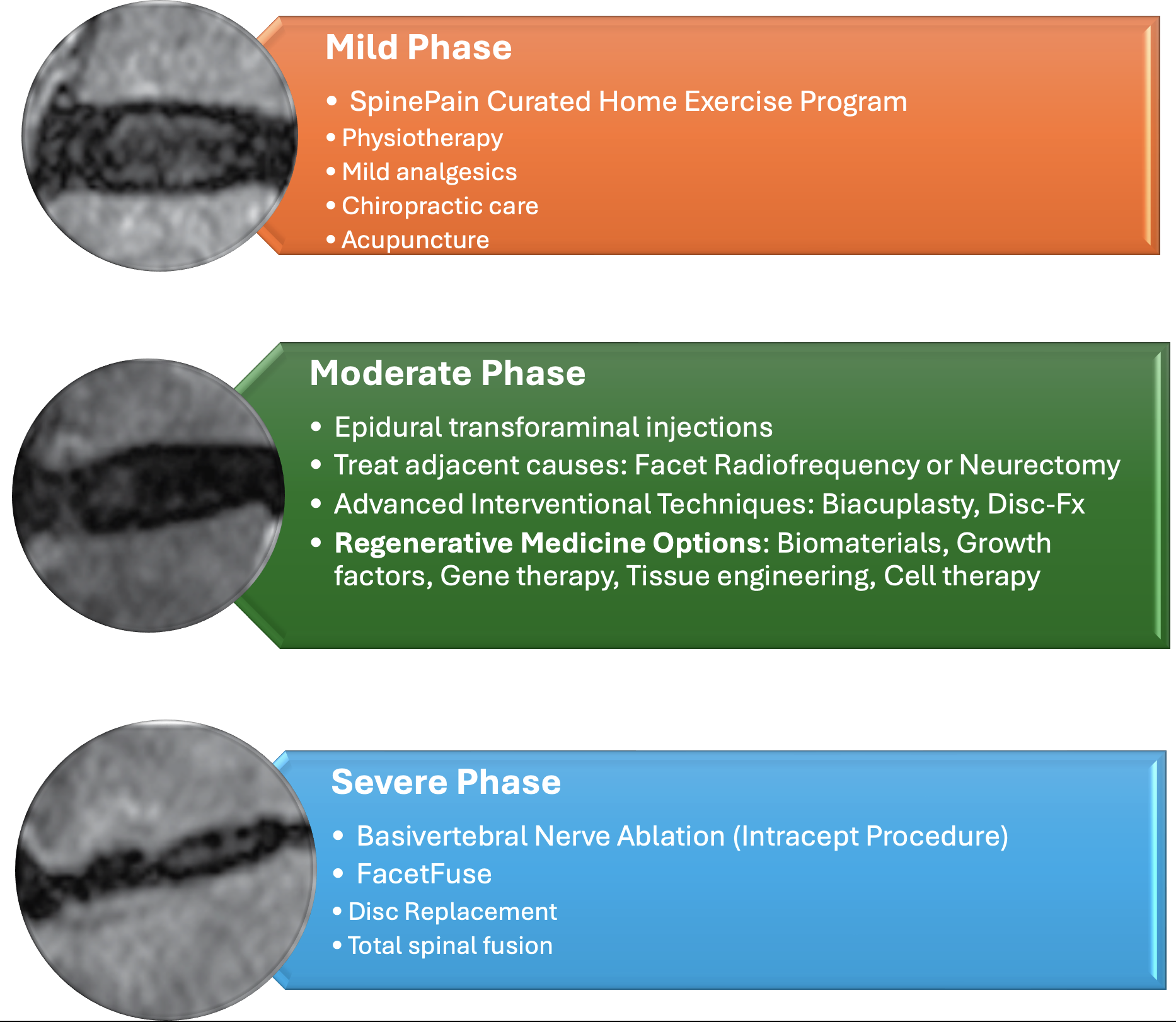
Treatment approaches based on the severity of disc degeneration. Regenerative therapies gain traction especially in the moderate phase.
Evolution of regenerative spine care: Historically, spinal care relied heavily on pain management, physical therapy, or surgical correction. However, regenerative medicine has emerged as a paradigm shift, aiming not just to manage symptoms but to biologically repair the disc. What was once theoretical is now backed by early clinical trials, novel biomaterials, and FDA-cleared investigational devices. The next frontier of spine care emphasizes cell therapy, tissue engineering, and biologic implants that promise to preserve mobility and prevent surgical intervention.
2. Why Regenerative Medicine Matters
Unlike traditional therapies that only manage pain, regenerative medicine for degenerative disc disease aims to repair and restore damaged tissue using biological and cellular tools such as stem cells, biomaterials, gene therapies, and growth factors.
But can we actually repair a damaged disc—particularly in early to moderate stages of degeneration? The short answer: we are getting close, especially in early-stage disease, but we’re not fully there yet in routine clinical practice.
Animal models—including rats, rabbits, pigs, and goats—have shown consistent success using stem cells and biomaterials to partially restore disc height, reduce inflammation, and regenerate extracellular matrix (ECM) components such as collagen and proteoglycans. For example, a rabbit model treated with mesenchymal stem cells (MSCs) encapsulated in hydrogels demonstrated disc rehydration, reduced inflammation, and improved mechanical properties within 8 weeks. Porcine studies have shown that notochordal cell-derived factors promote disc repair and suppress degeneration cascades in early phases.
Human data remains promising but preliminary. Several early-phase clinical trials—such as the NuQu trial (2019) and Mesoblast’s Phase 3 MSC study—report reduced pain, improved function, and halted progression of disc height loss in patients with mild-to-moderate degeneration. However, structural regeneration of the disc (i.e., full restoration of ECM integrity, hydration, and mechanical function) is still inconsistent across patients and studies.
Challenges include poor nutrient supply to the disc, immune reactions, low retention of injected cells, and the harsh inflammatory microenvironment inside degenerated discs. Moreover, regulatory and standardization hurdles have slowed the translation of lab breakthroughs into scalable clinical protocols.
That said, innovations in biomaterials, 3D bioprinting, exosome-based delivery systems, and induced pluripotent stem cells (iPSCs) are accelerating progress. Many experts agree that early-stage disc degeneration may soon be treatable with biologic repair strategies—possibly within this decade. Moderate-stage disease is more complex, but layered regenerative approaches combining cell therapy, scaffolds, and anti-inflammatory modulation show potential to reverse or significantly slow its progression.
In summary: while regenerative medicine for degenerative disc disease is not yet a fully mature clinical solution, we are rapidly moving toward that reality—especially for patients in the earlier stages of degeneration.
Modalities of Regenerative Medicine: A Conceptual Overview
Regenerative medicine encompasses a broad spectrum of strategies aimed at restoring structure and function to degenerated or damaged tissues. These modalities work across multiple biological levels—from molecular regulation to full tissue engineering—and often overlap in clinical application.
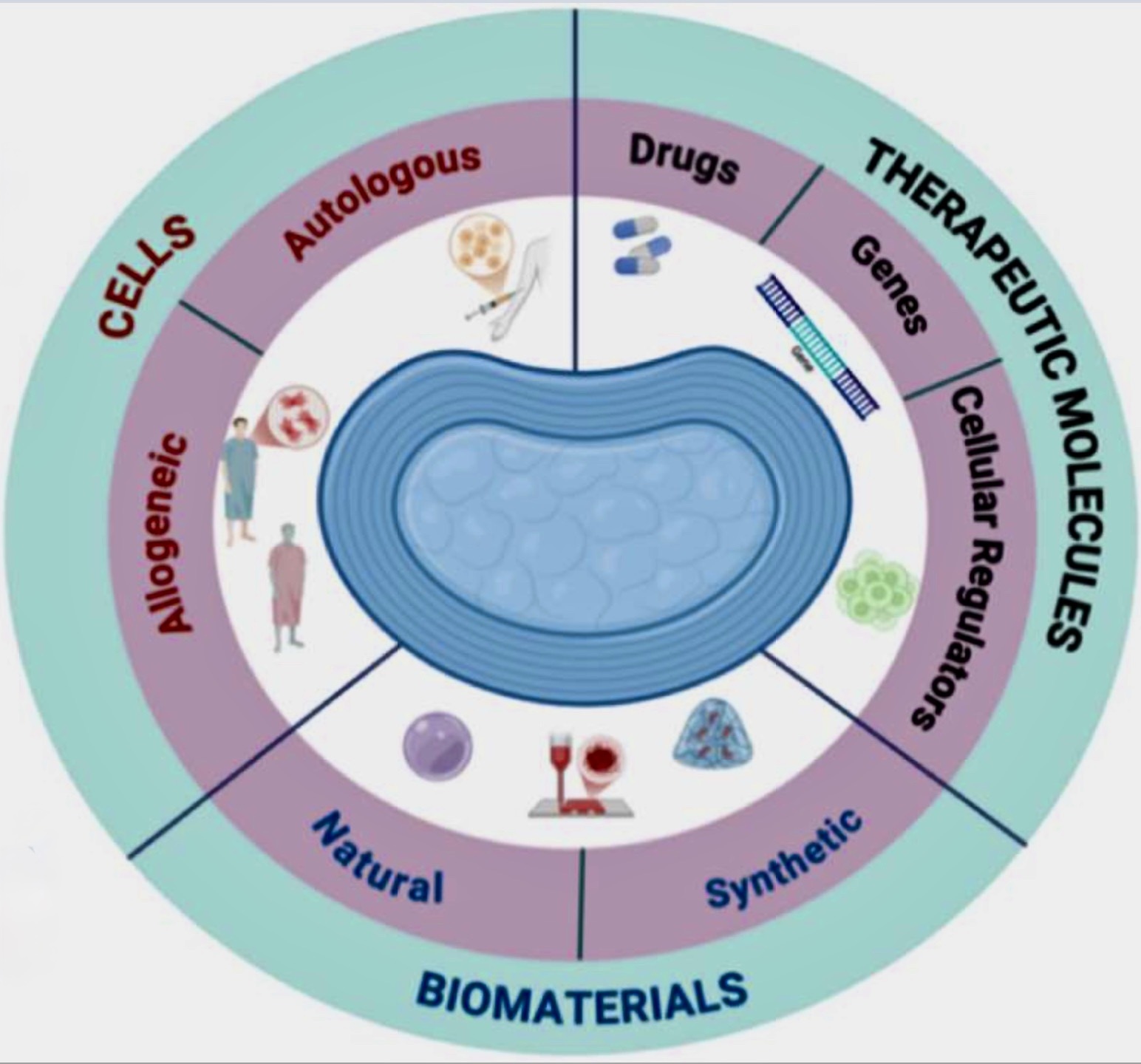
The image below summarizes three foundational domains in regenerative therapy:
- Cells: Therapies using autologous (self-derived) or allogeneic (donor-derived) cells to regenerate or support tissue repair.
- Therapeutic Molecules: Includes drugs, genes, and cellular regulators that influence tissue regeneration and modulate inflammation.
- Biomaterials: Natural or synthetic scaffolds used to support cellular growth, guide tissue architecture, or deliver bioactive signals.
These categories are not mutually exclusive. Modern regenerative therapies—like stem cell treatments, gene therapy, or 3D bioprinting—often combine components from all three domains for synergistic healing.
3. Stem Cell Therapies: Can MSCs Heal Degenerated Discs?
Among the leading innovations in regenerative medicine for degenerative disc disease is the use of mesenchymal stem cells (MSCs). These multipotent cells—sourced from bone marrow, adipose tissue, or Wharton’s Jelly—are demonstrating real potential in reversing early-to-moderate disc degeneration through multiple mechanisms.
🔬 Biological Impact of MSCs on Disc Tissue
- Disc matrix regeneration: MSCs can differentiate into nucleus pulposus-like cells and stimulate the production of extracellular matrix (ECM) molecules like collagen II and aggrecan—key components that maintain disc hydration and elasticity.
- Inflammation reduction: MSCs suppress harmful cytokines such as TNF-α, IL-1β, and IL-6, while inhibiting the apoptosis of native disc cells, which slows degeneration.
- Pain relief and function restoration: Clinical and preclinical studies suggest that MSCs help modulate neuroinflammation and pain signaling, leading to improved mobility and pain reduction in patients.
📊 Research and Clinical Progress
Animal models show that MSCs restore disc height, enhance hydration, and stimulate ECM regeneration. In humans, trials have shown reduced pain and improved function in patients with discogenic back pain. One notable multi-center FDA-approved trial reported that patients receiving bone marrow-derived MSCs in a hyaluronic acid carrier experienced significant improvement in back pain.
Particularly promising are Wharton’s Jelly-derived MSCs (WJ-MSCs), which have higher proliferation rates, superior immune-evasive properties, and enhanced anti-inflammatory effects—making them attractive candidates for future spine therapies.
⚠️ Challenges and the Road Ahead
- Cell delivery and survival: The avascular, hostile environment of a degenerated disc limits MSC viability. Researchers are testing biomaterial scaffolds and hydrogels to improve cell retention and protection.
- Mechanism understanding: There’s a need for deeper research into how MSCs interact with disc cells, immune responses, and mechanical forces within the spine.
- Clinical trial limitations: Small sample sizes and short follow-up periods limit current trial strength. More robust, large-scale studies are needed.
- Holistic treatment models: Future therapies may combine MSCs with dynamic stabilization or mechanical support systems to address both biologic and structural aspects of disc degeneration.
Bottom line: MSC therapy offers a scientifically validated, biologically active approach to treating disc degeneration—particularly in the early and moderate stages. While more work remains, the path toward integrating stem cell therapy into mainstream spine care is clearer than ever before.
4. Functional Biomaterials
One of the most exciting advances in regenerative medicine for degenerative disc disease is the use of stem cells in combination with engineered biomaterials. Together, they create a supportive environment that allows true regeneration of damaged disc tissues—something previously thought impossible.
Here’s how these technologies work together to support disc regeneration:
🧫 Stem Cell Support
Hydrogels and nanofiber scaffolds provide a biocompatible microenvironment where stem cells can survive, proliferate, and differentiate into specialized disc cells such as nucleus pulposus (NP) and annulus fibrosus (AF) cells. These materials also protect transplanted cells from the harsh, avascular, and inflammatory conditions within the degenerated disc.
🧬 ECM Synthesis
Biomaterials stimulate the production of essential extracellular matrix (ECM) proteins, such as collagen and proteoglycans. These components are crucial for maintaining disc hydration, elasticity, and structural integrity—key to reversing disc degeneration and restoring normal biomechanics.
🛡️ Structural Reinforcement
Nanofiber scaffolds and certain hydrogels mimic the concentric lamellae of the native annulus fibrosus, reinforcing disc walls and providing mechanical stability. This reduces further herniation or collapse while promoting tissue repair.
🖨️ 3D Bioprinting for Disc Analogs
3D bioprinting is enabling the fabrication of disc-like structures that match the native anatomy and biomechanics of each patient. These custom-printed disc analogs show promise for complete disc replacement in severe cases or reinforcement in earlier stages. Key benefits include:
- Patient-specific implants: Scans of the patient’s spine are used to create custom implants that fit precisely within the disc space.
- Mimicking native biomechanics: Printed constructs replicate the dual-zone architecture of the disc, with a soft NP core and a fibrous AF perimeter—restoring shock absorption and flexibility.
- Precise placement of biomaterials and cells: Engineers can control the distribution of cells and growth factors within the construct, promoting targeted tissue regeneration.
These technologies represent a powerful leap forward in spine care. By supporting stem cell survival, restoring the extracellular matrix, and mimicking natural disc function, they may soon offer minimally invasive alternatives to spinal fusion—particularly for patients in the moderate stages of disc degeneration.
5. Gene Therapy and Exosome Therapy for Disc Regeneration
In the search for less invasive and highly targeted solutions, gene therapy and exosome therapy are emerging as cutting-edge options in regenerative medicine for degenerative disc disease. These therapies focus on modulating specific molecular pathways—particularly SOX9, TGF-β, and inflammatory markers—to encourage disc regeneration, reduce inflammation, and prevent structural degradation.
🧬 SOX9: Master Regulator of Disc Cell Identity
SOX9 is a key transcription factor involved in chondrogenesis and maintaining the health of disc cells. Gene therapy targeting SOX9 delivers this gene directly to degenerative disc cells, promoting the synthesis of type II collagen—vital for disc hydration and structural integrity. In both human nucleus pulposus cells and animal models, adenoviral vectors carrying SOX9 have restored healthy cell phenotype and enhanced collagen production, slowing the degenerative process.
🧪 TGF-β Signaling: A Double-Edged Sword
Transforming Growth Factor Beta (TGF-β) plays a dual role in disc health. While it supports matrix synthesis and inhibits inflammation in normal levels, excessive TGF-β activity can contribute to fibrosis and disease progression. Gene or exosome-based therapies aim to fine-tune TGF-β pathways—stimulating protective signaling while limiting destructive overactivation. This can result in the regeneration of extracellular matrix components like collagen II and aggrecan, improving disc hydration and durability.
🔥 Controlling Inflammatory Markers
Inflammation is a major driver of intervertebral disc degeneration, often triggered by cytokines such as TNF-α and IL-1β. Gene therapies deliver anti-inflammatory genes, while exosomes—especially those derived from MSCs—have shown to suppress pro-inflammatory factors and modulate immune responses. This helps create a regenerative environment that supports disc repair instead of ongoing degradation.
📦 Exosomes: Nature’s Nanocarriers
Exosomes are nano-sized extracellular vesicles that function as natural delivery vehicles for therapeutic molecules including mRNA, microRNA, and proteins. Stem cell-derived exosomes can deliver genes like SOX9 directly to disc cells without the risks associated with live-cell therapy, such as immune rejection or unwanted differentiation. According to the National Institutes of Health (NIH), this makes exosomes a compelling alternative for regenerative spine care.
💉 Less Invasive, Highly Targeted
Unlike surgical interventions, gene and exosome therapies can be delivered through minimally invasive injections. This enables precise targeting of the disc’s internal environment while minimizing recovery time and complications. These therapies can potentially be integrated into outpatient care models, making advanced disc regeneration more accessible and less disruptive for patients.
⚠️ Challenges and Research Priorities
- Gene therapy: Requires ongoing refinement of delivery vectors, safety measures, and long-term gene expression control.
- Exosome therapy: Needs standardized isolation, purification, and dosing protocols to ensure consistent therapeutic outcomes.
- Personalization: Future success will depend on matching therapy type and dosage to individual patient biology and degeneration stage.
In summary: gene therapy and exosome therapy targeting key molecular pathways offer a less invasive, more precise method for regenerating disc tissue. With continued research and clinical validation, these innovations could fundamentally transform how we approach degenerative disc disease—moving from structural repair to true biologic healing.
6. Tissue Engineering and 3D Bioprinting in Spine Care
Tissue engineering and 3D bioprinting are pushing the boundaries of what’s possible in regenerative medicine for degenerative disc disease. These technologies aim not just to replace damaged structures but to replicate native biomechanics and restore spinal function—offering a game-changing alternative to spinal fusion.
🧩 Artificial Intervertebral Discs (IVDs)
Researchers are leveraging 3D bioprinting to fabricate artificial intervertebral discs that mimic the natural architecture and stiffness of spinal tissues. Early models have demonstrated the ability to reproduce disc-like properties in vitro. Future iterations are expected to integrate stem cells and growth factors to promote in vivo regeneration of native disc tissue—offering hope for true biologic disc replacement.
🔗 Hybrid Systems: Combining Scaffolds, Cells, and Growth Factors
Stand-alone scaffolds, while promising, often fall short in biological integration. That’s where hybrid systems come in—combining 3D-bioprinted scaffolds with stem cells (such as MSCs or neural stem cells) and growth factors. In preclinical models, these hybrid implants have enhanced functional recovery by promoting neural differentiation, reducing inflammation, and encouraging axonal regrowth. Scaffolds also act as protective microenvironments, improving stem cell survival and engraftment.
🌀 Motion Preservation vs. Spinal Fusion
Traditional spinal fusion, while effective, restricts mobility and can stress adjacent spinal segments. In contrast, tissue-engineered constructs and artificial disc replacements preserve spinal motion, improve flexibility, and reduce the risk of adjacent segment degeneration. These motion-preserving approaches may also result in faster recovery and fewer follow-up surgeries—making them highly appealing for patients with chronic spinal conditions.
⚙️ Challenges and the Path Forward
- Technical complexity: Bioprinting spinal constructs that replicate the fine architecture of grey and white matter remains a challenge. Print resolution, stability, and cell compatibility must be further optimized.
- Scalability and integration: Producing consistent, large-scale constructs while ensuring vascularization and tissue integration is critical for long-term success.
- Regulatory and ethical concerns: The sourcing of cells, manipulation techniques, and eventual translation to human trials must navigate a complex web of ethical and regulatory scrutiny.
🏥 Clinical Impact and Future Outlook
Despite these challenges, 3D bioprinting and tissue engineering hold tremendous potential for spinal repair and regeneration. From restoring disc integrity to rebuilding neural architecture, these technologies are not only repairing damaged tissue—they are also prioritizing spinal function and mobility. The future of spine surgery may very well shift from mechanical fusion to biologically integrated, motion-preserving constructs.
7. FDA’s Role in Regenerative Medicine for Degenerative Disc Disease
The U.S. Food and Drug Administration (FDA) plays a critical role in shaping the development and clinical adoption of regenerative medicine for degenerative disc disease. While research in stem cells, exosomes, and biomaterials is advancing rapidly, the FDA ensures that only therapies with proven safety and efficacy reach patients.
📜 Regulation of Stem Cell and Biologic Therapies
Most stem cell-based treatments are considered biologics by the FDA. This means they require an Investigational New Drug (IND) application and must undergo rigorous preclinical and clinical testing before market approval. This process includes:
- Phase 1 trials for safety and dosing.
- Phase 2 and 3 trials for efficacy, long-term outcomes, and risk assessment.
Although some clinics market unapproved “stem cell” treatments, the FDA has issued multiple consumer alerts warning against such unverified therapies.
🚀 Regenerative Medicine Advanced Therapy (RMAT) Designation
The FDA introduced the RMAT designation to accelerate approval of breakthrough regenerative therapies. If a treatment demonstrates preliminary clinical evidence of addressing an unmet medical need, it can qualify for faster review and development support. Several spine-related stem cell products are currently under RMAT pathways, potentially shortening their time to market.
🔬 Current Clinical Trials and Approvals
While no stem cell therapy for degenerative disc disease has received full FDA approval yet, several promising candidates—such as mesenchymal stem cell injections and biomaterial-based disc implants—are in late-stage trials. The ClinicalTrials.gov database lists dozens of ongoing studies evaluating MSCs, exosomes, and 3D-printed disc constructs for discogenic back pain.
⚠️ Challenges and Regulatory Barriers
The FDA’s cautious approach is partly due to the risks of unregulated regenerative therapies, which may cause infections, immune reactions, or even tumor formation if not properly tested. Standardizing cell preparation, ensuring sterility, and confirming consistent quality are critical requirements for FDA clearance.
💡 What This Means for Patients
Although patients may need to wait for full approval of advanced regenerative spine therapies, the FDA’s oversight ensures that when these treatments do become available, they are both safe and effective. For now, patients interested in regenerative care should seek providers conducting FDA-approved clinical trials or using therapies compliant with FDA regulations.
To explore FDA-approved treatments and ongoing research, visit AmitSharmaMD.com for updates and patient resources.
8. Next Steps in Care
As precision medicine and biologic therapies evolve, regenerative medicine for degenerative disc disease is set to become the standard of care. Tailored approaches based on imaging, biomarkers, and patient-specific data will guide interventions.
Ready To Explore Regenerative Spine Care?
Schedule your consultation with Dr. Amit Sharma and take the first step toward lasting relief and spine restoration.
9. Frequently Asked Questions
Tagged with: Back Pain, Degenerative Disc Disease, Regenerative Medicine, Stem Cells
Posted in: Special Report, News