

Biceps Tendinitis: Front-of-Shoulder Pain, Causes, and Treatment
← Back to the shoulder pain locator
Quick Answer: Biceps Tendinitis
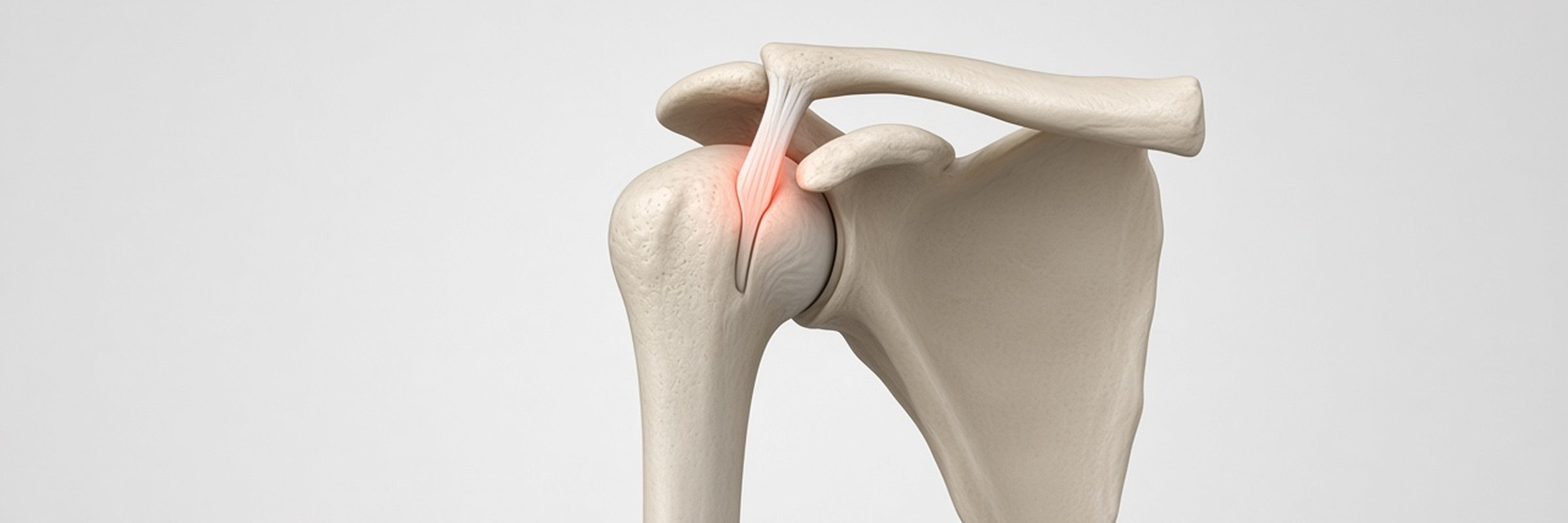
- Biceps tendinitis is irritation of the long head of the biceps tendon, which runs through a groove at the front of the shoulder and into the joint. It is also called biceps tendinopathy.
- Pain is often felt at the front of the shoulder during lifting, reaching, or carrying. There may be tenderness in the bicipital groove (the channel where the tendon sits).
- No single exam test can isolate this tendon with certainty. Rotator cuff problems often occur at the same time.
- Treatment usually starts with activity changes and progressive loading. If an injection is used, it should go into the tendon sheath, not into the tendon itself.
- A sudden bulge in the upper arm after an injury can mean the tendon has ruptured and should be checked.
- Call 911 or go to the nearest emergency room for a deformed shoulder after trauma, a cold or pale hand, or chest pain with shortness of breath. Bay Shore, Commack, Farmingdale / 631-310-0000.
Share this article
What Happens to the Biceps Tendon?
The long head of the biceps tendon runs through the bicipital groove at the front of the shoulder and then into the shoulder joint. Tendinopathy (irritation or degeneration from load, often called biceps tendinitis) can develop with repeated use, rotator cuff disease, or instability of the tissue sling that helps hold the tendon in its groove.
The shoulder is a team of parts that work together. These include the ball-and-socket joint (the glenohumeral joint), the acromioclavicular joint on top of the shoulder (the AC joint, where the collarbone meets a part of the shoulder blade called the acromion), the rotator cuff (the tendons that help lift and rotate the arm), the long head of the biceps tendon, the labrum (a rim of cartilage around the socket), the shoulder-blade muscles, and nerves from the neck. A problem in one part can change how the others share load. Imaging findings need to match the exam. A scan finding is not an automatic diagnosis.
How Biceps Tendinitis Feels
Pain is often noticed during lifting, reaching, or carrying. There may be tenderness over the front of the shoulder. Resisted elbow bending or turning the palm upward (supination) may provoke symptoms, but no single test reliably isolates the biceps tendon.
People often notice symptoms when dressing, lifting a bag, exercising, or sleeping on the affected side. Gradual aching, sudden pain after a pop, and catching can each suggest different problems, including a tendon rupture.
Keep track of the movements that reliably bring on pain. Note whether symptoms travel below the elbow, whether you have numbness or tingling, and whether the arm can move farther when someone else gently supports it. These details can be more useful than a pain number alone.
Who Develops Biceps Tendinitis?
Repeated lifting or overhead activity, age-related tendon changes, and a coexisting rotator cuff problem are common contributors. Risk factors change probability, not certainty.
How It Differs From Other Causes of Shoulder Pain
Rotator cuff disease
A rotator cuff tear often causes pain on the side of the shoulder and weakness with raising the arm. The long head of the biceps tendon and the rotator cuff commonly have associated pathology. See our guide to rotator cuff tendinopathy.
AC joint arthritis
AC joint arthritis is usually more focal on the very top of the shoulder and may worsen with reaching across the body.
Labral injury
A labral tear (a tear in the cartilage rim of the socket) may add catching or a sense that the joint may slip. Clicking alone is not diagnostic. See our page on shoulder clicking when you raise your arm.
Neck-related nerve pain
Cervical radiculopathy can send pain into the shoulder and arm, sometimes with tingling, numbness, or weakness. A neck and neurologic exam helps decide whether shoulder imaging or a neck evaluation is more relevant. See cervical radiculopathy and C5 radiculopathy.
How the Diagnosis Is Made
Assessment includes tenderness over the bicipital groove, resisted movements, rotator cuff strength, shoulder stability, a neck exam, and signs of tendon rupture, such as a sudden upper-arm bulge. No isolated maneuver should be treated as definitive.
When are X-rays, ultrasound, or MRI helpful?
Ultrasound can assess the extra-articular part of the tendon (the portion outside the joint) and can look for the tendon slipping out of its groove during movement. MRI may be useful when a labral or rotator cuff problem is also suspected, or when surgery is being considered. Imaging is most valuable when it answers a question that could change treatment.
Dr. Amit Sharma & our minimally invasive pain & spine team.
Treatment Starts With the Right Diagnosis
Initial care usually includes relative rest from aggravating lifts, progressive loading, shoulder-blade (scapular) rehabilitation, technique changes, and appropriate pain relief. As symptoms settle, activity can be advanced in stages rather than stopping all use of the arm for a long period.
Medicine and activity changes
Acetaminophen, a topical anti-inflammatory medicine, or an oral anti-inflammatory drug may be options for some people. Kidney disease, heart risk, stomach bleeding, blood thinners, and other conditions can change what is safe. Medicine choices should be individualized after a review of your medical history.
Physical therapy and home exercise
A physical therapist can look at how the shoulder and shoulder blade move and can prescribe exercises that match the stage of recovery. Home exercises should be specific, tolerable, and advanced according to how the shoulder responds, rather than repeated without a plan.
When injections may help
An ultrasound-guided injection into the biceps tendon sheath may be considered for selected persistent symptoms. Steroid should not be injected into the tendon substance because of the risk of tendon injury. A sheath injection is not the same as an AC joint, glenohumeral, or subacromial injection.
When a Shoulder Specialist Is Needed
A complete rupture, significant instability, or lasting symptoms with associated structural disease may warrant orthopedic assessment. Surgery such as tenodesis (attaching the tendon to bone) or tenotomy (releasing the tendon) is considered only in selected cases. Prompt specialty evaluation is especially important after major weakness following trauma, progressive nerve problems, a displaced fracture, or a large lasting loss of function.
What Recovery Can Look Like
Recovery varies with tendon loading, other shoulder problems, and the response to rehabilitation. There is no single reliable timeline. Recovery depends on the diagnosis, the tissue involved, how stiff or weak the shoulder is, other medical conditions, and a rehabilitation plan you can tolerate. Improvement is often uneven. A brief flare after more activity does not always mean new structural damage. Steadily worsening weakness or a new deformity should prompt a recheck. Track practical milestones such as dressing, reaching a shelf, sleeping more comfortably, carrying light objects, and returning to work or sport.
How SpinePain Solutions Evaluates Shoulder Pain
At SpinePain Solutions, the evaluation starts with the symptom pattern and an exam of the shoulder and neck. Imaging is reviewed when it would change the plan. Care may include activity changes, physical therapy, and selected image-guided procedures when a pain source is clear. An orthopedic shoulder specialist is the right next step when structural repair or stabilization may be needed. An injection is not the right first step for every shoulder problem.
Dr. Amit Sharma is board certified in Pain Medicine and is the Founder and Director of SpinePain Solutions. He has performed more than 60,000 interventional procedures. He has been Chief, Division of Pain Medicine at Good Samaritan University Hospital since 2012 and is Medical Director of MICNY in Commack. He evaluates nerve-related and musculoskeletal shoulder pain patterns and selected image-guided options at Bay Shore, Commack, and Farmingdale (office locations). Plans stay based on the exam and conservative-first care. Call or text 631-310-0000. If symptoms suggest an emergency, call 911 or go to the nearest emergency room instead of waiting for an office visit.
Related reading: rotator cuff tendinopathy, shoulder impingement, arm pain, shoulder pain guide, shoulder clicking when you raise your arm, and the Pain Locator.
When to Seek Urgent Medical Care
Call 911 or go to the nearest emergency room for a visibly deformed shoulder after trauma, a suspected dislocation or fracture, a cold or pale hand, loss of a pulse, rapidly worsening weakness, or sudden major numbness. A hot, swollen joint with fever needs urgent evaluation. Chest pain, shortness of breath, or other possible heart symptoms should not be blamed on a shoulder problem. A sudden Popeye bulge after an injury should be medically evaluated promptly, even if the hand remains warm and pink.
Frequently Asked Questions
1. Is biceps tendinitis pain felt in the shoulder or the arm?
It is often felt at the front of the shoulder. The pain can also travel into the upper arm.
2. When is front-of-shoulder pain a medical emergency?
Call 911 or go to the nearest emergency room for a visibly deformed shoulder after trauma, a cold or pale hand, loss of a pulse, or chest pain, shortness of breath, or other possible heart symptoms. A sudden bulge in the upper arm after an injury still needs prompt medical evaluation, even if it is not a 911 emergency by itself. Call SpinePain Solutions at 631-310-0000 for non-emergency questions.
3. Can biceps tendinitis occur with a rotator cuff tear?
Yes. The long head of the biceps tendon and the rotator cuff often have related problems. That is one reason the whole shoulder, not only the front of the arm, needs an exam.
4. Do I need an MRI right away?
Not always. A clinical exam and a rehabilitation trial are often reasonable first steps. Ultrasound or MRI is used when the result would change the plan.
5. Can a steroid injection be placed into the biceps tendon?
An image-guided injection into the tendon sheath (the lining around the tendon) may be considered in selected cases. Steroid should not be injected into the tendon itself because that can increase the risk of tendon injury.
6. What does a sudden Popeye bulge mean?
A sudden bulge in the upper arm, sometimes called a Popeye sign, can mean the long head of the biceps tendon has ruptured. This deserves medical evaluation, especially after an acute injury.
Dr. Amit Sharma & our minimally invasive pain & spine team.
Medical References and Further Reading
1. American Academy of Orthopaedic Surgeons (OrthoInfo). Biceps Tendinitis. https://www.orthoinfo.org/bodypart/shoulder/biceps-tendinitis/
2. American Academy of Orthopaedic Surgeons (OrthoInfo). Rotator Cuff Tears. https://www.orthoinfo.org/bodypart/shoulder/rotator-cuff-tears/
3. American College of Radiology. ACR Appropriateness Criteria: Chronic Shoulder Pain. https://acsearch.acr.org/docs/3101482/Narrative/
4. National Health Service (NHS). Shoulder pain. https://www.nhs.uk/symptoms/shoulder-pain/



