

Forefoot Pain: Causes of Ball-of-Foot Pain, Toe Numbness, and Pain When Walking
Quick Answer: Forefoot Pain
- Forefoot pain is discomfort beneath or around the metatarsal heads (the bones just behind the toes) and the toes themselves.
- A broad pressure-related ache may reflect metatarsalgia, which is a description, not a complete diagnosis.
- Burning between the toes may suggest an interdigital nerve problem, such as Morton’s neuroma.
- Focal pain beneath the second toe can involve the plantar plate or the joint capsule.
- Sharply localized bone tenderness after increased activity raises concern for a stress injury.
- Because treatment varies, the exact location, shoe triggers, swelling, and nerve symptoms matter more than the label “ball-of-foot pain.”
- Call 911 or go to the nearest emergency room if the foot is suddenly cold, pale, or blue, if you cannot bear weight after an injury, or if the foot looks deformed. Bay Shore, Commack, Farmingdale / 631-310-0000.
Share this article
This page focuses on pain in the ball of the foot and the toes. For a wider overview of heel, arch, midfoot, and ankle causes, see our foot pain guide.
Where Exactly Does the Forefoot Hurt?
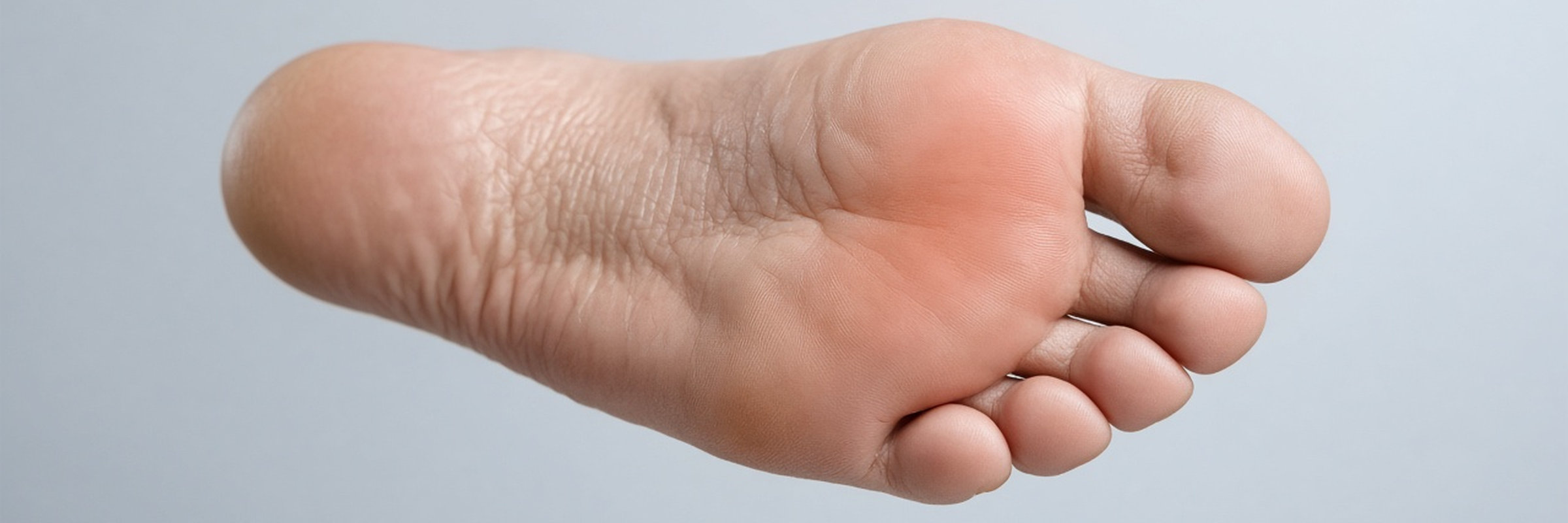
The forefoot includes the metatarsal heads, the joints at the bases of the toes, and the soft tissues, nerves, and ligaments beneath and between them. People often use “ball of the foot” for all of these structures, even though each has a different mechanical role. Pain beneath one metatarsal head differs from burning between two toes or swelling across the entire front of the foot.
When you describe the pain, use one fingertip to identify the most tender spot. Note whether it is on the sole or the top of the foot, under the big toe or the lesser toes, between the toes, or across a broader area. Also record whether the pain is worse barefoot, in narrow shoes, after running, during push-off, or at rest.
- Broad soreness across the ball of the foot: mechanical overload or metatarsalgia.
- Burning or a pebble sensation between the third and fourth toes: possible Morton’s neuroma.
- Pain directly beneath the second toe joint: possible plantar plate or capsular disorder.
- Focal bone tenderness after a training increase: consider a metatarsal stress injury.
- A red, hot, acutely swollen big-toe joint: urgent assessment for gout or infection.
Metatarsalgia: A Description, Not a Complete Diagnosis
Metatarsalgia means pain in the metatarsal region. It is useful shorthand, but it does not identify the injured tissue. High-impact activity, long periods of standing, shoes that shift weight toward the toes, a change in walking mechanics, or an underlying foot shape may increase pressure under one or more metatarsal heads.
Tight calf muscles can limit upward ankle motion, a pattern clinicians sometimes call equinus. That limited motion can transfer extra pressure onto the ball of the foot during walking.
People often describe aching or bruised pain when walking on hard floors or pushing off the toes. A callus beneath a metatarsal head can suggest repeated pressure, but it is not proof of the underlying cause. A careful exam checks which metatarsal is overloaded and whether joint instability, a tendon problem, arthritis, or nerve irritation is contributing.
The first approach may include reducing painful loading, a wider toe box, cushioned or stiffer shoes, and a correctly placed metatarsal pad. Pads generally sit just behind the metatarsal heads to spread the load, not directly under the most painful spot. Poor pad placement can increase symptoms.
Morton’s Neuroma: Burning and a Pebble-in-the-Shoe Feeling
Morton’s neuroma is irritation and thickening involving an interdigital nerve, commonly in the space between the third and fourth toes. Typical symptoms include burning, tingling, numbness, sharp pain radiating into nearby toes, and a sensation of a small stone or folded sock under the foot. Narrow shoes and prolonged forefoot compression may bring on symptoms.
The exam may reproduce familiar symptoms by compressing the forefoot or pressing between the metatarsal heads. These maneuvers are not definitive, though. Inflammation of the bursa between the bones, joint inflammation, and other conditions can produce similar pain. Ultrasound can help evaluate a suspected neuroma and nearby structures when imaging would change management.
Treatment generally starts with wider shoes, lower heels, pressure redistribution, and activity changes. Selected people with persistent, well-localized symptoms may discuss a diagnostic or therapeutic injection. Our dedicated Morton’s neuroma injection guide explains that procedure in more detail. It should not be used as a template for treating all forefoot pain.
Plantar Plate Injury and Second-Toe Joint Pain
The plantar plate is a strong ligament-like structure beneath the metatarsophalangeal joint. It helps stabilize the toe during walking. Injury or wear, especially around the second toe joint, can cause pain directly beneath the joint, swelling, tenderness, and the feeling that the toe is becoming unstable. Some people notice the toe drifting or lifting over time.
This problem is often mistaken for a neuroma because the painful structures lie close together. A plantar plate disorder usually has a more focal joint-related pattern. It may worsen with push-off, barefoot walking, or bending the toe upward. The exam may include a check of toe alignment and stability. No single test should be read in isolation.
Persistent symptoms or a progressive toe deformity warrant a podiatry or foot-and-ankle evaluation. Depending on the suspected injury, weight-bearing X-rays, ultrasound, or MRI may help. Treatment can involve load reduction, shoe changes, taping or splinting when appropriate, and structured rehabilitation. Advanced instability may require a surgical discussion with a foot-and-ankle specialist.
Metatarsal Stress Fracture: Do Not Push Through Focal Bone Pain
A stress fracture can develop when repeated loading exceeds the bone’s capacity to adapt. A recent increase in running, marching, jumping, or walking distance is a common clue. Stress injury can also occur with low bone density or other medical factors. The second and third metatarsals are frequently involved.
Pain is often sharply localized over a bone. It may first appear during activity and then progress to discomfort with ordinary walking. Swelling may occur on the top of the foot. Early X-rays can be normal, so a negative first X-ray does not always exclude a stress injury. MRI is often useful when clinical suspicion remains high.
A suspected stress fracture calls for prompt load reduction and medical evaluation. Continuing high-impact exercise, or receiving an injection simply to suppress pain, can worsen the injury. Treatment and weight-bearing limits depend on the exact bone, the fracture location, and the risk of impaired healing.
Big-Toe Joint, Sesamoid, and Arthritic Pain
Pain beneath the first metatarsal head may involve the sesamoid bones. These sit in the tendons beneath the big-toe joint and help with push-off. Sesamoiditis or a sesamoid stress injury may cause focal pain beneath the big toe, especially during running, dancing, or walking in thin-soled shoes.
Arthritis or stiffness of the big-toe joint, sometimes called hallux rigidus, more often causes pain and reduced motion at the joint itself. People may struggle with toe-off during walking or feel discomfort in shoes that bend sharply at the forefoot. Gout can cause abrupt, severe inflammation. Infection must also be considered when a joint is hot and swollen and there is fever or other systemic illness.
Weight-bearing X-rays can help assess joint alignment, arthritis, and some bone problems. Shoes with a stiff or rocker sole, activity changes, and selected medicines may be appropriate after diagnosis. Treatment for a sesamoid stress fracture differs from treatment for osteoarthritis, so locating the pain remains important.
Dr. Amit Sharma & our minimally invasive pain & spine team.
Numbness, Burning, and Nerve-Related Forefoot Symptoms
Burning pain or numbness involving several toes on both feet may suggest a more generalized peripheral neuropathy rather than a single interdigital neuroma. Diabetes, vitamin deficiencies, medicine effects, and other medical disorders can contribute. Symptoms often begin in the toes or the far end of the feet and may include altered temperature sensation or balance problems.
Lumbar radiculopathy can also cause foot symptoms, especially when pain is accompanied by back or leg symptoms, a recognizable nerve-root pattern, or weakness. Isolated pain under one metatarsal head that reliably worsens with forefoot pressure is less typical of a spinal nerve problem.
Evaluation may include a neurological exam and laboratory tests directed by primary care or neurology. EMG and nerve conduction testing may be useful for selected broader neuropathy or radiculopathy questions. When needed, these tests are arranged through an outside laboratory. They are not routine confirmatory tests for Morton’s neuroma.
Red Flags: When Foot Pain Needs Prompt Attention
Call 911 or go to the nearest emergency room if you cannot bear weight after an injury, if the foot looks deformed, or if there is an open wound with rapidly increasing swelling. A foot that is suddenly cold, pale, or numb may signal an urgent blood-flow problem. New severe weakness also needs emergency assessment.
Fever with a hot, swollen joint or spreading redness warrants prompt evaluation, especially in people with diabetes or reduced sensation. A painless wound can still be dangerous when protective sensation is reduced. Do not wait for severe pain to develop before seeking care.
Progressive focal pain despite rest, unexplained swelling, persistent nighttime pain, or a history of cancer may also require a broader assessment. Not every red flag means a serious diagnosis, but these features change the priority from routine shoe advice to medical evaluation. Call SpinePain Solutions at 631-310-0000 for non-emergency questions.
How a Clinician Diagnoses Forefoot Pain
A focused exam includes gait, shoe wear patterns, skin and calluses, metatarsal tenderness, toe alignment, joint motion, swelling, sensory testing, and circulation. The clinician checks whether pain is most reproducible by pressing a bone, moving a joint, compressing the space between metatarsal heads, or loading the foot during push-off.
Weight-bearing X-rays are often the first imaging study when bony alignment, arthritis, deformity, or fracture is suspected. Ultrasound can help evaluate an interdigital neuroma, bursitis, or some soft-tissue disorders. MRI is considered when a stress injury, a plantar plate tear, or another problem remains uncertain after the first evaluation.
Imaging must be interpreted alongside symptoms. A small neuroma or a degenerative joint change may appear on imaging without being the main cause of pain. Likewise, an early stress injury may not appear on the first X-ray. The goal is to explain the person’s actual pain rather than treat every abnormal finding.
Bringing the shoes you wear most often, and a photograph of any visible swelling or toe shift, can make the first visit more useful.
Treatment Starts With the Correct Mechanical Problem
For many overload conditions, a temporary reduction in painful walking or running, better-fitting shoes, targeted padding, and progressive rehabilitation are reasonable starting points. The right shoe varies. A wider toe box can reduce nerve compression. A stiffer sole may reduce painful joint motion. A one-size-fits-all orthotic recommendation is not appropriate.
Anti-inflammatory medicine or topical treatments may help selected people, but they require a review of kidney, stomach, and heart risks. An injection can sometimes help a well-defined interdigital nerve or inflammatory joint problem. It is not first-line for an undiagnosed stress fracture or an unstable plantar plate injury.
Foot and ankle surgery is considered only for specific persistent or structural problems after an appropriate assessment. People should know the diagnosis, the expected benefit, the risks, the rehabilitation needs, and the alternatives before choosing an invasive intervention.
How SpinePain Solutions Fits Into Forefoot Evaluation
SpinePain Solutions can evaluate selected neuropathic pain patterns and possible spinal contributions to foot symptoms. When a suspected Morton’s neuroma is supported by the exam, a targeted ultrasound-guided procedure may be discussed. The practice should not be the default destination for a suspected stress fracture, a significant toe deformity, or a primary orthopedic foot problem.
A podiatrist or foot-and-ankle orthopedic clinician is often the most appropriate first specialist for focal mechanical forefoot pain. Primary care or neurology may be more appropriate for numbness on both sides or a systemic neuropathy. A coordinated evaluation is more valuable than an injection into an uncertain pain source.
Dr. Amit Sharma is board certified in Pain Medicine and is the Founder and Director of SpinePain Solutions. He has performed more than 60,000 interventional procedures. He has been Chief, Division of Pain Medicine at Good Samaritan University Hospital since 2012 and is Medical Director of MICNY in Commack. He evaluates nerve-related foot symptoms, possible spinal contributions, and image-guided options at Bay Shore, Commack, and Farmingdale (office locations). Plans stay based on the exam and conservative-first care. Call or text 631-310-0000. If there is an acute injury, spreading infection, a sudden blood-flow change, or an inability to bear weight, call 911 or go to the nearest emergency room rather than waiting for a routine visit.
Related reading: the foot pain guide, Morton’s neuroma injection, and the Pain Locator.
Frequently Asked Questions
1. What is the most common reason the ball of my foot hurts?
Mechanical overload, often described as metatarsalgia, is a common explanation, but that term does not identify the specific tissue. Joint, plantar plate, bone, and nerve disorders can produce similar pain and need different treatment.
2. When does forefoot pain need emergency care?
Call 911 or go to the nearest emergency room if the foot is suddenly cold, pale, or blue, if you cannot bear weight after an injury, or if the foot looks deformed. Also seek emergency or urgent care for an open wound, rapidly increasing swelling, new severe weakness, fever with a hot swollen joint, or spreading redness, especially if you have diabetes or reduced sensation. Call SpinePain Solutions at 631-310-0000 for non-emergency questions.
3. How can I tell Morton’s neuroma from metatarsalgia?
A neuroma often causes burning, tingling, pain radiating into the toes, or a pebble-in-the-shoe sensation, especially in narrow shoes. Mechanical metatarsalgia more often causes pressure-related aching beneath the metatarsal heads. Neither pattern is definitive without an exam.
4. Can a stress fracture cause pain in the ball of the foot?
Yes. Metatarsal stress injury can cause localized forefoot pain, especially after an increase in activity. Early X-rays may be normal. Focal bone tenderness or worsening pain with weight bearing warrants medical evaluation.
5. Why does the area under my second toe hurt?
Pain beneath the second toe joint may come from capsulitis, plantar plate injury, overload, or another joint disorder. Swelling, toe drift, or instability makes a plantar plate problem more important to evaluate.
6. Should I get an MRI for forefoot pain?
Not always. History, examination, and often weight-bearing X-rays guide the first steps. Ultrasound or MRI may be useful when a neuroma, plantar plate injury, stress fracture, or another soft-tissue problem remains uncertain.
7. Can a pinched nerve in my back cause forefoot pain?
A lumbar nerve disorder can produce foot pain or altered sensation, especially with leg symptoms or weakness. Focal pain that is reproduced by pressing one metatarsal head is more suggestive of a local foot source, although both conditions can occur together.
Dr. Amit Sharma & our minimally invasive pain & spine team.
Medical References and Further Reading
1. American Academy of Orthopaedic Surgeons (OrthoInfo). Stress Fractures of the Foot and Ankle. https://www.orthoinfo.org/bodypart/foot-ankle/stress-fractures-of-the-foot-and-ankle/
2. American College of Foot and Ankle Surgeons. Morton’s Neuroma (Intermetatarsal Neuroma). https://www.foothealthfacts.org/conditions/morton-s-neuroma-(intermetatarsal-neuroma)
3. American College of Radiology. ACR Appropriateness Criteria: Chronic Foot Pain. https://acsearch.acr.org/docs/69424/Narrative/
4. American College of Foot and Ankle Surgeons. Equinus. https://www.foothealthfacts.org/conditions/equinus



