
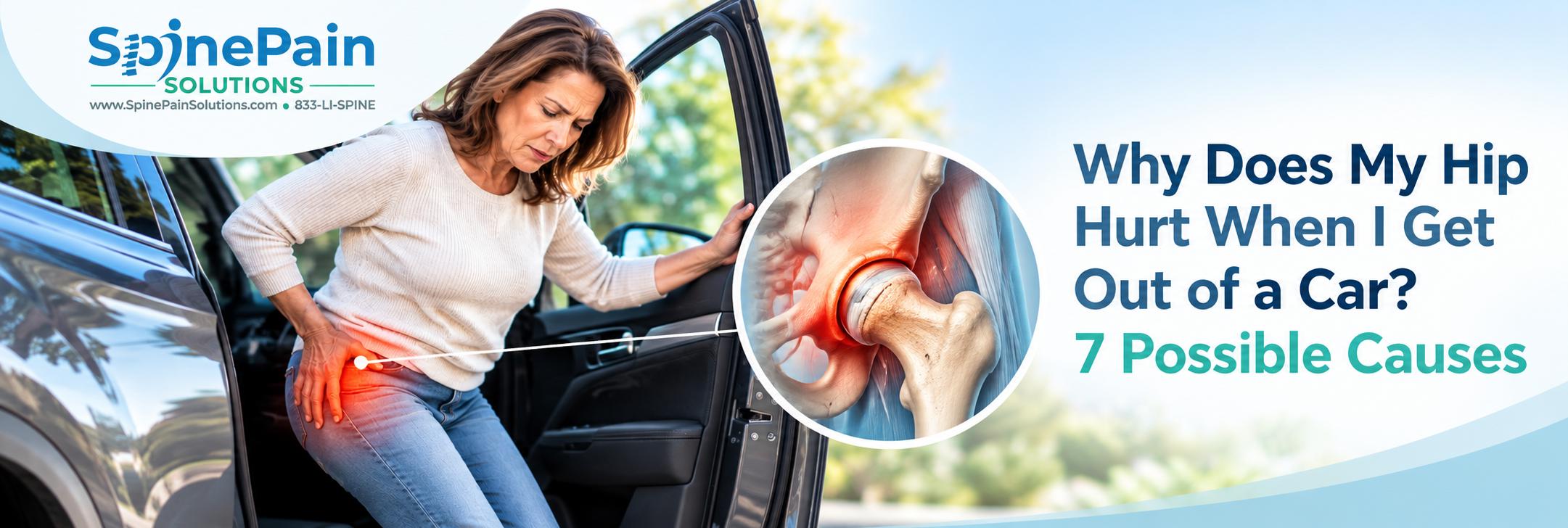
Why Does My Hip Hurt When I Get Out of a Car? 7 Possible Causes
Hip pain getting out of a car can make an ordinary movement unexpectedly difficult. You swing one leg toward the door, rotate your pelvis, push yourself up, and feel a sharp catch in the groin, an ache on the outside of the hip, or pain deep in the buttock. Sometimes the first few steps are stiff, but the discomfort improves once you begin walking. Other times the pain lingers.
This movement combines prolonged hip flexion while seated, rotation as you turn toward the door, and weight-bearing as you stand. That combination can aggravate several different structures. The exact location of the pain, whether it is accompanied by stiffness or numbness, and how it behaves during walking are more informative than the car movement alone.
Key point: Pain while getting out of a car does not automatically mean hip arthritis. The hip joint, surrounding tendons, sacroiliac joint, and lower back can all contribute. A focused examination is often the most useful starting point.
Why Getting Out of a Car Can Trigger Hip Pain
Sitting places the hips in a bent position, usually close to 90 degrees. To leave the car, most people rotate their trunk and hips, bring one or both legs out, lean forward, and push up through the legs. A low seat, tight doorway, or long drive increases the demand on the hip and pelvic muscles. Getting out of a car is therefore a small but useful functional test of hip rotation, strength, and load tolerance.
Some people feel pain before their foot reaches the ground, especially while rotating the thigh. Others hurt only when they stand or take the first step. The distinction can help separate a problem inside the hip joint from a tendon, pelvic, or spinal source, although it cannot confirm a diagnosis by itself.
Where Is the Pain? Location Offers the First Clue
- Front of the hip or groin: More suggestive of a problem within the hip joint, including arthritis, femoroacetabular impingement, or a labral disorder. Hip flexor irritation is another possibility.
- Outer hip: Often associated with gluteal tendon pain or greater trochanteric pain syndrome, especially when lying on that side is uncomfortable.
- Back of the hip or buttock: May arise from the sacroiliac joint, deep gluteal structures, or the lumbar spine.
- Pain traveling below the knee with tingling or numbness: Raises concern for nerve involvement, although the distribution and examination must be considered together.
- Severe pain after a fall or with inability to bear weight: Requires prompt assessment for fracture or another significant injury.
Pain location is a clue rather than a definitive test. Hip arthritis can cause buttock or knee pain, and a lumbar disorder can sometimes be felt predominantly around the hip. For a broader overview, see our guide to hip pain.
7 Possible Causes of Hip Pain Getting Out of a Car
1. Hip Osteoarthritis
Osteoarthritis occurs when the hip joint develops degenerative changes affecting cartilage and surrounding structures. It commonly causes deep groin pain, stiffness after rest, and difficulty rotating the hip. Getting into or out of a low car, putting on socks, and crossing the legs may become challenging. Pain may ease after several steps, particularly early in the condition, but more advanced arthritis can make walking difficult.
Hip arthritis is not diagnosed from stiffness alone. The examination looks for restricted internal rotation and other motion limits, and plain radiographs help assess joint-space narrowing and bony changes. Not everyone with arthritis on an X-ray has symptoms, so the findings must match the clinical picture.
2. Femoroacetabular Impingement (FAI)
Femoroacetabular impingement describes a mismatch in the shape or contact mechanics of the femoral head-neck region and the hip socket. Symptoms often occur during deep bending or rotation. Turning to swing a leg out of a car may reproduce a pinching sensation in the front of the hip or groin. Squatting, prolonged sitting, or pivoting may provoke similar discomfort.
FAI-related morphology is common even in people without pain. A diagnosis of FAI syndrome requires compatible symptoms, examination findings, and imaging, not an X-ray finding by itself. A positive hip impingement maneuver is suggestive but not specific enough to establish the diagnosis.
3. Acetabular Labral Irritation or Tear
The labrum is a ring of fibrocartilage around the hip socket. Labral disorders may cause groin pain, clicking, catching, or a sense of discomfort during rotation. Some patients describe a sharp pain when they pivot in the car seat or bring the leg across the doorway. However, clicking is not always abnormal, and labral tears may be present on imaging in people without symptoms.
The clinical evaluation considers age, activity level, motion, and other causes of pain. MRI or MR arthrography may be useful in selected cases when examination and initial imaging suggest intra-articular pathology and the result would change management.
4. Greater Trochanteric Pain Syndrome and Gluteal Tendinopathy
Pain on the outside of the hip often comes from the gluteus medius or minimus tendons near the greater trochanter. This is commonly called greater trochanteric pain syndrome; it is not always a true inflamed bursa. The discomfort may flare when standing on one leg, climbing stairs, or pushing up from a low seat. Lying on the painful side is another characteristic complaint.
The examination may reproduce symptoms with tenderness over the outer hip or resisted hip abduction. Progressive strengthening and modifying aggravating compression are central treatments. Injections may help selected patients, but treating the tendon and movement pattern remains important.
5. Hip Flexor or Iliopsoas Tendon Irritation
The iliopsoas helps lift the thigh toward the body. After prolonged sitting, lifting the leg over a high door sill or shifting the thigh during the exit can provoke pain at the front of the hip. Patients sometimes notice discomfort when climbing stairs, lifting the knee toward the chest, or getting into bed. Snapping can occur, but a snapping sensation does not always indicate injury.
This cause is more likely when resisted hip flexion reproduces the familiar pain and joint rotation is relatively preserved. The assessment also needs to exclude hip joint disease, hernia, and other groin conditions. A new groin complaint after hip replacement warrants particular attention because iliopsoas irritation can have different causes in that setting.
6. Sacroiliac Joint Complex Pain
The sacroiliac joints transfer force between the spine and pelvis. Pain is often centered in the lower back of the pelvis or upper buttock, typically on one side. Turning in the car seat, standing from sitting, or loading one leg may aggravate symptoms. Pain can extend toward the lateral hip or groin, making it easy to confuse with a primary hip disorder.
No single movement or bedside maneuver reliably proves sacroiliac pain. Clinicians look for a consistent location, a cluster of provocative findings, and whether the hip and lumbar examination suggest another source. See our detailed resource on sacroiliac joint dysfunction.
7. Lumbar Referred Pain or Radiculopathy
The lower back can refer pain to the buttock, lateral hip, thigh, and occasionally groin. A lumbar nerve-root problem may also cause burning, shooting pain, tingling, numbness, or weakness. Prolonged driving can aggravate some lumbar conditions, and the twisting motion of getting out may reproduce symptoms.
Clues favoring a spinal source include back pain, pain extending below the knee, altered sensation, or symptoms changed by lumbar movements. Yet many people have both hip and spine abnormalities. The goal is to identify which condition actually explains the current symptoms, not simply to treat the most dramatic MRI finding. Our resources on conditions that mimic spine disease and diagnosing back pain explain this distinction.
How to Tell Hip Joint Pain From Back or SI Joint Pain
The distinction is not perfect, but certain patterns are helpful. Groin pain with reduced hip rotation makes an intra-articular hip problem more likely. Outer-hip tenderness and pain when lying on that side suggest a gluteal tendon problem. Focal pain near the back of the pelvis can point toward the SI joint. Burning or electric pain with neurological changes increases concern for a lumbar nerve problem.
One useful observation is whether putting on a shoe or sock is difficult because the hip will not rotate. Another is whether bending the spine or coughing changes the symptoms. Neither observation should be used as a stand-alone home diagnosis. A clinician can compare passive hip motion, lumbar movement, gait, strength, sensation, and targeted provocative tests.
When Hip Pain Needs Urgent Medical Attention
- Seek emergency assessment after a fall or injury if you cannot bear weight, the leg appears shortened or deformed, or pain is severe.
- A hot, swollen joint with fever or significant illness requires urgent evaluation for infection, particularly after a procedure or joint replacement.
- New major leg weakness, saddle numbness, or loss of bladder or bowel control requires emergency assessment for a neurological condition.
- Unexplained severe pain at rest, fever, significant weight loss, known cancer, or rapidly worsening symptoms warrant prompt medical review.
- New groin or hip pain after a recent hip replacement should be discussed promptly with the treating surgical team.
Dr. Amit Sharma & our minimally invasive pain & spine team.
Not every painful exit from a car signals an emergency. But progressive pain, persistent limping, or inability to complete ordinary activities deserves an assessment rather than repeated self-treatment.
How Doctors Diagnose Hip Pain Triggered by Car Transfers
History and Physical Examination
The clinician first asks where the pain begins, how long it has been present, whether it follows an injury, and which phase of the car transfer hurts. Pain while rotating the seated leg is different from pain when loading the leg to stand. They may ask whether symptoms occur after long drives, when putting on shoes, during stairs, or while sleeping on the affected side.
The examination typically compares active and passive hip range of motion, especially internal rotation, with strength testing and palpation of the lateral hip. Lumbar movement, a neurological screen, gait, and sacroiliac provocative maneuvers are added when the symptom pattern suggests them. Examination findings must be interpreted together rather than relying on one provocative test.
X-Rays, MRI, and Ultrasound
For persistent suspected joint-related hip pain, radiographs are commonly the first imaging study. They can show arthritis, bony morphology, and some fractures. MRI may be useful when symptoms and examination suggest a labral disorder, stress injury, osteonecrosis, tendon injury, or another condition not adequately explained by radiographs. Ultrasound can assess selected tendons and bursae and guide procedures.
A normal X-ray does not exclude every significant condition. For example, early stress fractures and some occult fractures may require MRI. Imaging is selected according to the clinical question, not simply because pain has lasted a certain number of days.
When a Diagnostic Injection May Help
When hip and lumbar findings overlap, a carefully placed local-anesthetic injection into the hip joint may sometimes help identify whether the joint is a major pain generator. Relief during the expected anesthetic window is informative but not infallible. The injection should answer a specific diagnostic question and be interpreted alongside the examination and imaging.
What Helps Hip Pain When Getting Out of a Car?
Adjust the Movement Before You Stand
If the movement is painful but there are no concerning symptoms, small changes may reduce irritation. Move the seat backward to create room, rotate the trunk and legs together rather than twisting the thigh sharply, and use your hands on stable supports as you rise. Avoid pulling forcefully on the steering wheel or door. A higher seating position may reduce the amount of hip flexion required, provided the change is safe and does not interfere with driving.
During longer trips, take appropriate breaks to walk and change position. Gentle movement may reduce stiffness, but repeatedly forcing a painful end range of rotation is unlikely to help.
Use Diagnosis-Specific Exercise
Exercise is often central to recovery, but the program should match the diagnosis. Hip osteoarthritis commonly benefits from strengthening, mobility work within tolerance, and low-impact aerobic activity. Gluteal tendinopathy usually calls for progressive loading of the hip abductors while reducing provocative compression. Hip flexor symptoms may respond to graded strengthening and temporary modification of repetitive high-flexion activities.
A therapist can adjust exercises when deep hip flexion triggers pinching, when pain persists for hours after activity, or when weakness affects balance. The goal is better function, not simply stretching until the joint hurts.
Medication and Other Nonprocedural Options
Short courses of an anti-inflammatory medicine may be appropriate for some adults, but kidney disease, ulcers, anticoagulants, cardiovascular risk, pregnancy, and other factors can make these drugs unsuitable. Acetaminophen may be considered in selected situations, although it does not treat inflammation and may provide limited benefit. Discuss medication choices with your clinician rather than assuming an over-the-counter drug is risk-free.
Weight management when relevant, pacing of activities, and temporary use of an assistive device may help reduce load. A cane is generally held in the hand opposite the painful hip, but fitting and instruction matter.
When Are Injections or Surgery Considered?
A corticosteroid injection into the hip joint may offer short-term relief in appropriately selected patients with symptomatic osteoarthritis. It is not a repair for cartilage loss, and repeated injections require careful consideration. For lateral hip pain, an injection may sometimes reduce symptoms, but strengthening remains a core part of management. Injections for suspected SI-joint pain or other structures should be considered only after a convincing evaluation identifies the target.
For FAI syndrome or a symptomatic labral disorder, surgery is not automatically required. Many patients first undergo activity modification and a structured rehabilitation program. Referral for hip-preservation assessment may be appropriate when persistent mechanical symptoms and concordant findings remain despite suitable conservative care.
For advanced hip arthritis with major functional limitation despite nonsurgical treatment, hip replacement may be discussed with an orthopedic surgeon. A patient whose main complaint is nerve-related leg pain may need a very different treatment pathway. Selecting the right intervention depends on finding the true pain generator.
Practical Tips for Your Next Drive
- Before exiting, slide the seat backward if it is safe and practical.
- Bring both legs toward the door in a controlled motion rather than twisting sharply through the painful hip.
- Place your feet securely before standing; use stable support rather than a loose car door.
- If the hip feels stiff after a long trip, stand carefully and take several comfortable steps before moving quickly.
- Notice whether the pain is in the groin, outer hip, buttock, or leg, and whether it happens during rotation or weight-bearing. These details are useful at your appointment.
Dr. Amit Sharma & our minimally invasive pain & spine team.
These adjustments may reduce symptoms but do not replace an evaluation when pain persists, worsens, or causes a limp. If the pattern is confusing, it can help to compare the symptoms with our hip pain overview and SI-joint guide.
Frequently Asked Questions
Why does my hip hurt only when I get out of a car?
Leaving a car combines hip rotation, bending, and weight-bearing. That sequence may aggravate hip arthritis, impingement, a tendon disorder, SI-joint pain, or a lumbar condition even when ordinary walking is relatively comfortable.
Does groin pain when getting out of a car mean hip arthritis?
Not necessarily. Arthritis is one possibility, but femoroacetabular impingement, labral disorders, and hip flexor problems can also cause groin pain. Examination and sometimes imaging help distinguish them.
Why does my hip hurt after a long drive but improve after walking?
Stiffness after prolonged sitting can occur with hip osteoarthritis or other musculoskeletal problems. Improvement after a few steps is a useful clue, but it does not identify a single diagnosis.
Can a pinched nerve in my back cause hip pain when I stand up?
Yes. Lumbar nerve irritation can refer pain into the buttock or hip region, sometimes with tingling, numbness, or pain traveling down the leg. Hip and spine problems can also coexist.
Is outer hip pain from bursitis?
Sometimes, but many cases of greater trochanteric pain syndrome involve gluteal tendon irritation rather than isolated bursitis. The location and physical examination help guide treatment.
Should I get an MRI for hip pain getting out of a car?
Not automatically. A focused examination and, when indicated, plain radiographs are often the first steps. MRI is considered when a specific suspected injury or condition would change management.
What is the easiest way to get out of a car with a painful hip?
Create room by moving the seat back, turn the trunk and legs together, plant your feet securely, and use stable support to stand. Avoid forcing a painful twist, and seek evaluation if symptoms persist.
When should I worry about hip pain after sitting?
Seek urgent assessment for inability to bear weight after injury, fever with a hot painful joint, or major new neurological symptoms. Persistent limping, worsening pain, or loss of function also deserves medical evaluation.
References and Further Reading
- AAOS OrthoInfo: Osteoarthritis of the Hip.
- AAOS: 2024 Hip Osteoarthritis Clinical Practice Guideline Update.
- Femoroacetabular impingement and osteoarthritis of the hip. Clinical review.
- AAOS: Is the pain coming from your hip, spine or both?.



