

Scapular Pain: Why Your Shoulder Blade Hurts and When to Worry
← Back to the shoulder pain locator
Scapular pain is pain over or around the shoulder blade. It often sits between the blade and the spine. Most of the time it comes from muscles, the neck, or the shoulder. Sometimes it is a sign of a heart, lung, or gallbladder problem. This guide shows the clues and the warning signs. It is education, not a diagnosis. Related guides: mid back pain, neck pain treatment, and cervical radiculopathy.
Quick Answer: Scapular Pain
- Scapular pain is pain over, around, or between the shoulder blades.
- Tight or overworked muscles are a common cause.
- The neck often sends pain here. Arm pain, tingling, or weakness points toward a neck nerve.
- A shoulder blade that sticks out, or real weakness, needs a careful nerve and shoulder exam.
- The heart, the main artery (aorta), the lungs, and the gallbladder can also cause pain here.
- Conservative care usually comes first. EMG/NCS, when needed, are performed at an outside lab.
- Selected image-guided injections may ease persistent pain from a confirmed muscle, nerve, or joint source and create a window for physical therapy.
- Chest pressure, shortness of breath, or sudden tearing back pain -> call 911. Bay Shore, Commack, Farmingdale / 631-310-0000.
Where Scapular Pain Is Felt
The shoulder blade (scapula) is a flat, triangle-shaped bone on the upper back. It links the arm to the trunk. Many muscles attach to it. They move the blade when you reach, lift, or push. Pain can be felt on the blade, along its inner edge next to the spine, near its top, or at its lower tip.
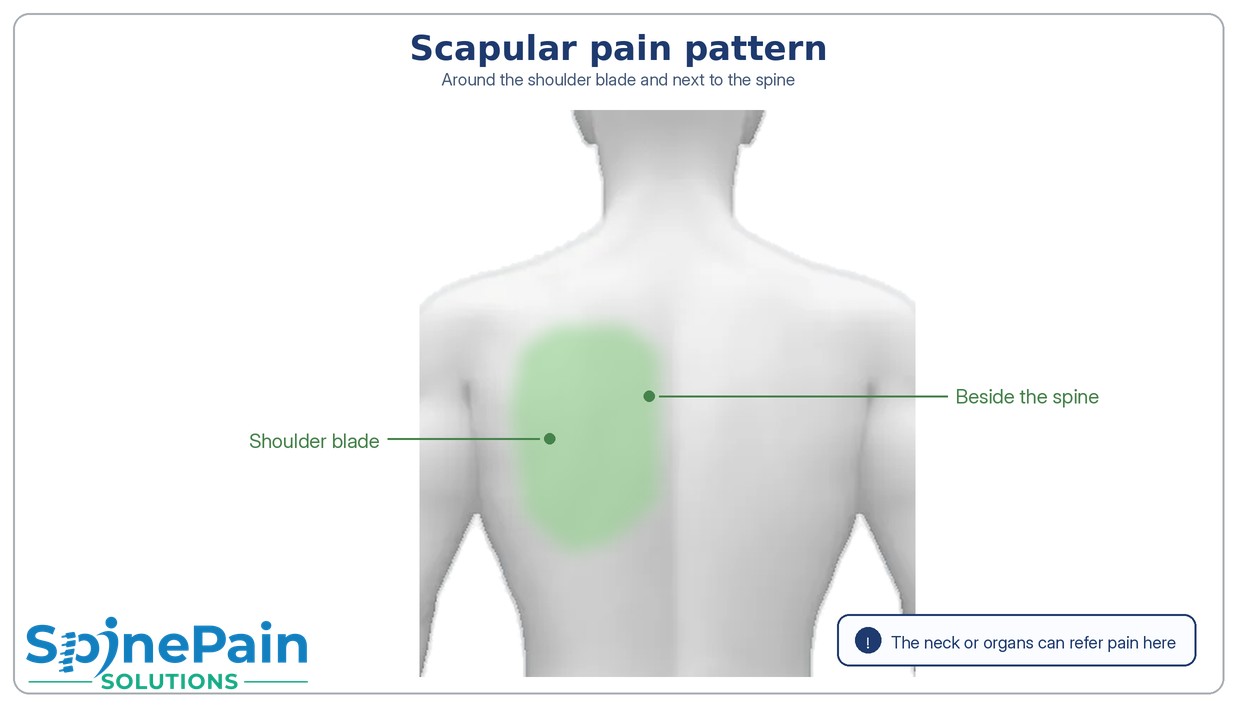
The spot helps, but it is only a start. How the pain began, what makes it worse, and what comes with it matter just as much. Pain that changes with neck movement points one way. Pain that changes with arm movement points another. Pain that comes with shortness of breath or after meals points somewhere else. You can mark the spot on our Pain Locator before a visit.
Common Causes of Shoulder Blade Pain
Muscle pain and trigger points
The trapezius, rhomboid, and levator scapulae muscles hold and move the shoulder blade. Long hours at a desk, looking down at a phone, heavy lifting, or stress can make them tight and sore. A tender knot (trigger point) may send aching pain nearby. This kind of pain often eases with movement, heat, and better posture. See myofascial neck pain.
The neck: joints, discs, and nerve roots
The neck is a common source of shoulder blade pain. Small joints in the neck (facet joints) can send pain to the upper back and shoulder blade [Source]. A pinched or irritated neck nerve root can do the same [Source]. The place of the pain on the blade can give a clue to which root is involved. Neck nerve pain often comes with arm pain, tingling, numbness, or weakness. Turning or tipping the head back may make it worse. See why the shoulder blade hurts when you turn your head and facet joint syndrome.
Shoulder problems
Rotator cuff problems usually hurt on the outer shoulder and upper arm, mostly when you lift the arm. When the shoulder does not move well, the blade can also move in an odd way and the muscles around it can get sore. See rotator cuff tendinopathy and shoulder pain when reaching behind your back.
Nerve problems and a winging shoulder blade
Winging means the shoulder blade sticks out from the back, often when you push against a wall. It can happen when a muscle that holds the blade flat is weak. Problems with the long thoracic nerve, the spinal accessory nerve, or the dorsal scapular nerve are known causes [Source]. These are uncommon. They need a careful exam and sometimes nerve tests. Thoracic outlet syndrome can also cause pain near the shoulder blade with arm symptoms.
The upper back and ribs
Stiff joints where the ribs meet the spine, or a strained muscle between the ribs, can cause pain near the lower part of the blade. Pain may get worse with a deep breath or twisting. See mid back pain.
Organs that can send pain to the shoulder blade
- Heart. Heart pain can be felt in the upper back, shoulder, arm, neck, or jaw, not only the chest. Shortness of breath, sweating, or nausea may come with it [Source].
- Aorta. A tear in the main artery (aortic dissection) can cause sudden, severe chest or upper back pain, often between the shoulder blades. This is an emergency [Source].
- Gallbladder. Gallstone pain is often felt in the upper right belly and may spread to the back or the right shoulder blade, often after meals [Source].
- Lung problems, such as pneumonia or a blood clot in the lung, can cause pain near the shoulder blade, often with cough, fever, or trouble breathing.
- Shingles can cause burning pain on one side of the back before a rash appears.
| Clue | Points more toward |
|---|---|
| Pain changes with neck movement; arm tingling or weakness | A neck joint or nerve root |
| Tender knot; worse after desk work; eases with movement | Muscle pain |
| Pain when lifting the arm; outer shoulder ache | The shoulder |
| Blade sticks out when pushing | A nerve or muscle weakness around the blade |
| Chest pressure, shortness of breath, sweating | The heart: call 911 |
| Sudden, tearing pain between the blades | The aorta: call 911 |
| Right-side pain after fatty meals, nausea | The gallbladder |
These are clues, not rules. More than one problem can happen at the same time.
Red Flags Need Emergency Care
Call 911 for shoulder blade pain with chest pressure, shortness of breath, sweating, nausea, or pain spreading to the arm or jaw. Call 911 for sudden, severe, tearing pain in the chest or upper back, or if you faint. Go to the ER for pain with high fever and feeling very ill, pain after a major fall or crash, or new trouble breathing. Call 631-310-0000 for non-emergency questions.
Get checked soon for arm or hand weakness that is getting worse, new trouble walking, or clumsy hands. These can be signs of pressure on the spinal cord in the neck. See cervical myelopathy. Also get checked soon for pain with fever, yellow skin or eyes, or pain that wakes you at night. Tell your doctor about cancer, a weak immune system, or weight loss you cannot explain.
Expert groups say to take warning signs seriously. They also note that one sign alone may not mean a serious problem [Source].
Dr. Amit Sharma & our minimally invasive pain & spine team.
How Dr. Sharma Evaluates Shoulder Blade Pain
Dr. Sharma asks when the pain started, where it travels, and what makes it better or worse. He asks about the arm, breathing, meals, and other health problems. The exam checks the neck, upper back, shoulder, and shoulder blade movement. It also checks strength, feeling, and reflexes in the arms.
If the story or exam points to the heart, lungs, gallbladder, or another organ, you will be told which kind of care to get first. Pain treatment should not delay that care.
Imaging and nerve tests
X-rays or an MRI of the neck may help when the exam points to the spine, when pain lasts despite good care, or when there is weakness. A scan alone does not prove the source, because wear and tear is common in people without pain. EMG/NCS, when needed, are performed at an outside lab. They can help when weakness or winging suggests a nerve problem.
Treatment Starts With the Right Source
Most shoulder blade pain from muscles, joints, or the neck improves with conservative care. This may include activity changes, physical therapy, and medicines when safe. Therapy often works on posture, shoulder blade control, and strength in the upper back. Heat, short movement breaks, and a better screen height may help desk workers.
Conservative care is not “doing nothing.” It is a structured plan to calm the pain, restore motion, and build strength.
When an injection may help
Sometimes pain stays limiting after a fair try of conservative care and the exam points to a clear source. Then a targeted, image-guided procedure may be discussed. Options include trigger point injections for muscle knots, a dorsal scapular nerve block or suprascapular nerve block for selected nerve pain, and epidural steroid injection or selective nerve root block for neck nerve-root pain. Easing the pain can create a more comfortable window for physical therapy. Benefit varies from person to person.
Before an injection, Dr. Sharma reviews the expected benefit, alternatives, and risks as part of informed consent. Tell the team about blood thinners, diabetes, allergies, or an active infection. An injection should not delay urgent care for warning signs.
When a surgical opinion helps
An opinion from our spine surgery partners may be needed when a neck problem causes arm weakness that is getting worse, signs of spinal cord pressure, or severe pain that lasts despite good care. A surgical opinion does not mean an operation is certain.
Shoulder Blade Pain Care on Long Island
Dr. Amit Sharma is board certified in Pain Medicine and is the Founder and Director of SpinePain Solutions. He has performed more than 60,000 interventional procedures. He has been Chief, Division of Pain Medicine at Good Samaritan University Hospital since 2012 and is Medical Director of MICNY in Commack. He evaluates neck, upper back, and shoulder blade pain patterns and image-guided options at Bay Shore, Commack, and Farmingdale (office locations). Plans stay based on the exam and conservative-first care. Call or text 631-310-0000.
A visit aims to answer three questions. Is the pain from a muscle, joint, nerve, or something else? Are there warning signs? What care makes sense now?
Frequently Asked Questions
Why does it hurt between my shoulder blade and spine?
Common causes are tight or overworked muscles, a neck joint or nerve problem, or a stiff joint in the upper back. Less often, the heart, lungs, or gallbladder send pain here. The exam helps find the source.
When is shoulder blade pain an emergency?
Call 911 for shoulder blade pain with chest pressure, shortness of breath, sweating, nausea, or pain spreading to the arm or jaw. Also call 911 for sudden, severe, tearing pain in the chest or upper back, or fainting. Call SpinePain Solutions at 631-310-0000 for non-emergency questions.
Can a pinched nerve in the neck cause shoulder blade pain?
Yes. A pinched or irritated neck nerve root often causes pain near the shoulder blade. It may come with neck pain, arm pain, tingling, or weakness. The spot of the pain can give a clue to which nerve is involved, but the exam matters more.
Can gallbladder or heart problems cause shoulder blade pain?
Yes. Gallbladder pain may be felt under the right shoulder blade, often after meals. Heart pain can be felt in the upper back, shoulder, arm, neck, or jaw. These need medical care, not just pain treatment.
Is shoulder blade pain the same as a rotator cuff problem?
No. Rotator cuff problems usually hurt on the outer shoulder and upper arm, mostly when you lift the arm. Shoulder blade pain has many possible sources. Both the neck and the shoulder should be checked.
What is scapular winging?
Winging means the shoulder blade sticks out from the back. It often happens when a muscle that holds the blade flat is weak, sometimes because its nerve is not working well. It needs a careful exam.
Will an injection fix shoulder blade pain?
Not always. Most people start with activity changes, physical therapy, and medicines when safe. An injection is considered only when the exam points to a clear source, such as a tight muscle knot, a nerve, or a neck joint.
Who treats shoulder blade pain on Long Island?
SpinePain Solutions evaluates shoulder blade pain at Bay Shore, Commack, and Farmingdale. Call or text 631-310-0000.
Dr. Amit Sharma & our minimally invasive pain & spine team.
Medical References
- Cooper G, Bailey B, Bogduk N. Cervical zygapophysial joint pain maps. Pain Med. 2007. PMID 17610457.
- Mizutamari M, Sei A, Tokiyoshi A, et al. Corresponding scapular pain with the nerve root involved in cervical radiculopathy. J Orthop Surg (Hong Kong). 2010. PMID 21187551.
- Martin RM, Fish DE. Scapular winging: anatomical review, diagnosis, and treatments. Curr Rev Musculoskelet Med. 2008. PMID 19468892.
- Gulati M, Levy PD, Mukherjee D, et al. 2021 AHA/ACC/ASE/CHEST/SAEM/SCCT/SCMR Guideline for the Evaluation and Diagnosis of Chest Pain. Circulation. 2021. PMID 34709879.
- Isselbacher EM, et al. 2022 ACC/AHA Guideline for the Diagnosis and Management of Aortic Disease. J Am Coll Cardiol. 2022. PMID 36334952.
- Lammert F, Gurusamy K, Ko CW, et al. Gallstones. Nat Rev Dis Primers. 2016. PMID 27121416.
- Finucane LM et al. International Framework for Red Flags for Potential Serious Spinal Pathologies. J Orthop Sports Phys Ther. 2020. PMID 32438853.
Medical disclaimer: This article is educational and is not a substitute for individualized medical evaluation. Decisions about injections, procedures, and surgery depend on examination, medical history, symptoms, imaging, and clinical judgment.



