
Why Versa-Kath Enables Targeted C2–3 Epidural Steroid Injection
- Posted on: Oct 30 2026
A Versa-Kath C2–3 epidural is a catheter-directed way to place contrast and medicine at the upper cervical level under live X-ray, rather than relying on injectate to travel upward from a lower entry point. These fluoroscopic images from SpinePain Solutions compare the same 1 mL of contrast delivered at C6–7 with the same volume delivered directly at C2–3. For background on the technique, see the main Versa-Kath directed epidural page and the overview of epidural steroid injection.
Quick Answer: Why Versa-Kath at C2–3
- C2–3 is hard to reach reliably with conventional lower cervical epidural techniques.
- Injections at C6–7 often depend on cephalad (upward) spread, which may be limited and unpredictable.
- Versa-Kath allows catheter-directed delivery of contrast and medication directly at C2–3.
- The same 1 mL of contrast looks substantially different at C6–7 versus targeted C2–3 on these images.
Why C2–3 Is Hard to Reach With Conventional Techniques
The Versa-Kath provides a unique capability to achieve targeted epidural access at the C2–3 level, a location that is extremely difficult to reach reliably using conventional epidural injection techniques. Traditional lower cervical epidural steroid injections, such as at C6–7, rely on cephalad spread of injectate, which may be limited and unpredictable, particularly when attempting to reach the upper cervical region.
The Versa-Kath allows controlled, catheter-directed delivery of contrast and medication directly at C2–3, rather than relying on injectate to travel several levels cephalad from a lower entry point. This offers a more targeted approach, improved control over injectate placement, and the potential for more predictable delivery to the intended level.
What C6–7 Contrast Spread Shows
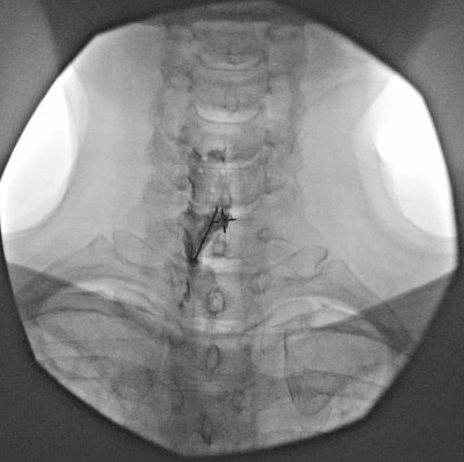
These views show a conventional left C6–7 cervical epidural steroid injection. With about 1 mL of contrast at this lower level, the dye outlines the epidural space near C6–7. Spread toward the upper cervical region is limited in these frames—useful context for why level and delivery method matter.
How Versa-Kath Reaches C2–3
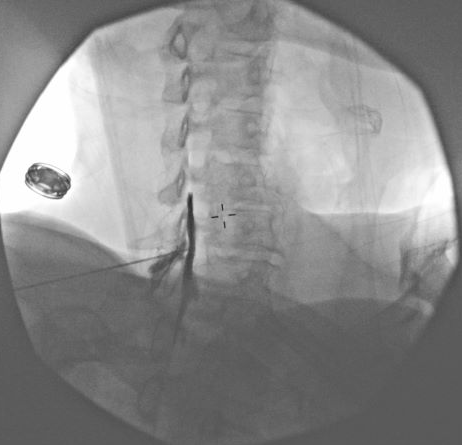
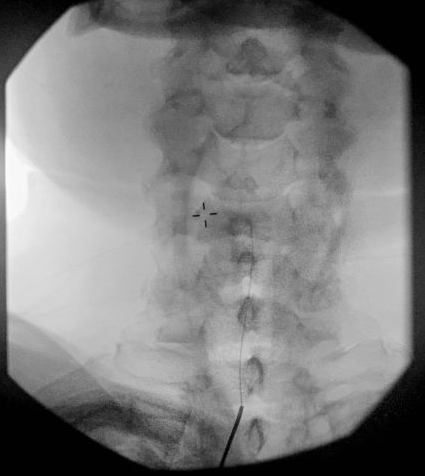
Here the Versa-Kath is inserted from the T1–2 level and advanced under fluoroscopy through the dorsal epidural space toward C2–3. The catheter path—not reliance on free cephalad flow—is what places the tip at the intended upper cervical target.
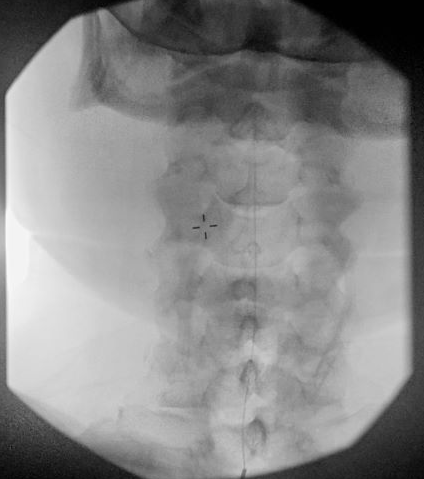
Same 1 mL: C6–7 Versus Targeted C2–3
As demonstrated in the accompanying fluoroscopic images, the same 1 mL volume of contrast produces a substantially different distribution when delivered at C6–7 versus directly at C2–3 using the Versa-Kath. This illustrates the importance of targeted delivery and the limitations of relying on cephalad epidural spread alone.
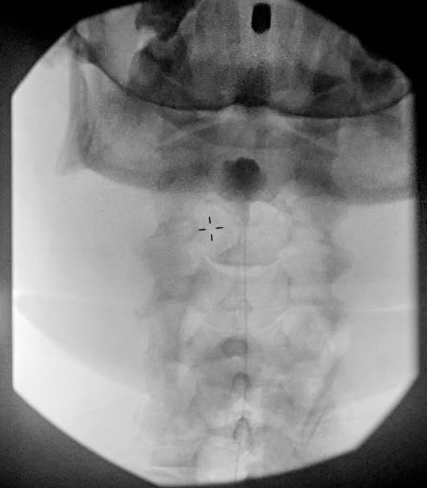
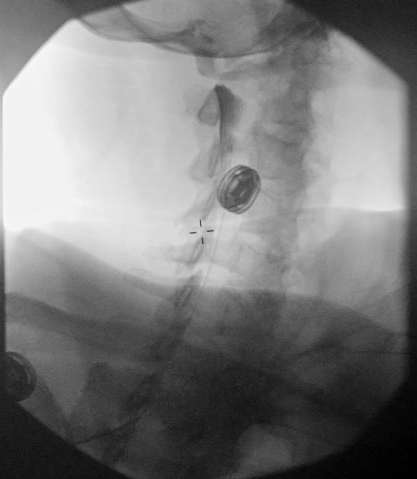
In practical terms, Versa-Kath offers a distinct technical advantage for accessing the upper cervical epidural space at C2–3, where conventional approaches provide very limited alternatives.
Dr. Amit Sharma & our minimally invasive pain & spine team.
What Patients Should Know
Who might this help? People whose neck, upper cervical, or related symptoms may involve the high cervical epidural space—and for whom a lower-level injection may not deliver medicine where it is needed—can ask whether a targeted C2–3 approach is appropriate. It is still an interventional procedure done with image guidance; your history, exam, and imaging guide the decision. Related reading: neck pain and interlaminar epidural steroid injection.
Care is available with Dr. Amit Sharma, Chief, Division of Pain Medicine at Good Samaritan University Hospital, through SpinePain Solutions in Bay Shore, Commack and Farmingdale (office locations). Call 631-310-0000.
Frequently Asked Questions
What is a cervical epidural steroid injection?
A cervical epidural steroid injection places anti-inflammatory medicine in the epidural space around the nerves in the neck. Doctors usually confirm the level with live X-ray (fluoroscopy) and a small amount of contrast before giving the medicine.
Why does the injection level matter for upper neck or headache-related pain?
Medicine delivered at a lower neck level, such as C6–7, may not travel reliably upward to C2–3. When symptoms relate to the upper cervical region, placing contrast and medicine closer to that level can matter more than relying on spread alone.
Is a Versa-Kath C2–3 epidural done under live X-ray with contrast?
Yes. The catheter is advanced under fluoroscopy (live X-ray), and contrast is used to confirm placement and the pattern of spread before medicine is delivered.
How do I know if a targeted C2–3 epidural fits my case?
That depends on your exam, imaging, and prior response to care. Ask Dr. Amit Sharma whether a Versa-Kath C2–3 approach fits your symptoms; call SpinePain Solutions at 631-310-0000.
Dr. Amit Sharma & our minimally invasive pain & spine team.
Posted in: Uncategorized