
Herniated Disc Symptoms: Signs by Spine Level
- Posted on: Dec 3 2025
A herniated disc (also called a disc herniation or “slipped disc”) happens when the soft center of a spinal disc pushes through a weakened outer ring and can irritate a nearby nerve. What you feel, however, can range from a mild ache to sudden, severe nerve pain that shoots down an arm or leg.
Understanding herniated disc symptoms early is one of the best ways to get the right treatment, avoid long-term nerve damage, and in many cases prevent unnecessary spine surgery. This guide walks you through key points into how herniated discs actually feel, which symptoms matter most, and when it’s time to see a specialist.
If you’re looking for a broader overview of disc problems and treatment options, visit our main guide on Herniated Disc after reading this page.
What Is a Herniated Disc?
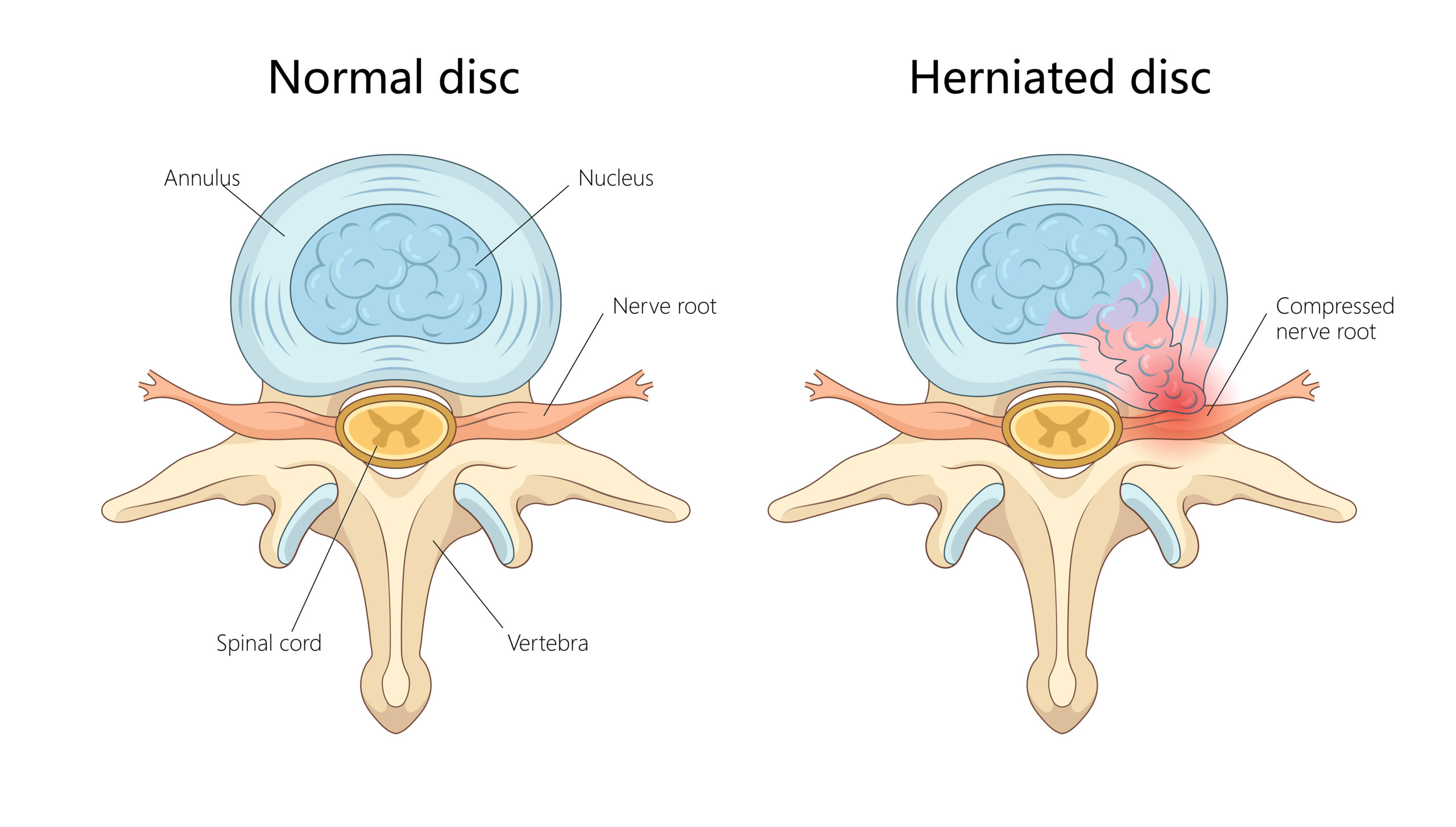
Your spine is made of a stack of bones called vertebrae. Between most of these bones are soft cushions called intervertebral discs. Each disc has:
- Annulus fibrosus – a tough outer ring that provides structure.
- Nucleus pulposus – a soft, gel-like center that acts like a shock absorber.
Over time, due to aging, repetitive strain, poor posture, genetics, smoking, or a specific injury, the outer ring can weaken. When a crack or tear develops and the inner material pushes out, you have a disc herniation. If that herniated disc presses on a nearby nerve root, you may develop very specific patterns of pain, tingling, and weakness. Here are key points Into Herniated Disc Symptoms
1. Pain Rarely Stays “Just in the Back” or “Just in the Neck
One of the most common early herniated disc symptoms is localized pain in the lower back or neck. It may feel sharp, aching, or like deep pressure. Often, patients notice:
- Pain that worsens with bending, twisting, or lifting.
- Increased discomfort when sitting for long periods.
- Neck or back “locking up” with certain movements.
However, a key insight is that with a true disc herniation, pain often doesn’t stay local. As the herniated disc irritates or compresses a nerve root, symptoms frequently begin to radiate into an arm or leg.
2. Radiating Nerve Pain Follows a Predictable Path
When a herniated disc presses on a nerve in the lower back, it can cause sciatica – sharp, electric, or burning pain that travels from the back into the buttock, thigh, calf, or foot. Similarly, a herniated disc in the neck can cause arm pain that radiates from the neck to the shoulder, elbow, forearm, or hand.
Typical patterns:
- Lumbar herniated disc – pain shooting down one leg, sometimes to the foot.
- Cervical herniated disc – pain radiating into the shoulder, upper arm, forearm, or fingers.
This radiating pattern is called radiculopathy and often matches the nerve’s dermatome (the skin area supplied by that nerve). When your pain pattern matches your MRI findings and your exam, the disc herniation is more likely to be clinically relevant.
3. Numbness and Tingling Are Not “Just Circulation”
Many patients initially blame numbness or tingling on poor circulation. In reality, these are often nerve-related symptoms from a herniated disc. You may notice:
- “Pins and needles” in the arm, hand, leg, or foot.
- A patch of skin that feels “asleep” or less sensitive.
- Buzzing or subtle burning in a specific area.
What makes this symptom pattern especially useful is its consistency. Numbness and tingling usually follow a repeatable map – for example, into the thumb and index finger (C6) or along the top of the foot (L5). This helps your spine specialist pinpoint which disc and which nerve are involved.
4. Weakness Is a More Serious Herniated Disc Symptom
Pain gets the most attention, but weakness is one of the most important herniated disc symptoms to recognize. When the herniated disc compresses a nerve strongly enough, the muscles that nerve controls can lose strength. Examples include:
- Difficulty lifting the foot or toes (possible L4/L5 involvement).
- Trouble pushing off when walking or climbing stairs.
- Weak grip strength or difficulty lifting objects overhead (cervical nerve root involvement).
Weakness can be subtle at first – dropping objects more often, stumbling occasionally, or having to “think” about certain movements. Because nerve-related weakness can lead to long-term problems if ignored, this symptom deserves prompt evaluation.
5. Certain Positions Make Herniated Disc Symptoms Better or Worse
Another way to recognize herniated disc symptoms is to pay attention to what makes them flare up or calm down. Many patients report:
- Pain that worsens with prolonged sitting, driving, or bending forward.
- Increased symptoms with coughing, sneezing, or straining (which raise disc pressure).
- Partial relief when standing, walking, or gently changing position.
For some, leaning slightly forward or to one side reduces nerve tension. For others, lying flat with a pillow under the knees feels best. These mechanical “clues” often support the diagnosis of a disc herniation rather than purely muscular pain.
6. Herniated Disc Symptoms Differ by Spine Region
Where your herniated disc is located plays a big role in what you feel:
- Cervical disc herniation (neck)
Neck pain, shoulder/arm pain, tingling in the hand or fingers, reduced grip strength, and pain that worsens when turning or extending the neck. - Thoracic disc herniation (mid-back)
Mid-back pain, sometimes wrapping around the chest or ribs. True thoracic disc herniations are less common and often discovered incidentally. - Lumbar disc herniation (lower back)
Lower back pain, sciatica, tingling or numbness in the leg or foot, and difficulty standing or walking when symptoms flare.
You can learn more about spinal structure and nerve pathways in our detailed Spine Anatomy guide.
7. Red-Flag Herniated Disc Symptoms Need Immediate Attention
While most herniated discs are not emergencies, certain symptoms are considered red flags and should be evaluated immediately:
- Loss of control over bowel or bladder function.
- Severe numbness in the groin or “saddle” area.
- Sudden, rapidly worsening weakness in one or both legs.
- Difficulty walking or standing due to leg weakness or instability.
These symptoms may indicate a rare but serious condition such as cauda equina syndrome, where the nerves at the base of the spine are under significant pressure. This situation requires urgent medical attention and should not wait for a routine office visit.
Not Sure If Your Symptoms Are Serious?
If you’re unsure whether your herniated disc symptoms need urgent care or can be managed conservatively, our team at SpinePain Solutions can help you sort through the details and create a safe, personalized plan.
How We Evaluate Herniated Disc Symptoms
At SpinePain Solutions, we don’t treat the MRI alone. A disc herniation is only meaningful if it truly explains your symptoms. A proper workup typically includes:
- Detailed history – when symptoms started, what makes them better or worse, and how they affect daily life.
- Focused examination – testing strength, sensation, reflexes, and specific nerve tension maneuvers.
- Imaging review – personally reviewing your MRI (not just the report) to assess disc herniation size, location, and nerve involvement.
In select cases, additional tests like EMG may be considered, but they are not required for most patients with straightforward herniated disc symptoms.
When to See a Spine Specialist for Herniated Disc Symptoms
You should consider seeing a spine specialist if:
- Pain lasts longer than 2–3 weeks despite rest and basic self-care.
- You experience numbness, tingling, or weakness in an arm or leg.
- Your symptoms interfere with work, sleep, or normal daily activities.
- You’ve been told you have a herniated disc and are unsure whether surgery is really necessary.
We provide expert evaluations and personalized treatment plans at our convenient Long Island locations in Commack and Bay Shore, NY.
Frequently Asked Questions About Herniated Disc Symptoms
Do herniated disc symptoms always include leg or arm pain?
Not always. Some patients have primarily back or neck pain with minimal radiating symptoms. Others have mostly leg or arm pain with very little spinal discomfort. The key is whether the symptom pattern matches a specific nerve root and your imaging.
Can herniated disc symptoms come and go?
Yes. Many patients describe “good days” and “bad days,” or flare-ups with certain activities. Symptoms may improve as inflammation decreases, then return if the nerve is irritated again. This doesn’t always mean the disc herniation is getting bigger.
How long do herniated disc symptoms usually last?
Mild to moderate symptoms often improve over weeks to a few months with proper conservative care. However, persistent or worsening pain, numbness, or weakness should be evaluated to avoid long-term nerve irritation or unnecessary suffering.
Is all leg pain from a herniated disc?
No. Leg pain can come from joints, muscles, peripheral nerves, or vascular issues. A thorough spine and neurologic exam helps determine whether a disc herniation is the true source of your symptoms.
When is it an emergency?
Red-flag symptoms such as loss of bowel or bladder control, severe groin numbness, or rapidly worsening leg weakness are emergencies and require immediate medical attention, often in an emergency room setting.
Take the Next Step Toward Relief
If you recognize yourself in these herniated disc symptoms, you don’t have to manage them alone. With advanced interventional options and minimally invasive procedures, many patients avoid open surgery and return to the activities they love.
Same-day and urgent appointments are often available so you can get answers—and relief—quickly.
Tagged with: disc herniation, Herniated Disc, Sciatica
Posted in: Special Report